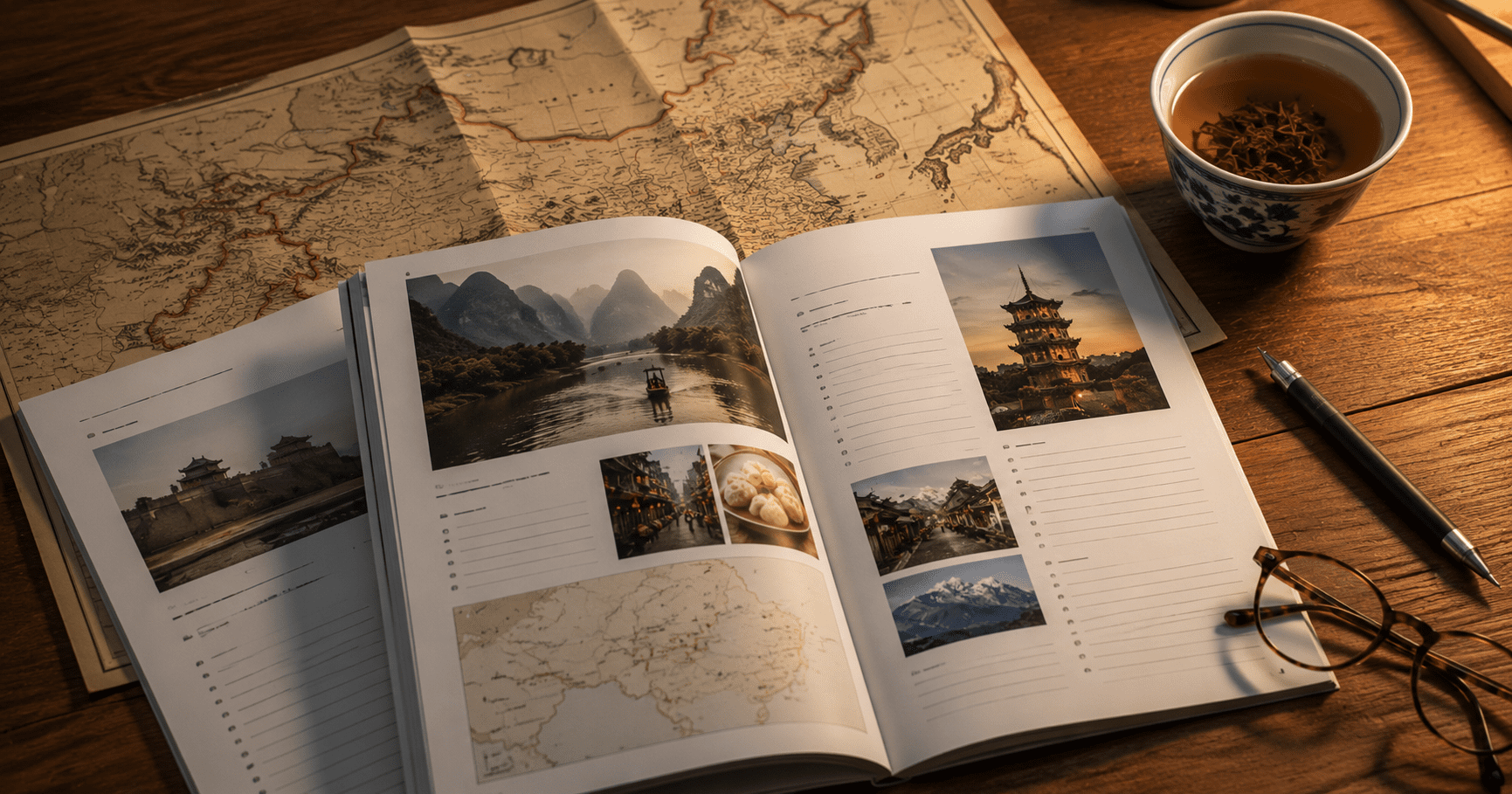
You’ve locked in Beijing. Shanghai is on the list. And now you’ve got five or six days left and one more city slot to fill. The two names that keep coming up: Xi’an and Chengdu. Both are heavy hitters. Both show up on every “must visit China” list. But they are not the same trip — and which one you pick changes the texture of your whole itinerary.
Here’s how to choose without the fluff.
TL;DR
- Pick Xi’an if you want jaw-on-the-floor ancient history, the Terracotta Warriors, and a city where layers of history are still visible in the streets.
- Pick Chengdu if you want pandas, a city where food is central to daily life, and a place that teaches you how to slow down.
- You can do both if you can set aside 5–7 days — but most first-timers don’t have that window, so this article assumes you’re choosing one.
At a Glance
Xi’an and Chengdu are connected by a frequent high-speed rail corridor in western China, but they deliver completely different versions of the country. One is an open-air history book. The other is a masterclass in living well.
| Xi’an | Chengdu | |
|---|---|---|
| Vibe | Ancient capital, Silk Road crossroads | Laid-back, modern, food-obsessed |
| Headliner | Terracotta Warriors (2,200+ years old) | Giant Panda breeding bases |
| Food personality | Bold, wheat-based, Muslim-influenced street eats | Fiery Sichuan heat, numbing peppercorns, endless variety |
| Pace | Busy, tourist-driven core with deep local pockets | Unhurried — tea houses are woven into daily life |
| Best for | History nerds, first-time China travelers who want iconic sights | Food travelers, animal lovers, people who hate rushed trips |
| Typical stay | 2–3 full days | 2–3 full days as a general suggestion, with extra time if adding a day trip |
| Pairs better with | Beijing (shared northern capital DNA) | A longer, slower loop through the southwest |
Choose the experience that earns the transfer
| Situation | Useful next step | Important limit |
|---|---|---|
| History is a leading priority | Compare Xi’an’s city sights and a separate Terracotta Army outing. | Do not compress the excursion into an already full transfer day. |
| Food and a slower city base matter more | Compare Chengdu’s neighborhoods and the separate panda visit. | Panda access and timing depend on the actual venue. |
| You want both | Count the door-to-door move and usable days first. | Remove a stop if it crowds out the experiences you came for. |
Why Xi’an Might Be Your Pick
If your mental image of China involves ancient walls, dynasties, and something you saw in a textbook come to life — Xi’an delivers that in a way few places on earth can.
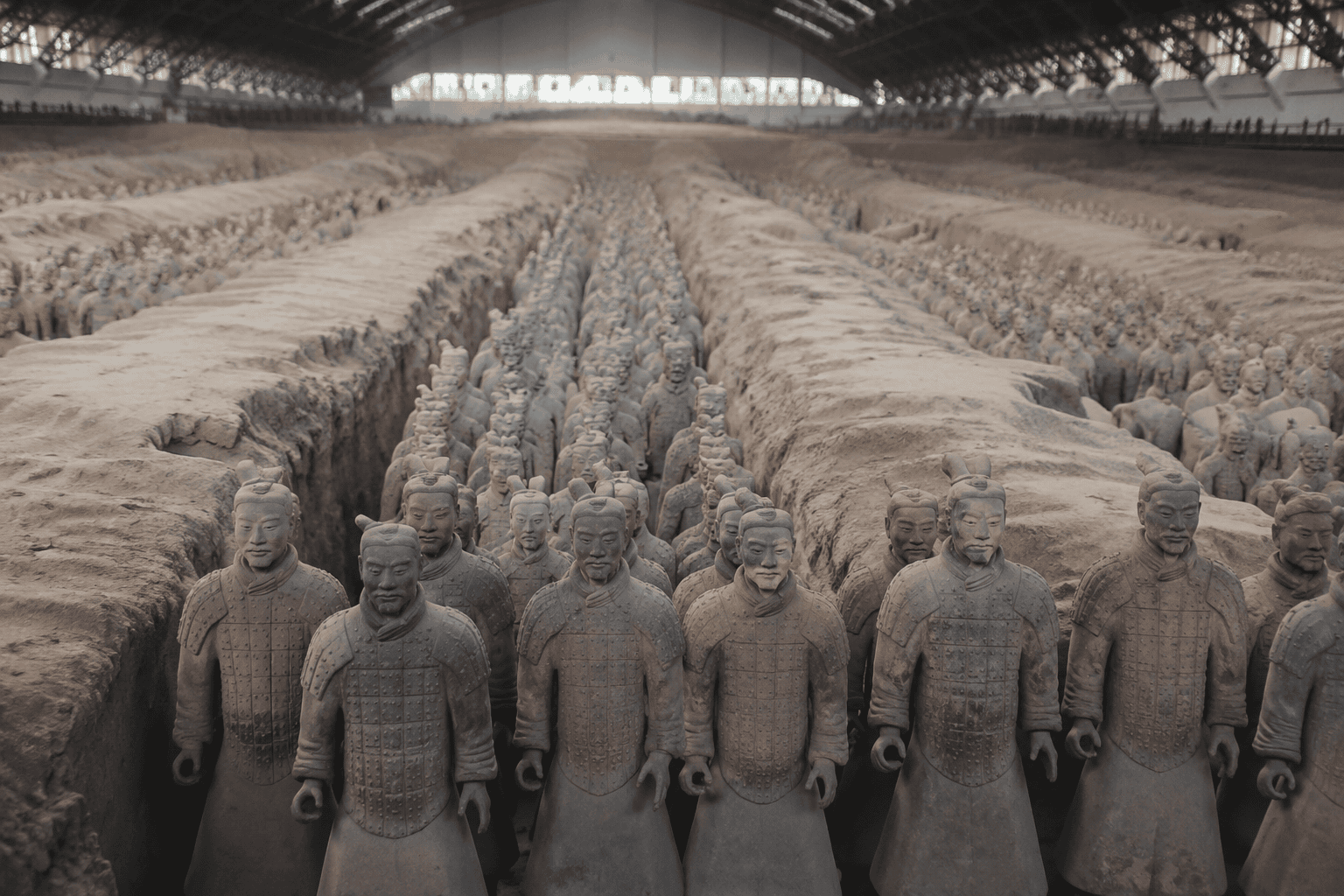
The Terracotta Warriors justify the trip alone. You’ve seen the photos. Standing in Pit 1 — with rows of life-sized soldiers stretching into the hangar’s far end — is a different thing entirely. It’s one of those rare sights that actually exceeds expectations. Budget a half-day. Go early. Bring a camera with a real zoom lens if you have one.
The city walls are still standing. Xi’an’s Ming-era fortifications ring the entire old city — 14 km of wall you can walk or bike on top of. At sunset, the view over the rooftops toward the Bell Tower is worth the climb.
The Muslim Quarter is unlike anything else in China. This isn’t a sanitized tourist zone. It’s a living neighborhood where the food stalls start frying flatbreads and lamb skewers before you’ve had your morning coffee. The street food here — roujiamo (often called a “Chinese hamburger,” though that’s underselling it), hand-pulled noodles, persimmon cakes — is some of the most distinctive eating you’ll do on the whole trip.

Xi’an rewards travelers who like their trips front-loaded with big, undeniable sights. You won’t wonder if you “did Xi’an right.” You’ll know.
Read our full guide on Xi’an local culture — Silk Road echoes, Muslim Quarter nights, and Shaanxi soul.
Why Chengdu Might Be Your Pick
Chengdu doesn’t hit you over the head with monuments. It works differently. You land, you eat, you sit in a teahouse, and somewhere around day two you realize you’ve relaxed more than you have in months.
The pandas are the obvious draw — and they’re worth it. The Chengdu Research Base of Giant Panda Breeding lets you see pandas doing panda things (mostly eating bamboo and ignoring you). Arrive early, ideally around opening time — mornings tend to be less crowded, and pandas are generally more active earlier in the day. For exact opening hours and the best time to visit, check the base’s official information on the day you plan to go.

The food is the real reason people stay. Sichuan cuisine is a controlled burn — chili heat layered with the numbing tingle of Sichuan peppercorn (málà). You’ll find it in hole-in-the-wall noodle shops and high-end hot pot palaces alike. Chengdu was named a UNESCO City of Gastronomy for a reason. If you plan your days around meals, you’re in the right city.
The teahouse culture is not a tourist act. Locals genuinely spend afternoons in parks like People’s Park, sipping jasmine tea, getting ear cleanings, and playing mahjong. You can join them — it’s a welcoming, everyday scene. That unhurried rhythm is Chengdu’s real export.

Chengdu rewards travelers who want a city that feels livable, not just visitable.
Get the full picture in our guide to Chengdu local culture — teahouse hours, mahjong slaps, and the Sichuan art of slow living.
The Route Logic: Which One Fits Your Itinerary?
This is where most generic “Xi’an vs Chengdu” articles fall short. They compare attractions. They don’t talk about how the city actually plugs into a real trip.
If your route is Beijing → Xi’an, the fit is natural. Both are northern cities with imperial history baked into their bones. Xi’an is about 4.5 hours from Beijing by high-speed train on the fastest services — check current schedules when planning. You get a clean north-to-south narrative: Beijing’s Forbidden City sets up the imperial story, and Xi’an shows you where it started (it’s often described as the capital of 13 dynasties). The logic scans.
If your route is Shanghai → points west, Chengdu often makes more sense. Shanghai is fast, polished, future-facing. Chengdu is its antidote — still modern and substantial, but with a noticeably slower rhythm. The contrast gives your trip shape: speed, then stillness.
What about train vs. flight? High-speed trains connect most major city pairs in China, but not all — and the routes you’d take between Beijing/Shanghai and these two cities vary in length and availability. Rather than list potentially outdated durations here, we’ll be straight: check current schedules when you’re planning, because China adds new rail lines frequently. Our custom itineraries always use the route that’s actually running, not the one that was running last year.
See how these cities slot into a full trip in our 10 days in China itinerary guide — it covers the exact flow most first-timers use.
When Both Make Sense
If you can set aside 5–7 days beyond Beijing and Shanghai — say, a trip with a bit more breathing room — you can absolutely do both Xi’an and Chengdu. The high-speed train between them runs multiple times daily. An ideal order: Beijing → Xi’an → Chengdu → (fly out of Chengdu or continue to Yunnan/Guilin).
But for the typical first-timer with two weeks total — which is most of our readers — picking one city usually makes for a better trip. Less time on trains. More time eating, walking, and letting a place actually sink in.
FAQ
Is Xi’an or Chengdu better for a first trip to China?
Neither is “better” — they’re better for different travelers. Xi’an wins if you want the biggest, most iconic historical sights. Chengdu wins if you want food, animals, and a city that doesn’t feel rushed. If you’ve already got Beijing on your list, Xi’an pairs with it more naturally; if you want maximum contrast from Shanghai, Chengdu delivers.
How many days do I need for Xi’an? What about Chengdu?
Plan 2–3 full days for Xi’an as a general suggestion (one for the Terracotta Warriors, one for the city walls and Muslim Quarter). If you have extra time and want to venture further, a day trip to Mount Hua is a popular option. For Chengdu, 2–3 full days as a general suggestion, with extra time if adding a day trip — pandas take a morning, the food scene could fill a week, and the teahouse culture rewards slowing down rather than rushing.
We break this down in detail in how many days you actually need for China as a first-timer.
What’s the food actually like? Is Sichuan food too spicy?
Xi’an’s food is wheat-heavy and deeply savory — think hand-pulled noodles, lamb skewers, stuffed flatbreads, and rich mutton soups. The Muslim Quarter’s street food is its own category; you won’t find it anywhere else in China. Chengdu’s Sichuan food is famously hot, but “spicy” isn’t the whole story — the málà combination of chili and numbing Sichuan peppercorn creates a complex sensation that’s more about flavor layers than pure heat. And plenty of Sichuan dishes are mild. You can eat very well in Chengdu without ever touching a chili if you want to.
Do I need to speak Chinese in either city?
Both cities are major tourist destinations, and you’ll find English signage at major sights and some English-speaking staff at larger hotels. That said, neither Xi’an nor Chengdu is as English-friendly as Beijing or Shanghai. Download a translation app before you go, have your hotel’s address in Chinese characters, and learn a few food words — you’ll be fine. Street food vendors in both cities are used to pointing and smiling.
The Honest Bottom Line
Most travelers who ask “Xi’an or Chengdu?” are really asking a different question: which version of China do I want to experience?
Xi’an shows you China the empire — ancient, monumental, still standing after millennia. Chengdu shows you China the lifestyle — spicy, slow, built around the table. Pick the one that fills the gap your trip actually has.
And if you’re still on the fence after reading this? That’s exactly what we build custom itineraries for.
July 15, 2026
Prices and availability verified as of July 15, 2026. Subject to change.
Related decisions for this part of the trip
- How to Plan Your First China Trip
- Which China Cities Fit Your First Trip?
- Two Weeks in China: Choose a Route You Can Enjoy
Turn this decision into a workable route
A city choice needs to work with your flight endpoints, interests and usable days. LOCLYX is a China-based local team. We tailor a written plan to your dates, budget, interests, pace and constraints. Planning costs $19.9 per travel day; travel purchases are separate and we do not make reservations or provide ground services.
Use the relevant guides above to settle this question, then compare the full planning deliverable. Compare the sample itinerary and pricing and scope before using Plan My Trip. Delivery and revision conditions are in the published policy.
Update note
Editorial review: October 16, 2026. Use official and provider references for the route and service they cover. Operational availability, individual eligibility, medical decisions and local procedures require the appropriate current or professional check.
Official sources for the checks above
- China Railway 12306: booking and travel-document requirements — Compare actual trains and stations for your date before choosing the route. Preferences between the two cities remain editorial judgments.