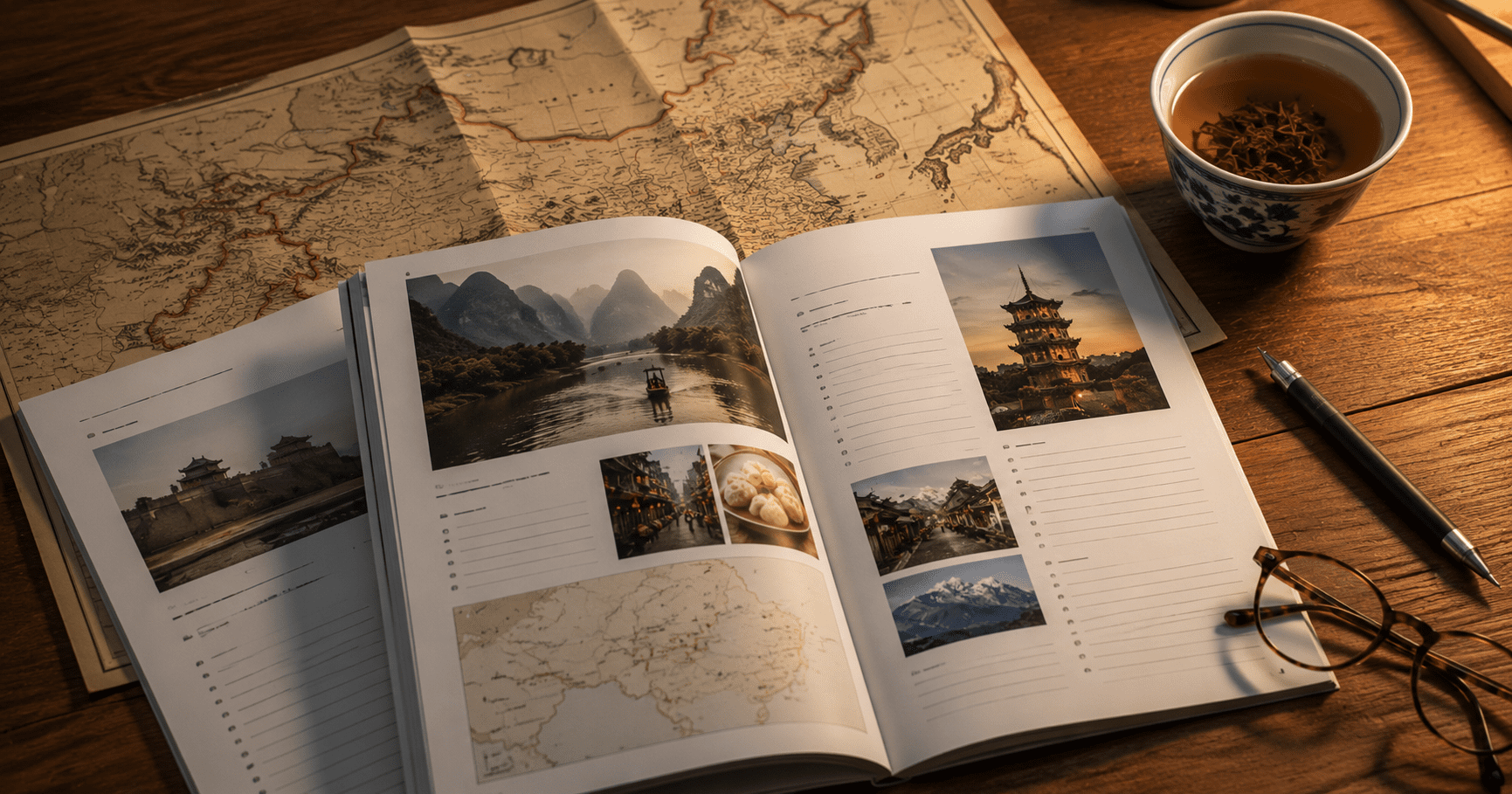
Two weeks is enough for a very good first trip to China. It is not enough to collect half the country.
A two-week China itinerary starts to fall apart when every open day becomes another city. A train may take four hours, but changing cities also means checking out, reaching the station, passing security, finding the next hotel, and starting again. Do that five or six times and the final days blur into luggage and waiting rooms.
The three routes below are general templates. They show where to spend your nights and what each stop adds. Exact trains, hotels, attraction times, and restaurant choices should come later, once your dates are fixed.
Use the sample routes as options, not a required checklist
| Situation | Useful next step | Important limit |
|---|---|---|
| Comfort is the priority | Start with three bases and add day trips only if practical. | Four or five cities are choices, not a minimum. |
| You want a mixed highlights route | Measure each move in door-to-door time. | Flight and train duration exclude terminal and hotel access. |
| A nature stop is essential | Protect its weather window and travel day. | Do not insert it only because it looks close on a map. |
The short answer
| Route | Order | Best for | Pace |
|---|---|---|---|
| Classic first trip | Beijing → Xi’an → Chengdu → Shanghai | History, food, and two very different big cities | Moderate |
| Scenery first | Beijing → Xi’an → Zhangjiajie → Guilin/Yangshuo → Hong Kong | Mountains, rivers, and travelers comfortable with more walking | Fast |
| Slower east China | Shanghai → Suzhou day trip → Hangzhou → Nanjing → Beijing | Gardens, museums, city walks, and fewer hotel changes | Relaxed |
If you have no strong preference, take the classic route. It is the easiest of the three to understand, and the four stops do different jobs.
Route 1: Beijing, Xi’an, Chengdu, Shanghai
Days 1 to 4: Beijing
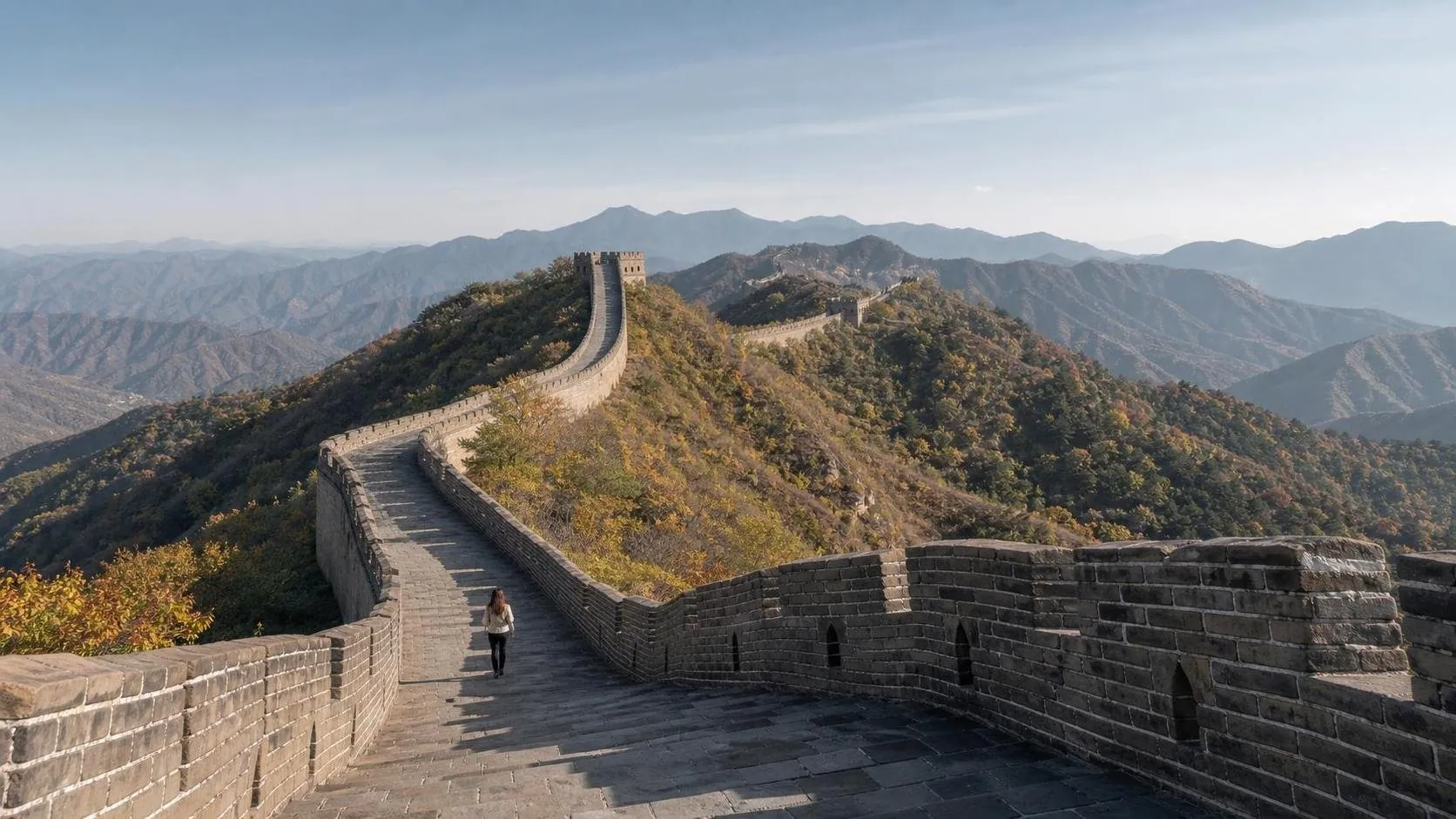
Keep arrival day light. Check in, eat, and walk around the neighborhood near your hotel. A long flight from the United States and a large time-zone change are poor preparation for the Forbidden City or a Great Wall day.
Use the next three days for:
- the Forbidden City, Jingshan Park, and the old central axis
- a full day at the Great Wall
- the Temple of Heaven, the hutongs, or the Summer Palace
Beijing needs three proper sightseeing days. The Great Wall takes a day by itself. The Forbidden City also deserves more than a hurried stop between distant attractions.
Days 5 and 6: Xi’an
Take a high-speed train to Xi’an on Day 5. The late afternoon or evening is enough for the City Wall and the Bell Tower area. Use Day 6 for the Terracotta Army, then return to the city for Shaanxi noodles or a walk through one of the older neighborhoods.
Two nights works for most first visits. Add another day if Chinese history is the main reason for the trip, or if Mount Hua is on your list.
Days 7 to 9: Chengdu
Take the high-speed train from Xi’an to Chengdu on Day 7. This is a sensible rail leg, so there is little reason to add an airport unless your dates produce an unusual timetable.
Three days in Chengdu gives you time for the panda base, People’s Park, a teahouse, neighborhood walks, and a Sichuan meal that is not squeezed between two trains. One night is too short. The panda base takes most of a morning, and Chengdu is better when you leave room to sit down and watch the city go about its day.
If you only have room for Xi’an or Chengdu, read Xi’an or Chengdu: which one fits your first China trip.
Days 10 to 14: Shanghai
Chengdu and Shanghai are far apart. Compare the full rail journey with the full airport journey for your date. A short flight on paper can still mean a long day after airport transfers, early check-in, and the trip from the arrival airport into Shanghai.
After arrival and departure are removed, you have about three full days in Shanghai. Spend two on the Bund, the old city, museums, and walkable neighborhoods. Use the third for Suzhou or Hangzhou, or keep it empty as protection before the international flight home.
This is the strongest general route for a first visit. Beijing and Xi’an cover imperial and ancient history. Chengdu changes the pace and puts food at the center of the trip. Shanghai is an easier place to finish.
Route 2: Beijing, Xi’an, Zhangjiajie, Guilin/Yangshuo, Hong Kong
This route cuts back on city time and gives the days to mountains and rivers. It also involves more hotel changes and more weather risk.
Days 1 to 5: Beijing and Xi’an
Give Beijing three nights and Xi’an two. Keep the Great Wall and Forbidden City in Beijing, then the Terracotta Army and City Wall in Xi’an. Do not add Chengdu as well. The second half would turn into a chain of transfers.
Days 6 to 8: Zhangjiajie
Check the current flight and rail options from Xi’an before locking the route. Direct services and useful departure times can change, so an old train number should never hold the whole trip together.
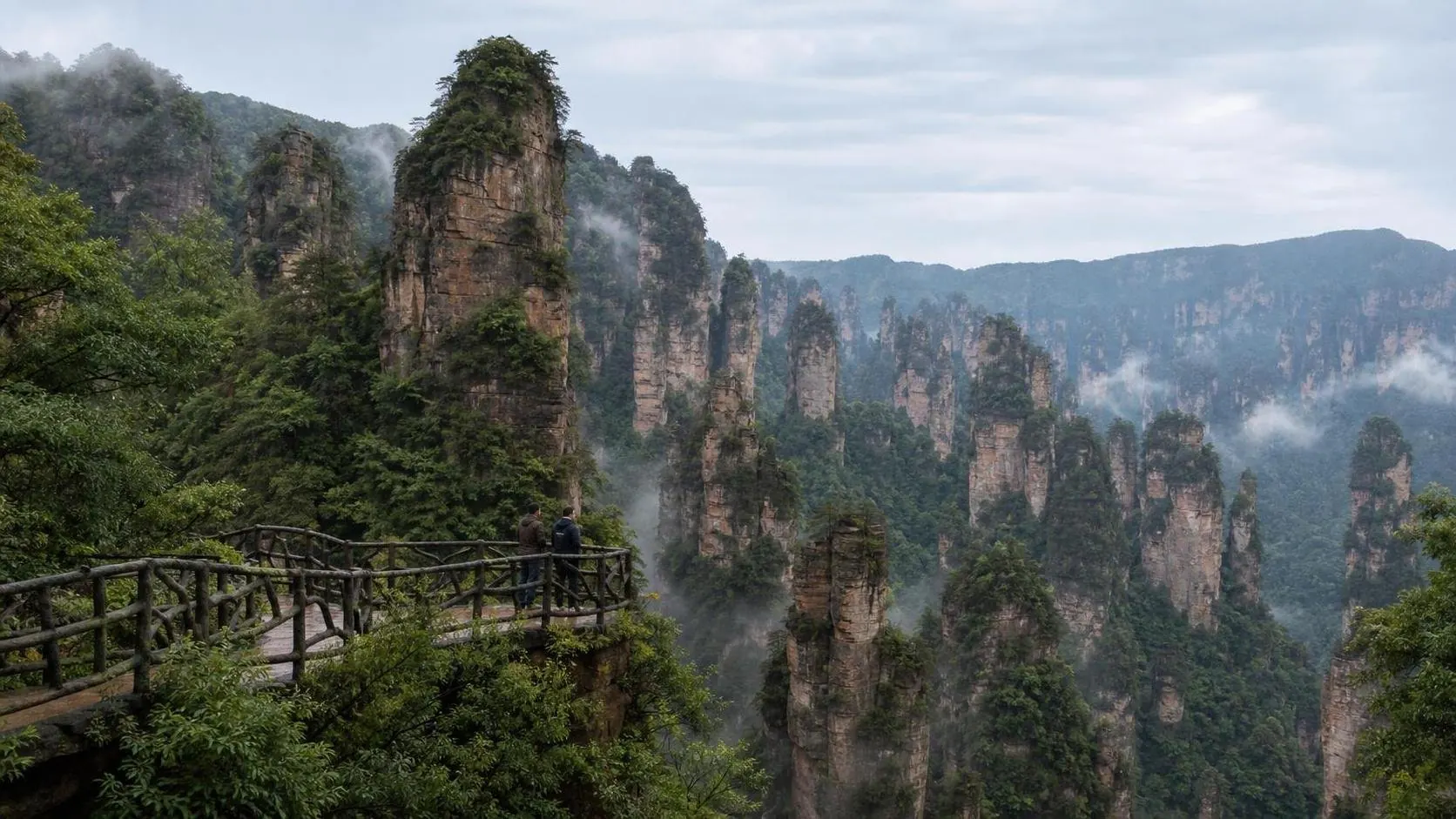
Allow two complete sightseeing days. The UNESCO-listed Wulingyuan area, Tianmen Mountain, and the Grand Canyon Glass Bridge are separate visitor areas. Cable cars, an elevator, and park buses reduce some of the climbing, but they do not remove the walking.
Travelers with painful knees, young children, or a strong fear of heights may enjoy Guilin more. Zhangjiajie rewards people who are comfortable with stairs, long park days, and weather that may hide the peaks.
Days 9 to 11: Guilin and Yangshuo
Reserve a main travel block for the move south. Guilin works well as the transport gateway. Yangshuo is the better base if you want to slow down among the karst hills.
Two full days can hold a Li River or Yulong River experience, countryside cycling, and some actual rest. This is a useful order after Zhangjiajie. The first stop is vertical and tiring; the second is easier to experience by boat, bicycle, and short walks.
Days 12 to 14: Hong Kong
Check the current high-speed rail options from Guilin to Hong Kong West Kowloon. Ending in Hong Kong changes the mood of the trip and gives you a major international airport for the flight home.
This route looks excellent in photographs, but it is sensitive to rain, heat, and peak-season queues. If the dates are poor, remove one nature stop. Two well-timed places are better than three places seen through fog, crowds, and transfer windows.
Route 3: Shanghai, Hangzhou, Nanjing, Beijing
This route uses four hotel bases and relies mainly on high-speed rail. It suits travelers who prefer neighborhoods, gardens, and museums to frequent domestic flights.
Days 1 to 4: Shanghai, including a Suzhou day trip
Use the first two days for central Shanghai. Keep the third flexible for a museum, architecture, or a longer neighborhood walk. On Day 4, visit Suzhou and return to the same Shanghai hotel that evening.
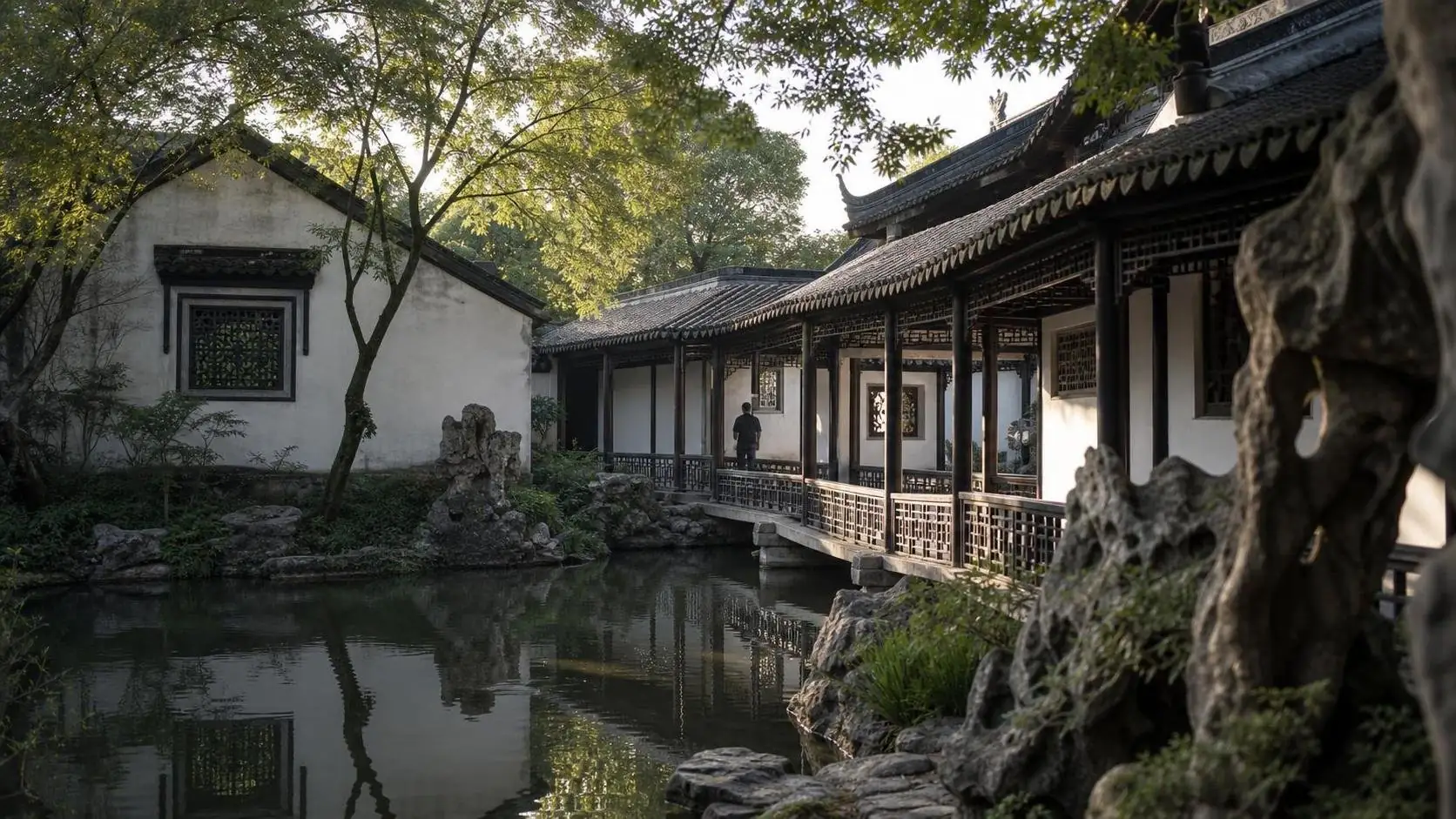
Suzhou’s classical gardens are the reason to go. A day trip lets you see one or two gardens and part of the old city without packing for a single overnight stay.
Days 5 to 7: Hangzhou
Hangzhou connects easily with Shanghai by rail. Three days gives you time for West Lake, a temple or tea area, and half a day with nothing scheduled.
There is no prize for checking every photo spot around the lake. Pick a section, walk it properly, and let the weather decide how much more to add.
Days 8 and 9: Nanjing
Nanjing suits travelers interested in modern Chinese history, museums, and long city walks. Two nights is enough for one or two major museums plus an old-city or wall area. If that does not sound appealing, remove Nanjing and give the nights to Beijing or Hangzhou.
Days 10 to 14: Beijing
Take the high-speed train to Beijing and leave three full sightseeing days, plus a buffer before the international flight. Finishing in Beijing keeps the final days focused, with the Forbidden City and Great Wall still ahead of you.
The drawback is physical. Both days require energy, so do not exhaust yourself in the first half of the trip.
This route lacks the obvious drama of Zhangjiajie or Chengdu, but it is easier to execute. The transport is simpler, hotel changes are limited, and rainy days still leave you with museums, gardens, and neighborhoods.
Which route fits your trip?
The classic route is the safest default for a first visit without one dominant interest.
The scenery route fits travelers coming mainly for Zhangjiajie, Guilin, and outdoor views. It asks more from your legs and your transport planning.
The slower east-China route works for families, older travelers, and anyone who would rather spend another night in a city than collect another hotel key.
Six rules for a two-week China itinerary
- Use different arrival and departure cities when the airfare makes sense. This removes a return leg across the country.
- Keep a normal two-week trip to four hotel bases. The scenery route stretches to five, and that is already busy.
- Count every intercity move as at least half a day. Treat airport legs as longer unless the airports happen to suit both hotels.
- Sleep in the international departure city on the final night. Do not arrive from another province on the day of the long-haul flight.
- Check rail schedules and attraction rules again when tickets open. The official 12306 English FAQ confirms that foreign passengers can use valid passports for real-name train tickets.
- Check public holidays and summer demand before buying flights. The month may look fine while the exact week is not. Use the best time to visit China guide before fixing the dates.
Travelers with less time can use the 10-day China itinerary instead of compressing one of these routes.
Frequently asked questions
Is two weeks enough for a first trip to China?
Yes. Four well-chosen hotel bases fit comfortably into 14 days. Two weeks becomes tiring when the plan grows to six or seven bases and every second day includes a check-out.
How many cities should I visit in 14 days?
Four hotel bases is a sensible limit for most travelers. The scenery route in this guide uses five, but it also has the fastest pace and the least room for disruption.
Should I use trains or domestic flights?
Use high-speed rail when it connects the right cities without consuming the whole day. For longer cross-country legs, compare the complete rail journey with airport transfers, check-in time, flight time, and the trip into the arrival city.
Do I need to choose exact trains before building the itinerary?
No. Set the city order and number of nights first. Check the live timetable before buying international flights, then choose exact trains when sales open.
Final choice
Pick the route first, then remove places. Starting with a long wish list and forcing it into 14 days usually creates a trip that looks good in a spreadsheet and feels tiring on the ground.
For a broad first visit, use the classic route. Choose the scenery route when mountains and rivers are the reason for coming. Take the slower east-China route when fewer transfers matter more than covering distant regions.
A general itinerary can decide where the trip goes. It cannot choose the right train, hotel area, attraction slot, walking load, or backup plan without real dates and traveler details.
Prices and availability verified as of July 22, 2026. Subject to change.
Related decisions for this part of the trip
- How to Plan Your First China Trip
- How Many Days Do You Need for a China Trip?
- Xi’an or Chengdu for Your First China Trip?
Turn this decision into a workable route
A two-week plan should reflect your party’s priorities and pace, not a fixed list everyone must complete. LOCLYX is a China-based local team. We tailor a written plan to your dates, budget, interests, pace and constraints. Planning costs $19.9 per travel day; travel purchases are separate and we do not make reservations or provide ground services.
Use the relevant guides above to settle this question, then compare the full planning deliverable. Compare the sample itinerary and pricing and scope before using Plan My Trip. Delivery and revision conditions are in the published policy.
Update note
Editorial review: October 12, 2026. Use official and provider references for the route and service they cover. Operational availability, individual eligibility, medical decisions and local procedures require the appropriate current or professional check.