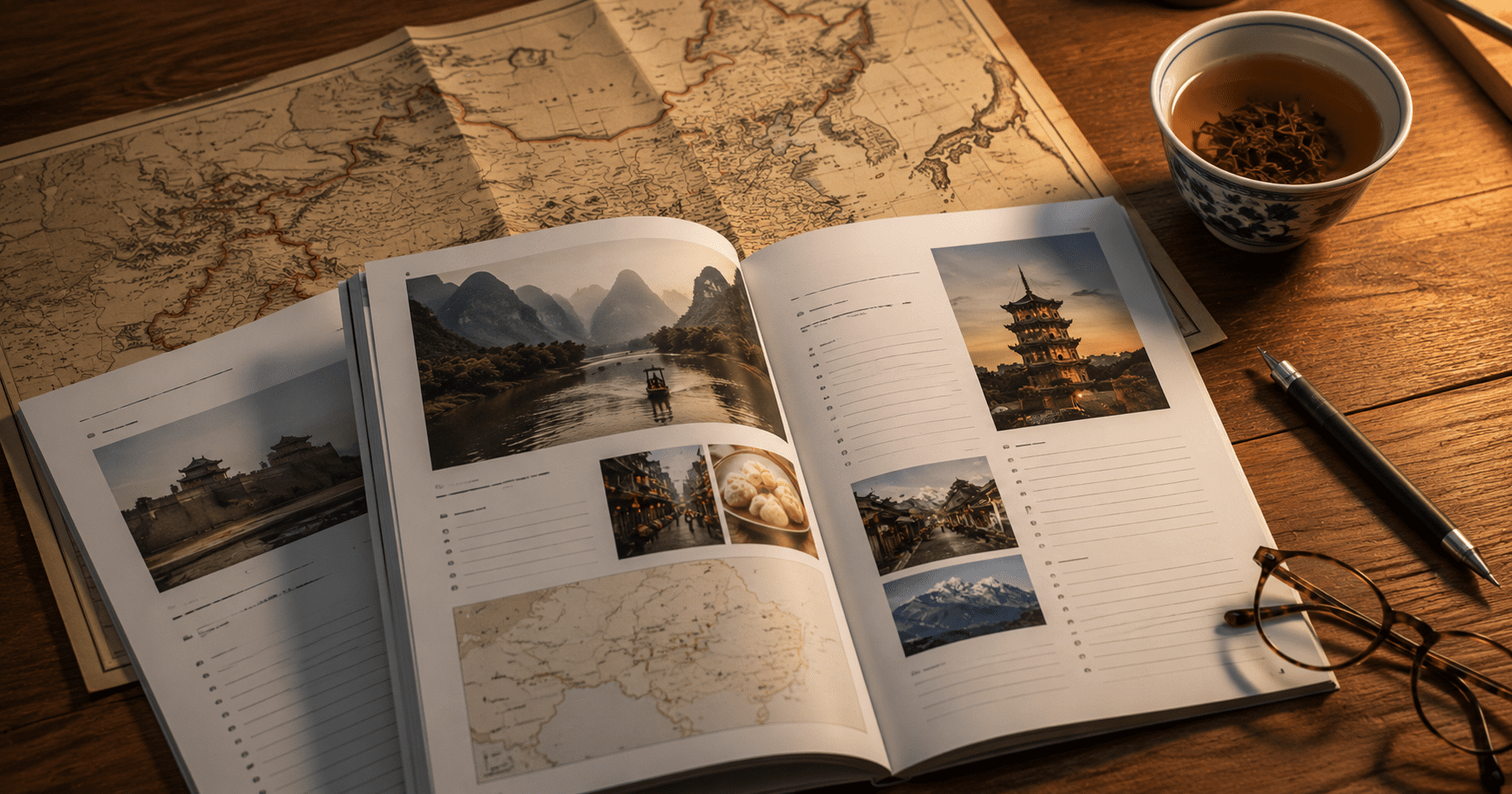
There is no universal minimum number of days for China. The useful question is how much time your chosen places need after arrival, departure and transfers are counted.
Count days you can use, then count destinations
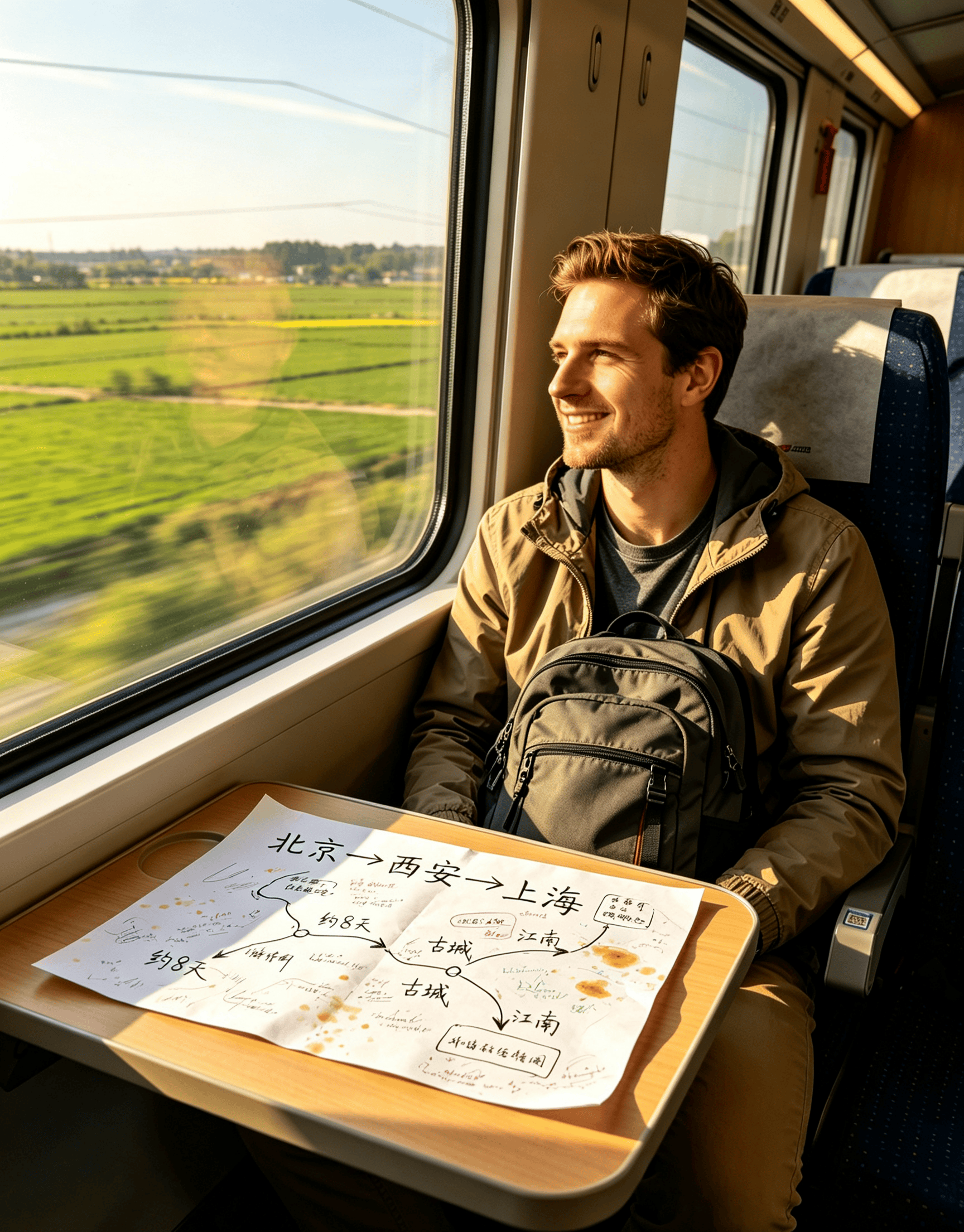
List the time you land in China, the time you leave, and every intercity move. Mark each date as a full sightseeing day, a partial day or a transfer day. The labels stop an overnight flight or a six-hour travel chain from becoming an imaginary extra day.
Next list your non-negotiable experiences. A major museum, a Wall excursion, a food neighborhood and a landscape outing require different kinds of time. Three cities with distant excursions can be harder than four cities whose sights and stations are close.
Compare seven, ten and fourteen days

| Time on the ground | A starting option | What can make it too busy |
|---|---|---|
| 7 calendar days | One city with excursions, or two cities with a clear reason for the move | Late arrival, early departure and an extra intercity transfer |
| 10 calendar days | Two cities at a slower pace or three with explicit transfer allowances | Treating the middle stop as two full sightseeing days |
| 14 calendar days | Three well-matched bases; a fourth only if its value exceeds its transfer cost | Several distant landscape outings, short stays and repeated flights |
These are planning starting points, not official rules or guaranteed timetables. Read the ten-day comparison and the two-week options for route-specific tradeoffs.
Allocate nights around the experiences you want
Beijing’s distant Wall outing changes the allocation differently from a central Shanghai walk. Xi’an’s Terracotta Army trip uses a different travel block from a City Wall visit. Chengdu city time and a panda-base excursion should not be treated as one interchangeable activity.
Give the place that matters most the best available time, not the leftover afternoon between two transfers. If a destination only has a late arrival and an early exit, decide whether the hotel change is worthwhile at all.
Pace changes the answer more than a destination count
Children, older travelers, mobility needs, chronic conditions, luggage and tolerance for early starts can change a seemingly comfortable route. Build meals, toilets, rest and packing into the schedule instead of adding them after the route is sold.
A slower plan does not mean abandoning the main attractions. It usually means choosing a nearer hotel, reducing cross-city journeys, retaining one flexible period and removing a stop that creates more work than enjoyment.
Let arrival and exit cities do useful work
Compare an open-jaw flight arriving in one city and leaving from another with a round trip that requires backtracking. Include the domestic journey, extra night, baggage and delay exposure in the comparison. Open-jaw is not automatically cheaper or better; compare the actual options.
If the flights are already booked, use them as constraints. Do not copy a route that exits elsewhere and then squeeze the return journey into a spare hour.
Your entry basis can set a separate limit
A permitted stay is not the same thing as a suggested itinerary length. Check your passport, visa or transit basis, ports and destination area with the appropriate authorities. A 240-hour transit headline does not mean every traveler can book a ten-day mainland round trip.
For qualifying transit, the border’s permitted deadline and travel area control the plan. For a visa, read the entries and duration actually issued. Use the transit checklist before choosing flights on that assumption.
Use this test before adding another city
- Which distinct experience does it add?
- How many usable hours remain after both transfers?
- What do you lose in the other cities?
- Does the destination fit the season and your entry permission?
- Can the route absorb a delay without losing the flight home?
If you cannot answer those questions, spend the extra night in a current base. If an additional experience is essential, add days or remove another stop rather than overloading every date.
Turn this decision into a workable route
Choosing trip length is easier when someone checks the hours between your headline experiences. LOCLYX is a China-based local team. We tailor a written plan to your dates, budget, interests, pace and constraints. Planning costs $19.9 per travel day; travel purchases are separate and we do not make reservations or provide ground services.
Use the planning framework to turn these choices into a city sequence. Compare the sample itinerary and pricing and scope before using Plan My Trip. Delivery and revision conditions are in the published policy.
Sources and scope
Editorial review: October 12, 2026. Routes and time allocations below are illustrative planning options, not documented customer cases, available packages or promises of a particular timetable.
- National Immigration Administration — check passport-specific entry rules and transit conditions
- China Railway 12306 — check live railway stations, schedules and ticket availability