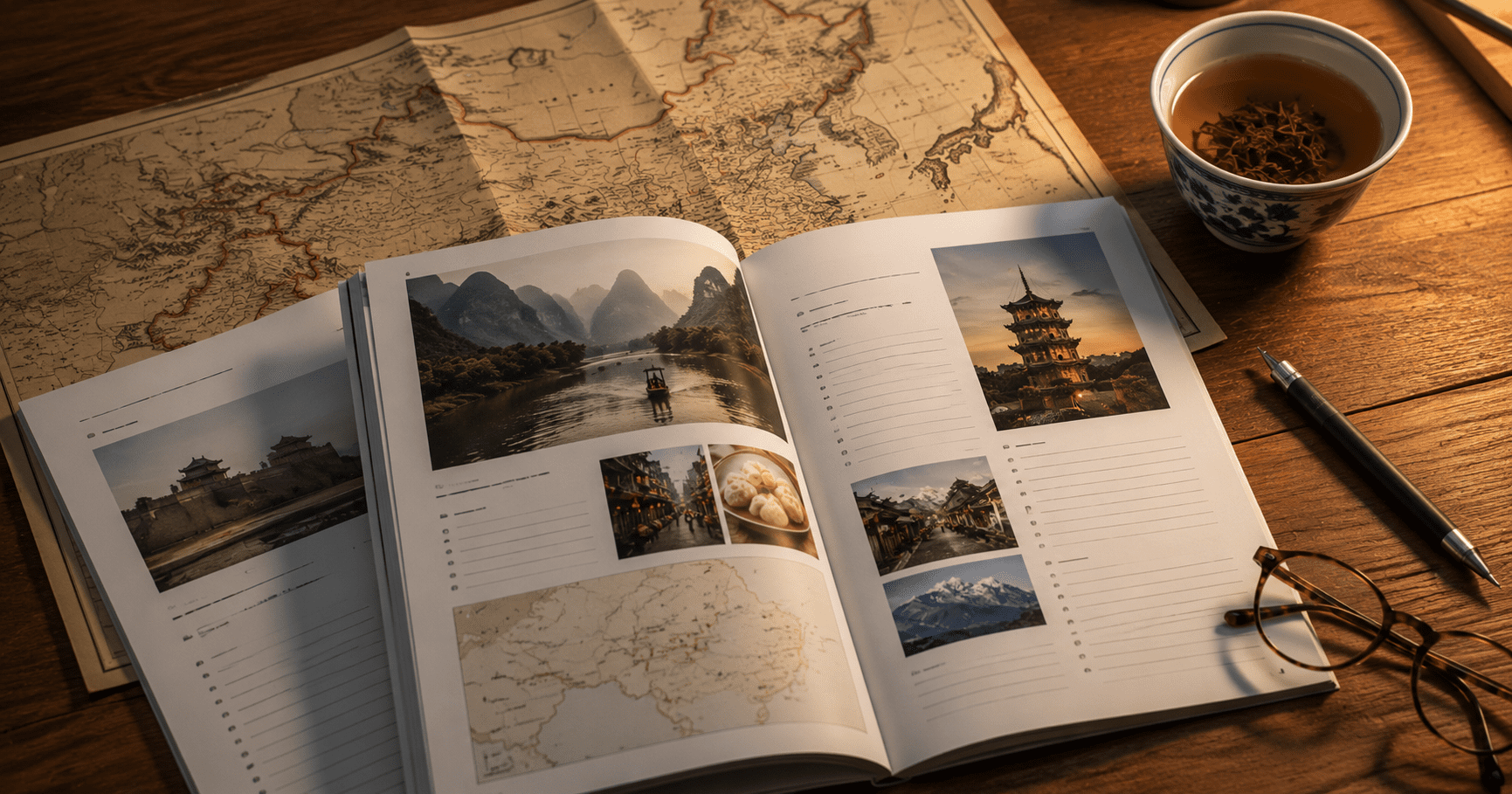
Ten days can support a focused two-city China trip or a busier three-city route. Count usable hours before choosing: arrival, intercity transfers and your flight home are not full sightseeing days.
Start with flight times, not ten empty boxes
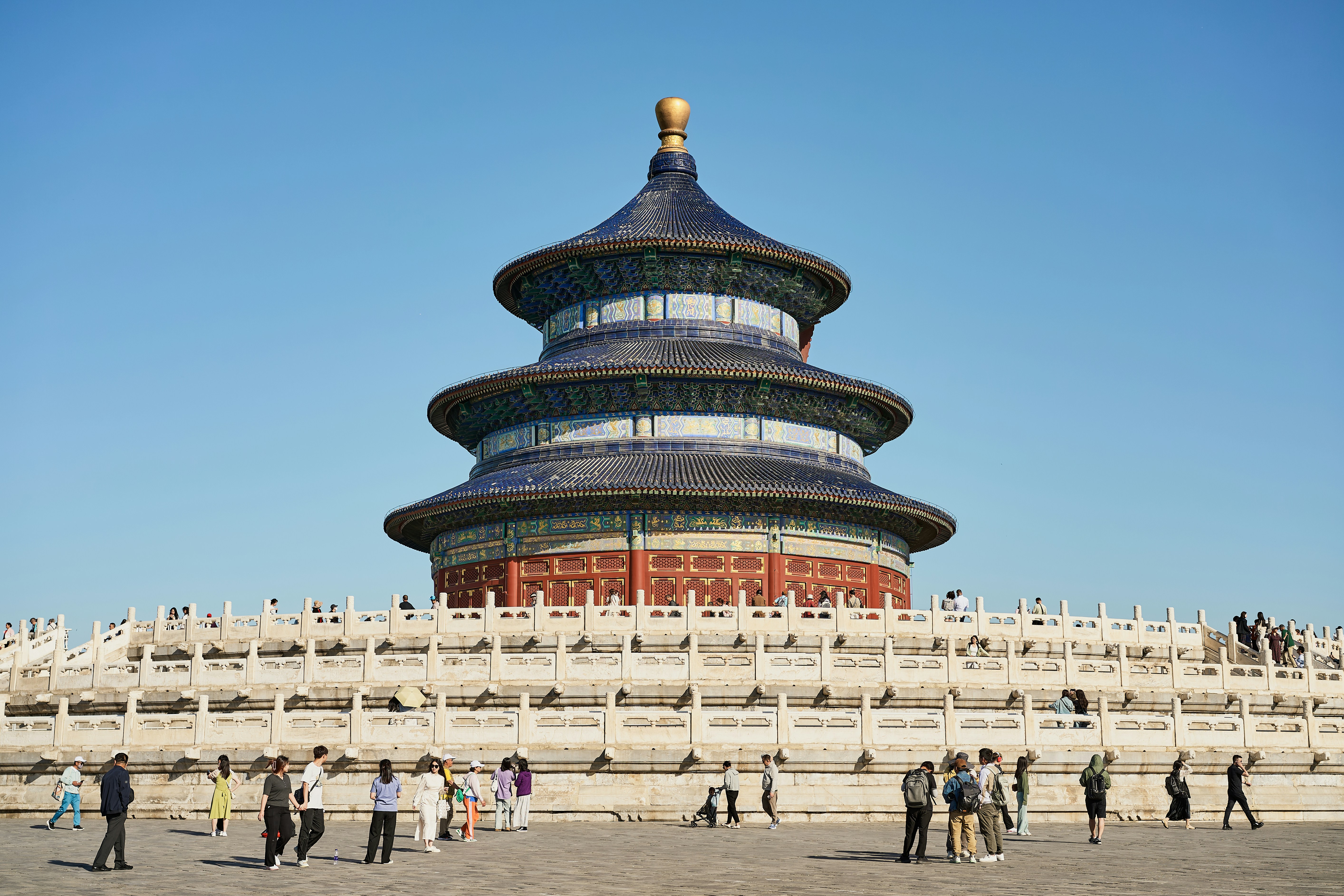
Write the landing airport and time, the flight leaving China, and the number of hotel nights. A trip described as ten days may have only eight unrestricted days once arrival recovery and departure are allowed for. A late landing changes the first hotel night; an early international departure can consume the final morning.
Keep the first day adaptable. Border processing, baggage, the airport transfer and sleep after a long flight all belong in the plan. Do not attach a prepaid attraction visit to an arrival time that has not been tested against these steps.
Choose between variety and room to breathe
| Route | Illustrative allocation | Tradeoff |
|---|---|---|
| Beijing + Shanghai | Beijing days 1–5; transfer and Shanghai days 6–10 | One intercity move; more flexibility for neighborhoods, recovery and weather |
| Beijing + Xi’an + Shanghai | Beijing days 1–4; Xi’an days 5–6; Shanghai days 7–10 | Two intercity moves; Xi’an has one main sightseeing day rather than two completely free days |
| Another two-city pairing | Choose from your actual entry/exit flights and interests | A familiar route is not automatically the right route for food, scenery or a slower trip |
These are allocations rather than a promise that any train, flight or attraction is available. Do not add a fourth city simply because a map makes the distance look small. Compare Xi’an and Chengdu if choosing a middle stop is the decision holding up your bookings.
Beijing: separate the city day from the Great Wall day
Group central sights geographically and treat a Great Wall outing as its own excursion until the transfer is known. Do not pair distant sites by comparing only their opening hours. A Palace Museum visit depends on its current reservation and identification instructions; leave an alternative if your preferred date is unavailable.
Choose the Wall section for walking ability, weather, transport and operating arrangements. A quieter or more remote section is not necessarily easier for children or older travelers. Use the Mutianyu versus Badaling comparison rather than assuming every section provides the same access.
Xi’an: give the main experience an actual time window
A transfer arriving during the afternoon does not leave a full day for the Terracotta Army outside the city. Place that outing on the clearest available day, then choose between the City Wall, museums, local food and a neighborhood walk for the other available hours. Avoid scheduling an assumed private or crowd-free dawn visit that is not offered by the venue.
Travel time includes checkout, getting to the station or airport, waiting, the journey and reaching the next hotel. An early departure may protect sightseeing time but cost sleep and make breakfast or luggage handling harder.
Shanghai: choose city time before adding an excursion
Use one compact city area per block rather than crossing the city repeatedly. A waterfront visit, a neighborhood walk and a food-focused evening can fit together more naturally than distant attractions selected from a top-ten list. Check current opening and reservation arrangements for the particular observation deck or museum you choose.
A nearby water-town or garden-city day trip is optional. Add it only after the city priorities, weather and departure transfer fit. A second local morning may be more valuable than another long trip with luggage.
Audit the transfers before booking
- Check exact station and airport names; a city name alone is insufficient.
- Compare train and flight journeys door to door, including hotel access, baggage and check-in.
- Check entry conditions for all mainland legs, including an exit to Hong Kong or Macao and return.
- Avoid a tight separate-ticket domestic connection to the international flight home.
- Keep at least one replaceable activity in each city for weather or an unavailable reservation.
Use the booking-order guide after the city order works. Flight fares, hotel cancellation terms and scarce attraction dates need to be compared together.
When to remove the third city
Prefer two cities if hotel changes are tiring, mobility is limited, you want longer meals and neighborhood walks, or your international flights already leave fewer usable days. Prefer three only when the additional experience matters enough to justify both transfers. The right choice is the route you can enjoy rather than the longest list you can print.
Turn this decision into a workable route
A ten-day plan becomes difficult when the flights, reservations and city ambitions compete for the same hours. LOCLYX is a China-based local team. We tailor a written plan to your dates, budget, interests, pace and constraints. Planning costs $19.9 per travel day; travel purchases are separate and we do not make reservations or provide ground services.
Use the planning framework to turn these choices into a city sequence. Compare the sample itinerary and pricing and scope before using Plan My Trip. Delivery and revision conditions are in the published policy.
Sources and scope

Editorial review: October 12, 2026. Routes and time allocations below are illustrative planning options, not documented customer cases, available packages or promises of a particular timetable.
- National Immigration Administration — check passport-specific entry rules and transit conditions
- China Railway 12306 — check live railway stations, schedules and ticket availability