Choose the access pattern that fits your party
| Situation | Useful next step | Important limit |
|---|---|---|
| Rail access matters most | Compare the full Badaling station-to-entrance journey. | The train ride is not the entire excursion. |
| Mutianyu is your preferred setting | Confirm the transfer and operating access options. | It is not a guarantee of a quiet holiday visit. |
| Mobility is limited | Verify slopes, stairs and the actual accessible route. | A lift or cable car does not remove every walking barrier. |
The short answer
For most first-time visitors who are comfortable walking and willing to plan transport in advance, Mutianyu is the better default. It has an enclosed cable car, a toboggan, strong mountain scenery, and routes that are easy to shorten when someone gets tired.
Badaling is a better fit if you want to travel from Beijing by high-speed rail, need clearly documented accessibility facilities, or value mature services for international visitors. The Wall itself is no less impressive, but the site handles more visitors and feels more like a large, standardized attraction.
Both are restored Ming-era sections open to ordinary visitors. Your choice should depend on transport, mobility, and who is traveling with you.
Mutianyu vs Badaling at a glance
| What matters to you | Mutianyu | Badaling |
|---|---|---|
| Best default for a first visit | Usually the better choice for most travelers | Better when rail access or accessibility is the priority |
| Getting there from Beijing | Public transport normally involves a transfer; tourist shuttle services also operate | High-speed rail serves Badaling Great Wall Railway Station |
| Experience on the Wall | Forested ridges, closely spaced watchtowers, cable car and toboggan | Mature facilities, north and south routes, and a larger visitor operation |
| Lower physical effort | Enclosed cable car to the area around Watchtower 14, followed by a short walking route | Ramps, elevators, accessible viewing areas and wheelchair services, but the entire Wall is not step-free |
| Traveling with children | The toboggan is appealing, subject to weather and operating rules | Concentrated services make last-minute changes easier |
| Avoiding dense tour-group traffic | Usually the better option, although holidays are still busy | Beijing’s official tourism materials describe it as the Great Wall section receiving the most visitors |
| Passport and payment support | Real-name ticketing; foreign visitors should carry the passport used for booking | Passport ticketing, cash, foreign bank cards at supported terminals, and English-language service windows |
When Mutianyu fits your visit
Mutianyu gives you more flexibility once you arrive. The Beijing Municipal Government’s Mutianyu guide lists dense watchtowers, double-sided battlements, high vegetation coverage, an enclosed cable car and an alpine slide. The view is dominated by the Wall, mountain ridges and forest rather than a large visitor complex.
The physical effort is also easier to control. Mutianyu’s official website recommends a low-effort route that starts at the north ticket gate, takes the cable car to the area around Watchtower 14, and returns by cable car after a short visit. Travelers with more energy can continue toward the higher watchtowers, but there is no reason to turn a Great Wall visit into an endurance test.
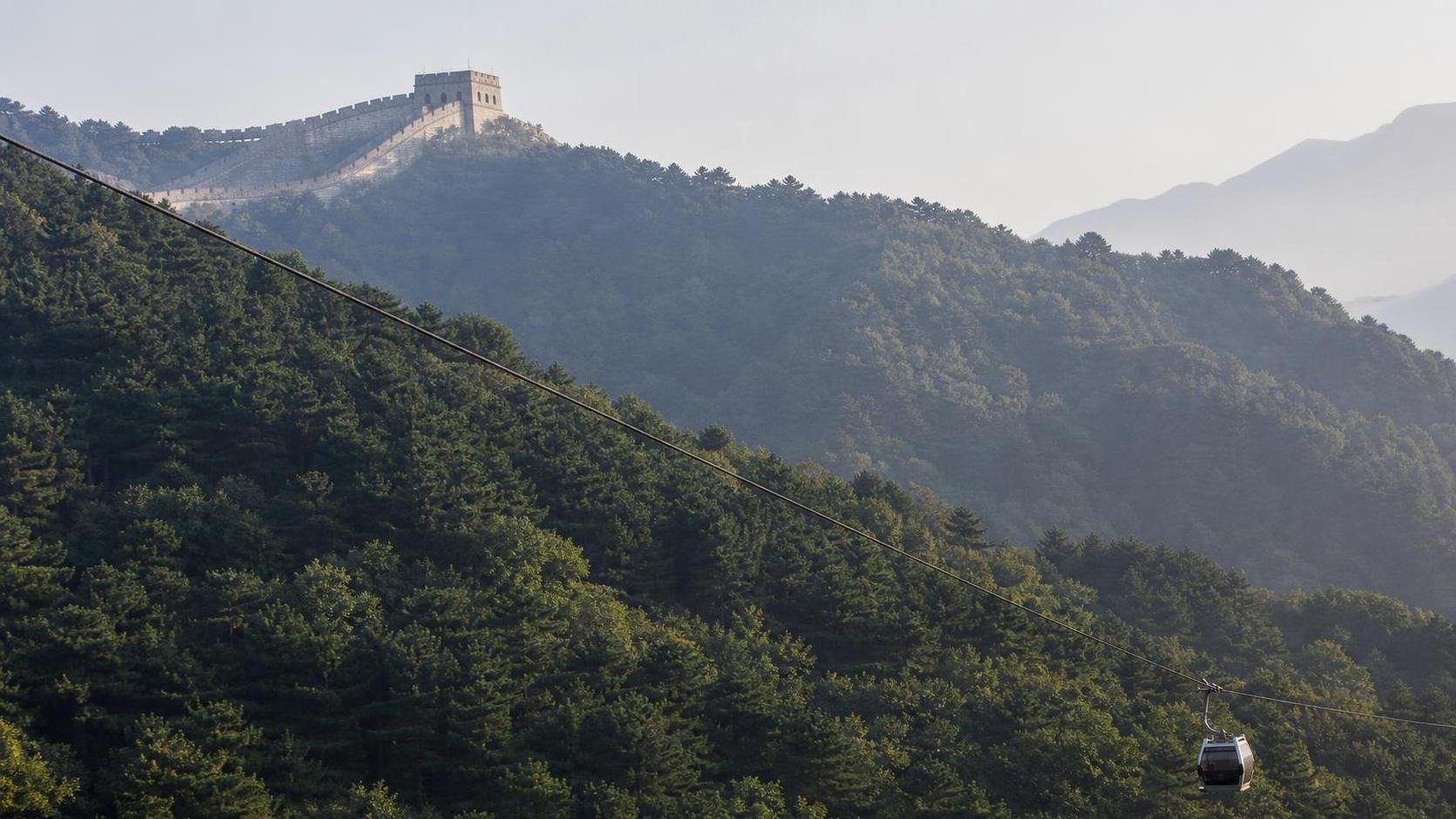
The trade-off is ground transport. Beijing’s official route uses the 916 Express Bus from Dongzhimen to Huairou Beidajie, followed by a local bus to the scenic area. That is manageable, but it requires more attention than boarding a direct train. Families, travelers unfamiliar with Chinese stop names, and anyone working with a tight morning schedule should plan this part before leaving the hotel.
There is another detail people often discover too late. According to Mutianyu’s official visitor notice, the shuttle station is about three kilometers from the ticket gate. Admission, the shuttle bus, the enclosed cable car, the ropeway and the toboggan are separate products. Some are run by different companies, and their tickets are not interchangeable. Decide how you want to go up and down before buying the extras.
When Badaling is the better choice
You want to travel independently by high-speed rail
Badaling Great Wall Railway Station is a practical advantage. Beijing’s culture and tourism authority lists a journey of about 34 minutes from Beijing North Railway Station. Departure station, timetable and seat availability can change, so check the live schedule in Railway 12306 before committing to the day.
The train solves only the intercity leg. You still need time to reach Beijing North or Qinghe station, pass security, get from Badaling station to the scenic entrance, and wait for the return train. Even so, rail usually gives you more predictable timing than a road journey affected by Beijing traffic.
Someone in your group needs mobility support
Beijing’s official tourism page for Badaling lists powered wheelchairs, manual wheelchairs, strollers and walking sticks. It also describes accessible parking, paths, ramps, elevators and viewing platforms. For a wheelchair user or someone with a significant mobility limitation, those details are more useful than a general promise that a site “has a cable car.”
The accessible facilities do not make the entire ancient Wall step-free. Slopes and stairs remain, and weather may change which areas are usable. Contact the scenic area before booking to confirm the accessible entrance, the section available that day, and any companion requirements.
You are concerned about passports, payment or language support
Badaling publishes clearer information for international visitors. The Beijing Municipal Government’s service notice says foreign visitors can buy and validate tickets with passports. Ticket offices support cash, mobile payment and some foreign bank cards, and the scenic area has Chinese-English service windows. Beijing’s English-language 12345 page also provides a foreign-tourist booking route and a foreign-language hotline.
No page can guarantee that every overseas bank card will work. The useful part is having more than one backup. Whichever section you choose, bring the original passport used for the reservation instead of relying on a photo on your phone.
A cable car does not make the Wall flat
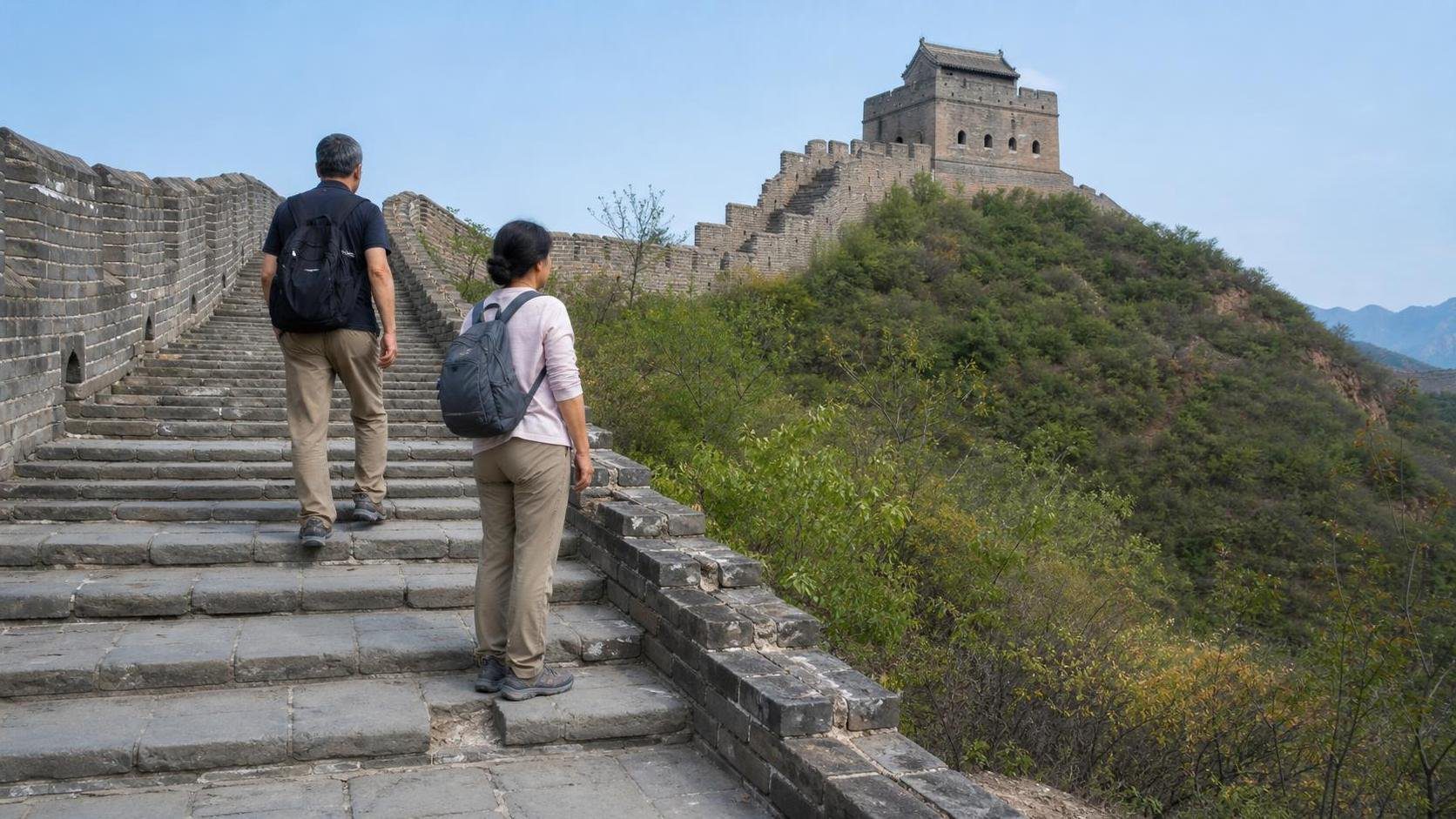
A cable car removes part of the climb from the valley. After you get off, there are still stone steps, slopes, wind and foot traffic. Someone who can ride a cable car may still tire quickly on repeated steps.
Match the route to the people traveling with you:
- Adults and couples with ordinary fitness: Mutianyu is usually the better fit because you can choose a short or longer walking route on the day.
- Families with children: choose Mutianyu if the toboggan matters, but use the cable car instead if the child is too young, the weather changes, or the slide is closed.
- Wheelchair users or travelers who cannot manage stairs: start by confirming Badaling’s accessible route rather than relying on promotional photos.
- Travelers with only half a day who depend on public transport: Badaling’s railway connection is easier to time, but secure both outbound and return seats first.
Neither section will be quiet on a major holiday
Both sections can be busy on public holidays and popular dates. Choose by the actual transport and access pattern, and check live reservations and operating notices; neither location guarantees a quiet visit.
If your date falls on a Chinese public holiday, a summer weekend or the autumn foliage season, choose a weekday when possible and check official opening, ticketing and lift information before leaving. Strong wind, thunderstorms, ice or other severe weather can suspend cable cars, the toboggan or part of the walking route. Follow the staff and the day’s official notices instead of forcing a fixed plan.
The final choice
Choose Mutianyu when no special constraint points elsewhere. It keeps the focus on the Wall and the mountain setting, and the walking route is easy to shorten.
Choose Badaling when rail access, mobility support or mature international-visitor services matter more. It is the more predictable operation for those specific needs.
Your Great Wall day should also fit the rest of your China travel plan: hotel location, nearby sights, the next railway station and the group’s energy. If your Beijing schedule is already crowded, first decide how many days you actually need in China. A traveler staying in Dongcheng and leaving from Beijing West the next morning may need a different answer from a family staying in Chaoyang whose children want the Mutianyu toboggan.
Prices and availability verified as of July 28, 2026. Subject to change.
Main public sources
- Beijing Municipal Government: Mutianyu Great Wall
- Mutianyu official website: Notice to Visitors
- Beijing Municipal Government: Badaling Great Wall
- Beijing Municipal Government: Payment and ticketing services at Badaling
- Visit Beijing: Badaling facilities and accessibility
- UNESCO World Heritage Centre: The Great Wall
Related decisions for this part of the trip
- China destination-choice guide
- 10 Days in China: Choose a Route That Fits Your Flights
- China Attraction Tickets: Passport Booking and Entry
- How Many Days Do You Need for a China Trip?
Turn this decision into a workable route
A Great Wall day needs transport, access and recovery time suited to the traveler. LOCLYX is a China-based local team. We tailor a written plan to your dates, budget, interests, pace and constraints. Planning costs $19.9 per travel day; travel purchases are separate and we do not make reservations or provide ground services.
Use the relevant guides above to settle this question, then compare the full planning deliverable. Compare the sample itinerary and pricing and scope before using Plan My Trip. Delivery and revision conditions are in the published policy.
Update note
Editorial review: October 12, 2026. Use official and provider references for the route and service they cover. Operational availability, individual eligibility, medical decisions and local procedures require the appropriate current or professional check.