Evidence checked: September 2, 2026. Travelers should not drink water directly from an ordinary tap in China. Use sealed bottled water, water from a clearly identified drinking-water dispenser, or water that has been properly boiled in a clean kettle. If you cannot confirm the source or treatment, choose another option rather than guessing.
Short answer: do not treat a hotel, restaurant, train-station or washroom tap as drinking water unless the venue clearly says it is potable. Check the seal on bottled water, distinguish a maintained drinking-water machine from a sink, and ask before accepting ice when the source matters to you.
Choose a water source you can identify
| Situation | Useful next step | Important limit |
|---|---|---|
| Sealed bottled water | Check the intact seal and storage condition. | A familiar brand label alone does not confirm a refilled bottle. |
| Venue drinking-water supply | Ask whether it is intended for drinking and how it is provided. | A bathroom tap is not a verified drinking-water point. |
| A medical vulnerability or uncertain source | Follow your clinician’s travel guidance and choose a suitable alternative. | Do not assume all contaminants disappear through boiling. |
Key Takeaways
- Do not drink directly from an ordinary tap.
- Use sealed bottled water, clearly identified drinking water, or properly boiled water.
- Do not assume every hotel kettle is clean or functioning correctly; inspect it first.
- Using bottled water for brushing your teeth is the conservative choice when you are sensitive or uncertain.
- Ask about the water source for ice instead of judging safety from the venue’s price or appearance.
- A dedicated drinking-water dispenser is not the same thing as a washbasin tap.
- Persistent vomiting, diarrhea or dehydration needs medical attention rather than another travel hack.
Can You Drink Water Directly From the Tap in China?
No. Visitors should not assume that ordinary tap water is ready to drink. Beijing’s official English-language guidance says that tap water must be boiled before drinking and recommends bottled or purified water for visitors. The U.S. Department of State’s China travel information also advises that tap water is generally not safe to drink.
This does not mean the water coming from every tap looks dirty or that touching it is dangerous. The practical distinction is simpler: water suitable for washing is not automatically water you should swallow. Treat a sink tap as a washing source unless the property specifically identifies it as potable drinking water.
What Water Should Travelers Use Instead?
Use the clearest available option rather than trying to infer safety from appearance. Clear water can still have an uncertain source, while a properly maintained dispenser may provide drinking water without looking special.
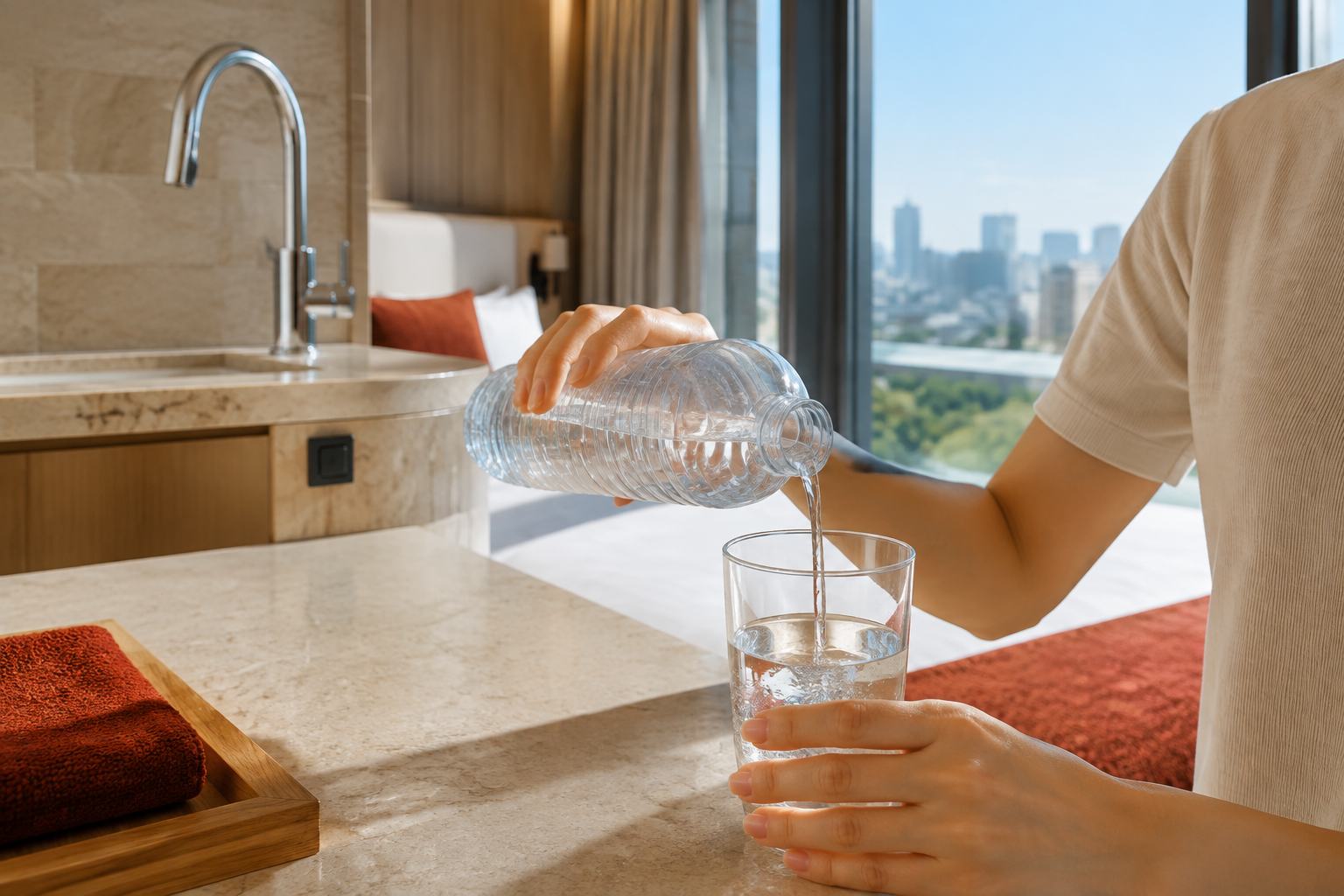
- Sealed bottled water: check that the cap ring or seal is intact before drinking.
- Clearly marked drinking water: use a dispenser or tap only when the venue identifies it for drinking and maintains it for that purpose.
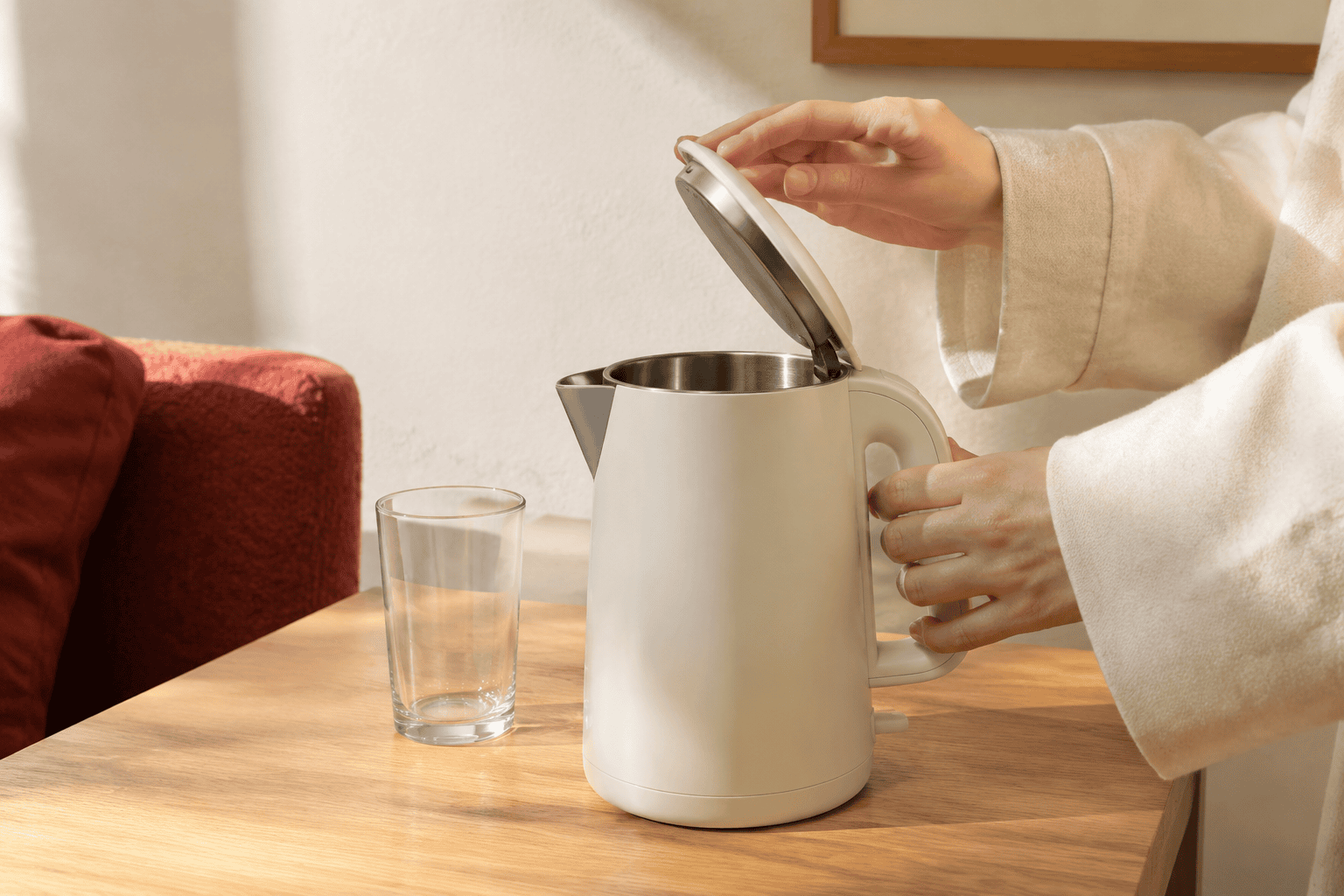
- Properly boiled water: inspect the kettle, bring the water to a full boil and let it cool safely.
- Ask the venue: when a glass, carafe, dispenser or ice source is unclear, ask before using it.
- Choose another source: do not drink from an ordinary sink or washroom tap because it is convenient.
Carry one usable bottle on long days, especially in hot weather. Our China summer packing guide covers the wider heat and clothing problem; this guide deals only with deciding which water to drink.
Is Boiled Tap Water Safe to Drink?
Boiling is a common practical option when the venue provides a clean, working kettle. Beijing’s visitor guidance notes that many hotels provide bottled water, boiled water, an electric thermos or a kettle. That is a useful city-specific baseline, not a promise that every hotel in China supplies the same equipment.
- Look inside the kettle before filling it.
- Do not use it if you see residue, foreign material, damage or an unusual smell.
- Use water from the room’s cold tap unless the property gives different instructions.
- Bring the water to a full boil rather than merely warming it.
- Pour and cool it in a clean container where it cannot be confused with untreated water.
- If the kettle or source is doubtful, use sealed bottled water instead.
Boiling helps address biological contamination, but it is not a magic repair for every possible chemical or plumbing problem. Do not use visibly discolored water, and report an unusual smell, color or sediment to the property.
Should You Use Bottled Water for Brushing Your Teeth?
Using bottled water is the conservative choice, particularly for travelers with a sensitive stomach, young children, anyone who may swallow the water, or anyone who simply wants to remove uncertainty. Beijing’s official visitor page notes that visitors commonly use bottled water for brushing their teeth.
Do not turn this into a panic rule. Washing your hands or showering is a different exposure from drinking a glass of untreated tap water. The useful habit is to avoid swallowing water from a source you have not identified as drinkable.
What About Ice in Restaurants and Hotels?
Do not assume that ice is safe because a restaurant is expensive, and do not assume that it is unsafe because a venue is small. The building, menu and room rate do not prove the water source. If the source matters to you, ask whether the ice is made from purified or drinking water. If you cannot confirm it, order the drink without ice.
The same logic applies to water already poured into an open glass or carafe. Ask whether it is bottled, boiled, filtered or directly from the tap. A sealed bottle removes more ambiguity than an unlabeled container.
How Do You Identify a Drinking-Water Dispenser?
Use context and venue instructions, not the shape of the machine. A dedicated unit in a waiting area, hotel corridor or lounge may provide drinking water, but equipment and labeling vary. Look for a drinking-water label or ask staff. Do not refill from a washroom basin or an ordinary cleaning sink.
- Confirm that the machine is intended for drinking water.
- Check whether it dispenses hot, warm or cold water before placing your bottle.
- Use a heat-safe container for hot water.
- Keep the bottle opening away from the dispenser nozzle.
- Move on if the unit is damaged, dirty, leaking or not clearly in service.
How Should You Handle Water on Trains and Long Travel Days?
Start with enough sealed drinking water for the first part of the journey, then refill only from a source you can identify. Stations and trains may have shops or water equipment, but availability, operating condition and access vary. Do not build your hydration plan around one machine being available.
- Fill or buy water before entering a long queue.
- Keep a small backup rather than finishing everything at once.
- Use only a container designed for the water temperature.
- Do not confuse a washbasin tap with a drinking-water outlet.
- Check the next reliable refill point before a long transfer.
What Should You Check on a Bottled-Water Seal?
Check the cap and tamper ring before drinking. The closure should feel intact rather than already loosened, and the bottle should not leak or appear refilled. Buy from an established shop, hotel, restaurant or transport outlet when possible. If the bottle looks opened or altered, replace it.
What If You Develop Vomiting, Diarrhea or Dehydration?
Stop treating it as a water-selection problem if symptoms become persistent or severe. Seek medical help for repeated vomiting, inability to keep fluids down, signs of dehydration, blood in stool, high fever, severe abdominal pain, confusion, fainting or another worrying change. Children, older adults and people with underlying conditions may need help sooner.
Our getting sick in China guide explains pharmacies, outpatient care, hospitals, payment and records. Travel insurance terms also vary, so review the practical checks in our China travel insurance guide before you need treatment.
The 20-Second Water Safety Checklist
- Ordinary tap: do not drink directly.
- Bottled water: check the seal.
- Kettle: inspect, fully boil and cool safely.
- Dispenser: confirm it is for drinking water.
- Ice or open carafe: ask about the source or skip it.
- Long journey: carry a backup and identify the next refill point.
- Persistent or severe symptoms: seek medical care.
Bottom Line
Do not drink directly from an ordinary tap in China. Use sealed bottled water, clearly identified drinking water or properly boiled water, and choose the less ambiguous option whenever the source is unclear. That simple rule works better than trying to judge water safety from a hotel rating, restaurant appearance or unfamiliar machine.
Official Sources and Update Note
- Evidence checked: September 2, 2026.
- Beijing official English visitor FAQ: says visitors should use bottled or purified water and that tap water must be boiled before drinking.
- U.S. Department of State China travel information: advises that tap water is generally not safe to drink and recommends checking the seal on bottled water.
- Water systems, hotel equipment and venue facilities vary. Follow current property instructions and use a clearly identified drinking-water source.
Related decisions for this part of the trip
- Food-ordering guide
- Food Allergies in China: Ingredients and Meal Backups
- Getting Sick in China: Care, Payment and Records
- How to Apply for a China Tourist Visa in the U.S.
Turn this decision into a workable route
Reliable drinking-water stops, rest and suitable meals should be part of the actual day’s route. LOCLYX is a China-based local team. We tailor a written plan to your dates, budget, interests, pace and constraints. Planning costs $19.9 per travel day; travel purchases are separate and we do not make reservations or provide ground services.
Use the relevant guides above to settle this question, then compare the full planning deliverable. Compare the sample itinerary and pricing and scope before using Plan My Trip. Delivery and revision conditions are in the published policy.
Update note
Editorial review: October 12, 2026. Use official and provider references for the route and service they cover. Operational availability, individual eligibility, medical decisions and local procedures require the appropriate current or professional check.