
For a U.S. tourist visa application, identify the Chinese embassy or consulate responsible for your residence, follow its current online COVA instructions, and submit the passport physically when the application reaches that stage. Do not use an old list of supposed U.S. visa centers.
This is the application workflow. If you are still deciding whether your trip needs a visa or qualifies for transit, begin with China entry options for U.S. citizens.
1. Find the office for your residence

Consular jurisdiction determines the office. The embassy publishes its own jurisdiction and refers applicants to the applicable consulate for other areas. Check the current official coverage rather than choosing the nearest city on a travel blog.
The embassy’s published Visa Office address is 2201 Wisconsin Avenue NW, Suite 110, Washington, DC 20007. That is not a national submission address for every U.S. resident. Verify jurisdiction, office hours and current closure notices before arranging travel or an agent.
2. Prepare the current documents, not an outdated checklist

The embassy’s new COVA guidance requires passport biographical information, a passport with more than six months’ validity and at least two blank visa pages, and the applicable supporting documents. Examples include proof of U.S. residence, the most recent Chinese visa or residence permit, and legal U.S. status for non-U.S. applicants. Former Chinese nationals and some minors have additional requirements.
For an ordinary U.S. L-tourist application, routine flight, hotel, itinerary and invitation documents were removed from the standard checklist from January 1, 2024. The responsible office can request additional materials case by case. A paid itinerary is not a universal visa requirement.
3. Complete the online form and preliminary review
Use the COVA link on the responsible office’s official site. The embassy launched its newer online procedure on September 30, 2025. Enter truthful information matching the passport and upload the materials requested by that live application.
Follow requests to correct or supplement the application. Do not invent reservations or put “N/A” into a field merely because an old guide says to. Save the application reference and monitor the status; successful online submission is not a visa approval or permission to board a flight.
4. Submit the passport when instructed
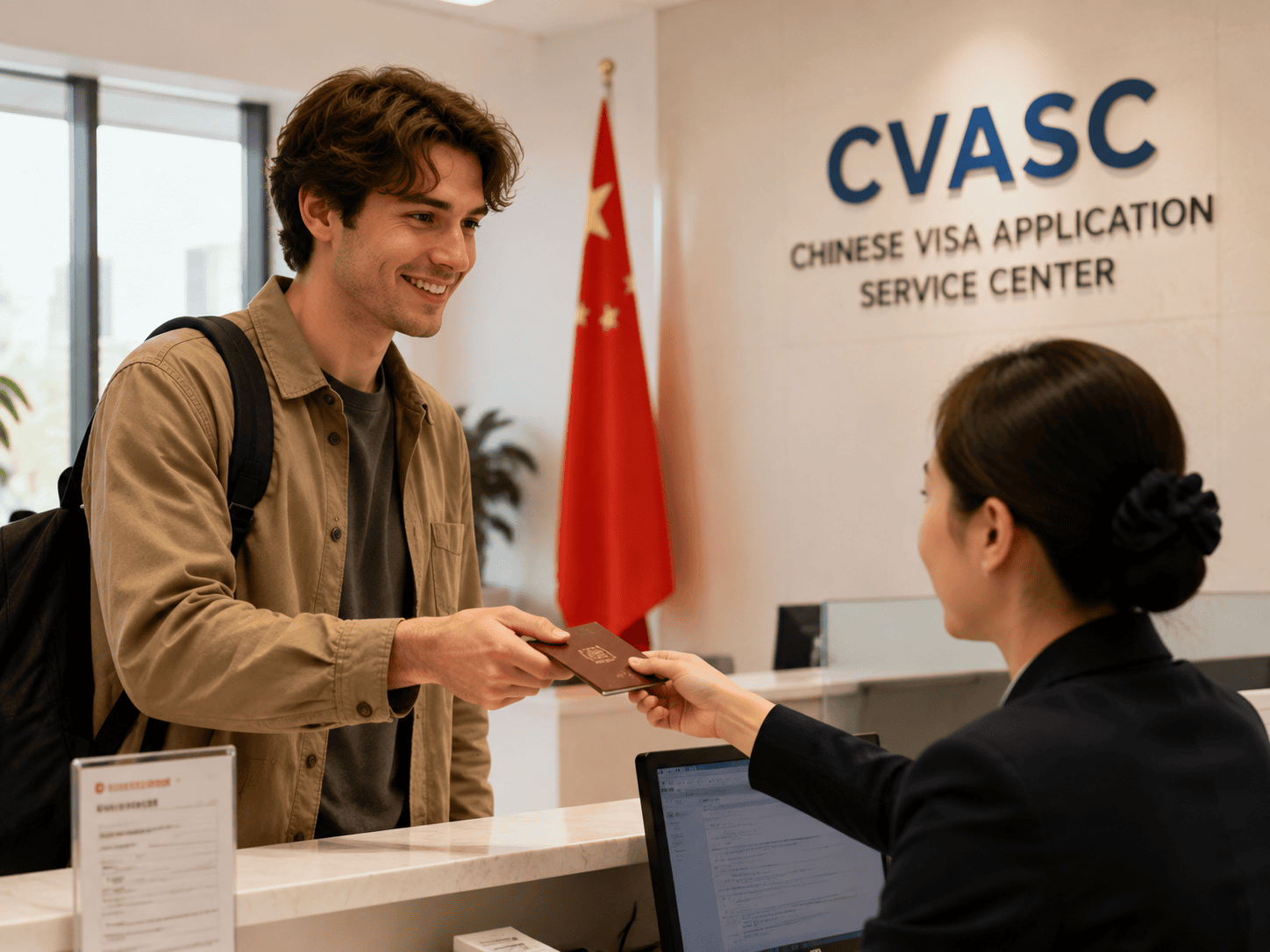
Under the embassy procedure, wait for “Passport to be submitted,” then the applicant or an agent physically submits the required documents at the Visa Office. Bring the original passport, the barcode information page showing the appropriate status, and any originals or earlier passport requested for the case.
Online review does not eliminate passport submission. Ask the responsible office about a representative or other permitted arrangements if you cannot attend. Do not assume mail-in submission, biometrics exemptions or appointment rules from another jurisdiction apply to yours.
5. Budget for fees and processing without promising a flight date
| Published embassy reference | Current guidance | Limit |
|---|---|---|
| U.S. regular visa fee | $140 through December 31, 2026 under the reduction notice | Check later applications and the responsible office’s notice |
| Express fee | An additional $25 | Availability and eligibility depend on the office and case |
| Processing reference | Four business days regular; three express after physical submission | Not the total online-to-passport timeline or a guarantee |
| Extra purchases | Agent, courier or travel costs if you choose them | Separate from the consular fee |
Some applications require longer examination with no fixed completion date. Do not schedule a restrictive departure by counting only the reference processing days. The embassy lists accepted card and money-order/cashier-check payment methods; confirm the current office instructions before collection.
6. Collect and check the issued visa
Follow the “Passport to be collected” status and pickup instructions. Check your name, passport number, visa category, validity, entry count and permitted stay before leaving. Report an apparent error to the issuing office promptly.
A ten-year validity, where issued, is not a ten-year stay. Do not assume identical terms for every applicant. Keep the passport and visa accessible during travel and check the airline’s document requirements.
Keep the application stage separate from the trip-planning stage
| Your situation | Next action | What remains unconfirmed |
|---|---|---|
| You have not selected the responsible office | Check jurisdiction using your residence and that office’s official instructions | The nearest city is not automatically your office |
| Online submission is under review | Follow the live application’s requests and status | A submitted form is not approval or a finished processing clock |
| The passport submission stage is reached | Follow the responsible office’s physical submission instructions | Do not assume postal or representative rules are the same everywhere |
| Your passport is ready for collection | Follow collection instructions and inspect the issued visa | Do not infer stay length from the visa’s overall validity |
Illustrative planning decision: if you have only submitted the online form, do not work backward from the published passport-processing reference as though the visa must be ready four business days later. Keep a list of which bookings can be changed while the application is pending. A paid LOCLYX itinerary is optional travel planning; it does not accelerate consular review or replace required documents.
7. Prepare the trip separately from the application
After the entry basis is settled, organize first-night accommodation, airport transfer, payment and train bookings. Use the official arrival-card guide and airport arrival sequence. Accommodation registration is a separate requirement after arrival, not the visa application itself.
Turn this decision into a workable route
A valid visa answers entry questions; it does not decide a sensible city order or solve arrival-day logistics. LOCLYX is a China-based local team. We tailor a written plan to your dates, budget, interests, pace and constraints. Planning costs $19.9 per travel day; travel purchases are separate and we do not make reservations or provide ground services.
Start with the China planning guide. We provide itinerary planning, not visa processing, reservations or guaranteed approval. Compare the sample itinerary and pricing and scope before using Plan My Trip. Delivery and revision conditions are in the published policy.
Sources and scope
Editorial review: October 19, 2026. Practical checklists are planning guidance, not a guarantee of eligibility, availability or a particular outcome.
- Chinese Embassy in the U.S.: application guidance — jurisdiction, COVA stages, documents, office and processing references
- Chinese Embassy in the U.S.: fee notice — reduced fees extended through 2026
- Embassy: simplified L-visa documents — standard document change from January 1, 2024