
You can take a power bank on a domestic flight in mainland China, but check the device itself before packing it. Airport security will focus on four things: a clear CCC (3C) mark, whether the device is part of a recall, its watt-hour rating, and whether it is in your carry-on bag.
Use this order:
- Make sure the CCC mark is clearly visible on the power bank.
- Check that its brand, model, batch, or manufacture date is not covered by a recall.
- Confirm that it is no more than 100Wh. A power bank over 100Wh and up to 160Wh requires airline approval, and each passenger may carry no more than two. Do not bring one over 160Wh.
- Put it in your carry-on bag, never in checked baggage, and do not use it during the flight.
Missing any one of these checks may stop the device at security. Buying a power bank in the United States or using it for years without trouble does not change the rule. CE, UL, and FCC marks do not substitute for CCC. Since June 28, 2025, the Civil Aviation Administration of China has prohibited passengers from carrying power banks with no CCC mark, an unclear CCC mark, or a recalled model or batch on domestic flights.
Check the marking, rating and airline instructions
| Situation | Useful next step | Important limit |
|---|---|---|
| Missing or unclear CCC mark | Check the domestic-flight notice before leaving for the airport. | A capacity label alone is not the complete domestic acceptance test. |
| Recalled model or series | Confirm the manufacturer and regulator’s recall status. | A genuine-looking certification mark does not override a recall. |
| Accepted battery | Follow the carrier’s carry-on, storage and in-flight-use instructions. | International and domestic segments may apply different checks. |
Check the Device, Not the Box or Order Page
“3C” and “CCC” refer to the same China Compulsory Certification system. At security, the relevant markings are the ones on the power bank you are carrying. An Amazon order, a product page, or a promotional image on the packaging is not a substitute.
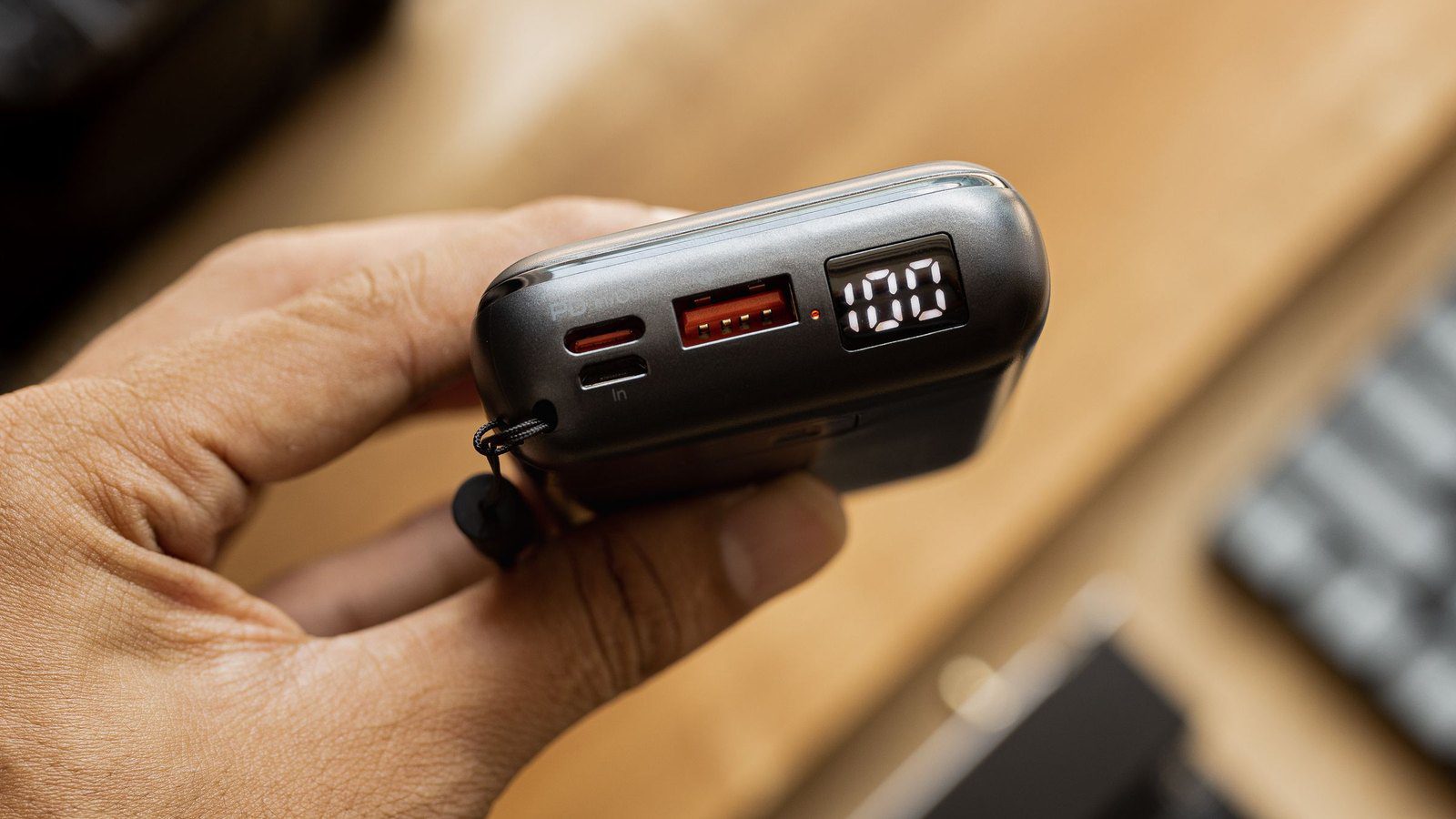
Turn the device over and make sure you can read:
- the CCC mark;
- the brand and model;
- the rated energy in Wh;
- the rated voltage in V and capacity in mAh;
- the batch or manufacture date, if shown.
If the CCC mark or capacity information has rubbed off, there is no nationwide rule requiring security staff to accept an order screenshot, retail packaging, or handwritten figures instead. Replacing an unreadable device before departure is much safer than trying to explain it at the checkpoint.
This rule is separate from plug shapes and voltage compatibility. For help choosing plugs and chargers, see LOCLYX’s China power outlet and adapter guide. This article deals only with whether a power bank can pass security for a domestic flight in mainland China.
Capacity Is Judged in Wh, Not mAh Alone
China’s civil aviation rules use rated energy in watt-hours:
- 100Wh or less: Airline approval is not required, but the device must still have a clear CCC mark, must not be a recalled model or come from a recalled batch, and may travel only in carry-on baggage.
- Over 100Wh and up to 160Wh: You must obtain airline approval first, and each passenger may carry no more than two power banks in this range.
- Over 160Wh: You may not carry it.
- Rated energy cannot be confirmed: If Wh is not printed on the device and cannot be calculated from the other specifications printed on it, you may not carry it.
These capacity limits, carry-on requirement, and restrictions on in-flight use come from the CAAC’s current notice on passengers carrying power banks by air.
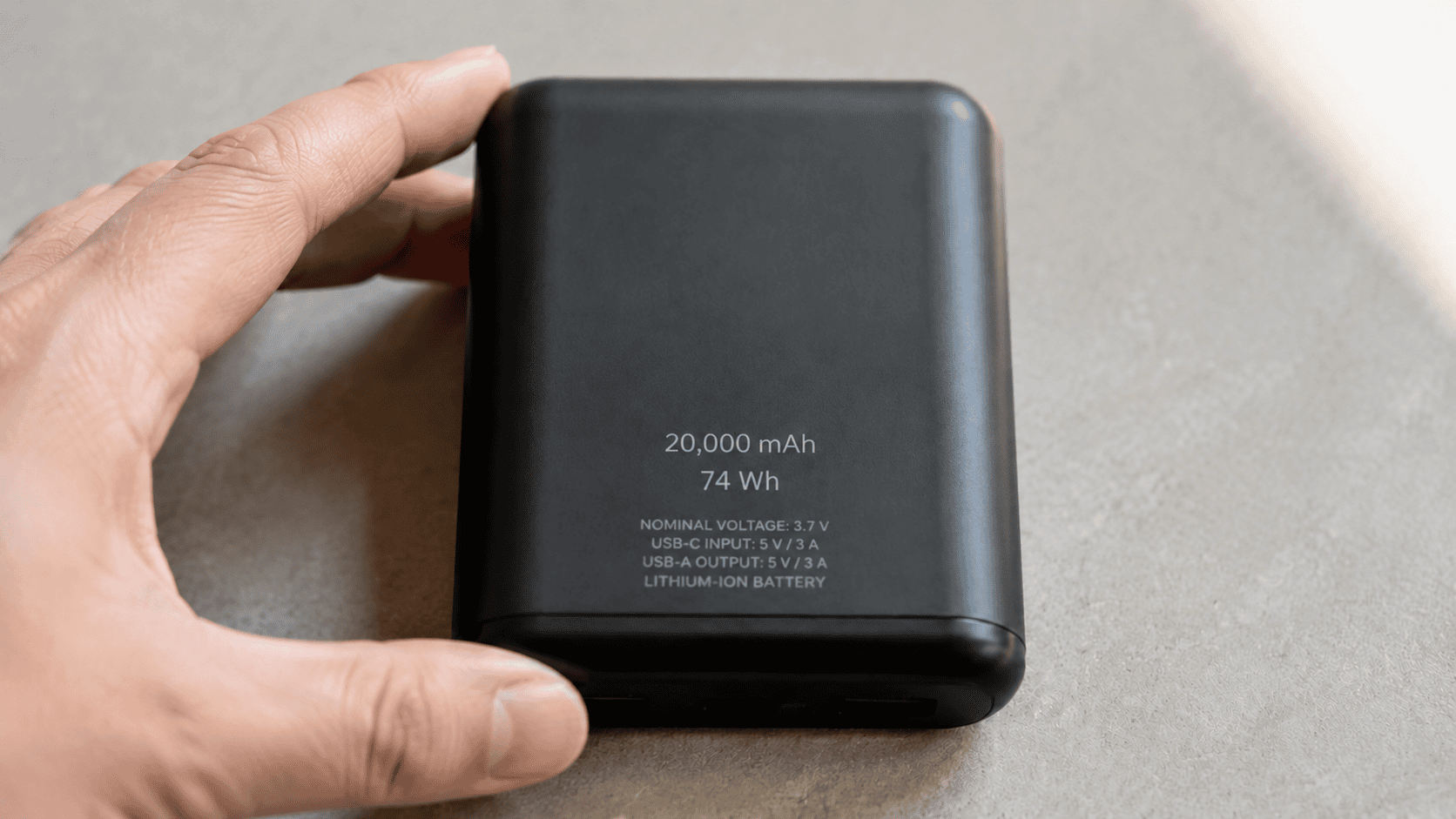
If the power bank does not show Wh but does show both voltage and capacity, use this calculation:
Wh = V × mAh ÷ 1000
For example, a power bank rated at 3.7V and 20,000mAh is 74Wh. The number “20,000mAh” alone is not enough because rated voltage can differ between devices. Use the specifications printed on the device and the resulting Wh figure. A handwritten calculation does not replace missing or unreadable original markings.
The CAAC’s nationwide notice does not set a universal 12-hour or 48-hour advance deadline for approval. Timing and application procedures depend on the operating airline’s current requirements. For a connecting or codeshare itinerary, find the “operated by” airline on your ticket and ask that carrier how to request approval.
Carry It On and Keep It Switched Off
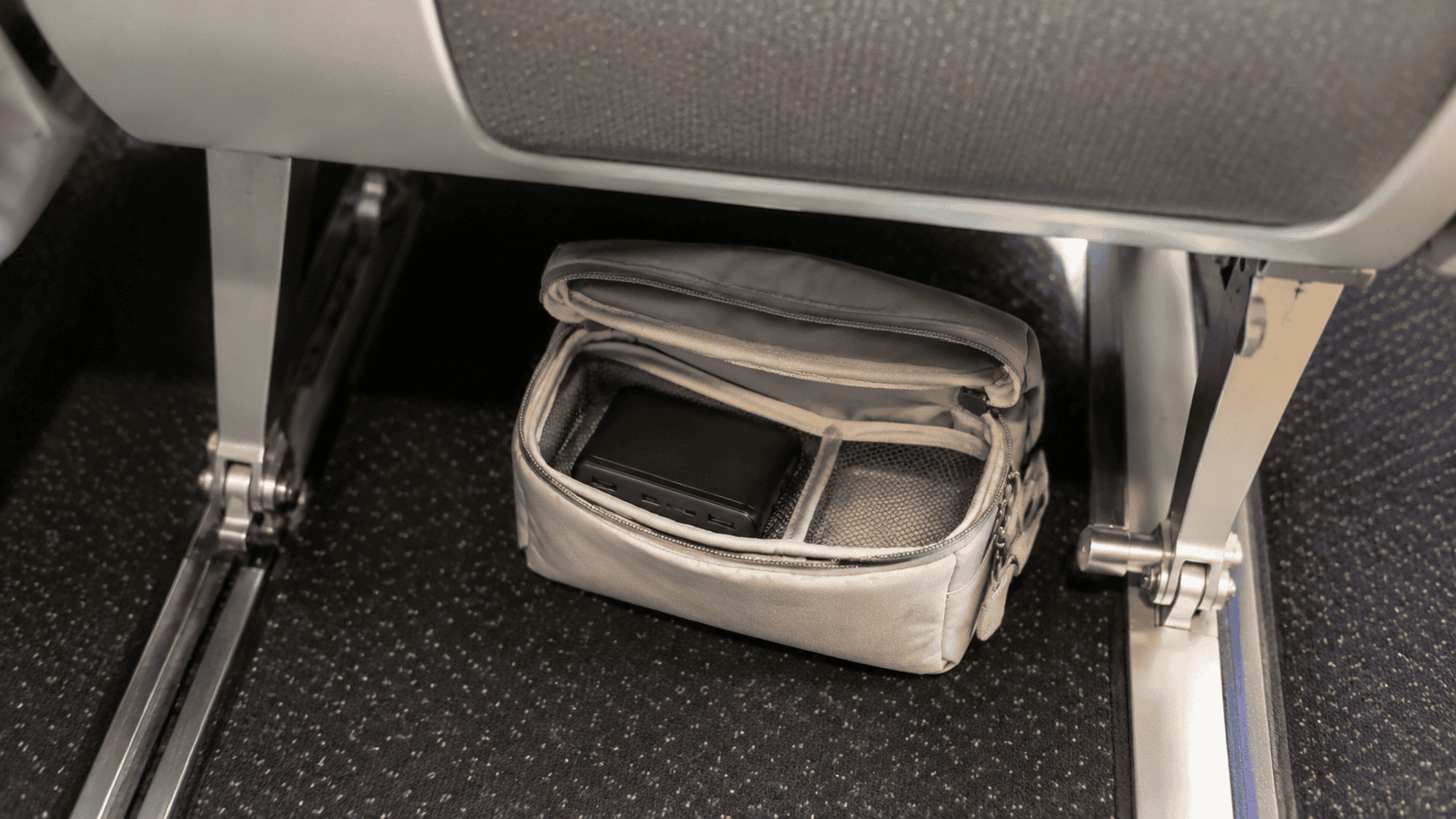
Never place a power bank in checked baggage. Pack it in a small carry-on bag where you can remove it easily if security staff need to inspect it. It must be for your personal use. During the flight, do not use it to charge a phone, tablet, or laptop. If it has a power switch, keep it switched off for the entire flight. China Eastern’s current rules also prohibit charging the power bank itself in flight.
An airline may impose stricter cabin requirements. Under China Eastern’s current policy, each passenger may carry no more than two power banks. The airline also says not to place them in the overhead bin; they should remain in carry-on baggage stowed under the seat in front of you or in another storage location designated by the airline. Check the carrier’s regulations on the safe transportation of lithium batteries before departure.
Keep the two layers of rules separate. The nationwide CAAC rule already limits each passenger to two power banks in the 100–160Wh range after airline approval. China Eastern separately applies a two-power-bank limit to all power banks it carries and adds its own overhead-bin restriction. Other airlines may use different approval procedures or cabin-storage rules, so check them individually.
If your trip also includes high-speed rail, do not apply the flight rules to the train. Rail travel has its own capacity limits and security procedures; see the China high-speed train luggage rules. Passing train security does not prove that the same power bank meets the CCC, recall, and airline-approval requirements for a domestic flight.
Check Recalls by Model and Batch, Not Brand Rumors
Claims that all power banks from a particular brand are “banned on flights” are usually too broad. The CAAC restriction covers recalled models or batches, not every product sold under a brand name. Compare the brand, model, manufacture date, and batch information on the device. Even within one brand or model, a recall may apply only to units made during specified dates.
Brand lists in blog posts can quickly become outdated because recalls may be added, expanded, or revised. Before departure, search the brand and model in the State Administration for Market Regulation’s defective product recall section, then compare the batch and manufacture dates in the official recall notice with the markings on your device. If you cannot find the model, the absence of online warnings does not prove compliance. Check the manufacturer’s notices as well and confirm with the operating airline.
A visible CCC mark does not guarantee that a power bank can fly. The CCC mark, recall status, Wh limit, carry-on requirement, and any additional airline rules must all be satisfied. None replaces the others.
What the 2026 QR Code Reform Actually Covers
A common online claim says, “Starting March 1, 2026, a power bank cannot board a flight without a CCC QR code.” The CAAC and certification-authority documents checked for this article do not support that blanket statement.
The Certification and Accreditation Administration’s pilot notice on traceability QR codes for CCC marks concerns certification marks and the circulation of regulated products. From March 1, 2026, pilot products that receive a new CCC certificate must add a traceability QR code to the right of the CCC mark before they leave the factory, are sold, are imported, or are used in other business activities. The notice also provides a transition for existing compliant products: products that already bear a CCC mark under the current requirements and enter circulation before March 1, 2027, do not have to be relabeled solely because of this reform.
This product-certification reform should not be rewritten as a rule that every passenger’s older power bank must now display a QR code. Passengers should still begin with the CAAC checks: a clear CCC mark, recall status, and Wh, followed by the operating airline’s requirements. A QR code may help trace a product, but it does not replace any of those checks and has not been announced by the CAAC as a new universal boarding requirement.
These Rules Cover Domestic Flights in Mainland China
The CAAC’s 2025 announcement refers to “domestic flights.” A mainland China flight such as Beijing to Xi’an or Chengdu to Shanghai should therefore be prepared for under the rules in this article. If you arrive in China on an international flight and then connect to a mainland domestic flight, the domestic segment must meet these requirements when you pass security for that flight.
The 2025 CAAC announcement does not say that every international flight departing China uses exactly the same CCC threshold. This article does not make one rule for international departures or routes involving Hong Kong, Macao, or Taiwan. Confirm those segments with the departure airport and the operating airline. One traveler getting a device through one airport does not prove that another airport, or even the same checkpoint on another day, will accept it.
For broader electronics and luggage preparation during warmer months, see the China summer packing list. If your packing list says to bring a power bank, you still need to complete the flight-specific checks in this article rather than looking at capacity alone.
What Happens If Your Power Bank Fails Security
CAAC rules do not provide an exception because your flight is about to depart. If a device has no clear CCC mark, is covered by a recall, exceeds the capacity limit, or falls in the 100–160Wh range without airline approval, do not expect security staff to let it through because you are short on time.
The CAAC requires airports to make reasonable arrangements for areas where passengers can abandon or temporarily store noncompliant power banks and to explain the procedure. This does not mean every airport guarantees free storage, a fixed holding period, mailing, or return service. Whether storage is available, what it costs, and how long the airport will keep the device depend on the arrangements in place at that airport. If no suitable service is available, you may have to give up the power bank. If airport procedures allow it and you have enough time, you may instead need to leave the security area and hand it to someone who is not flying.
“Deal with it at the airport” is not a reliable backup plan. Leaving security, disposing of or transferring the device, and lining up again can make you miss the flight. Complete these checks the night before a domestic departure. For a 100–160Wh power bank, contact the operating airline in advance and keep a record of its approval. The check-in desk may not be able to approve it immediately on the day of travel.
One Last Check Before You Leave
Hold the power bank under good light and check it in this order:
- Is the CCC mark clear?
- Is the model, batch, or manufacture date outside all current recalls?
- Is the Wh rating readable and within the limit?
- If it is over 100Wh and up to 160Wh, has the operating airline approved it?
- Have you moved it out of checked baggage and into your carry-on?
- Can it remain switched off and unused throughout the flight?
- Does the airline have any additional limits on quantity or cabin storage?
Finally, check the operating carrier shown on your ticket and open that airline’s latest baggage rules. If the power bank passes all seven checks, place it in your carry-on bag.
Policy and carrier requirements verified as of July 21, 2026. Rules can change. Recheck CAAC, your departure airport, and operating airline before travel.
Related decisions for this part of the trip
- Airport-to-hotel transfer guide
- China High-Speed Train Luggage Rules for Travelers
- China Domestic Flights With a Foreign Passport
- China Power Adapters: Check the Plug and the Device Label
Turn this decision into a workable route
Battery compliance needs to fit every flight segment and the devices used for travel. LOCLYX is a China-based local team. We tailor a written plan to your dates, budget, interests, pace and constraints. Planning costs $19.9 per travel day; travel purchases are separate and we do not make reservations or provide ground services.
Use the relevant guides above to settle this question, then compare the full planning deliverable. Compare the sample itinerary and pricing and scope before using Plan My Trip. Delivery and revision conditions are in the published policy.
Update note
Editorial review: October 12, 2026. Use official and provider references for the route and service they cover. Operational availability, individual eligibility, medical decisions and local procedures require the appropriate current or professional check.