LOCLYX FIELD NOTES / Jul 10, 2026

China Power Outlet Adapter: What US Travelers Need (2026)

GUIDES / JOURNALS 2026

China Power Outlet Adapter: What US Travelers Need (2026)

A china power outlet adapter, the kind that costs $10 at Best Buy, is the entire fix. A friend of mine once unpacked in a Beijing hotel room and plugged his curling iron straight into the wall before remembering he didn’t have one. The lights in his room went out. So did the lights in the next three rooms, because the iron was rated for 110V and the wall was pushing 220V. He spent the next hour standing in the hotel lobby holding a charred hotel faceplate while the front desk politely pretended they had never heard of this happening before. It happens every week.

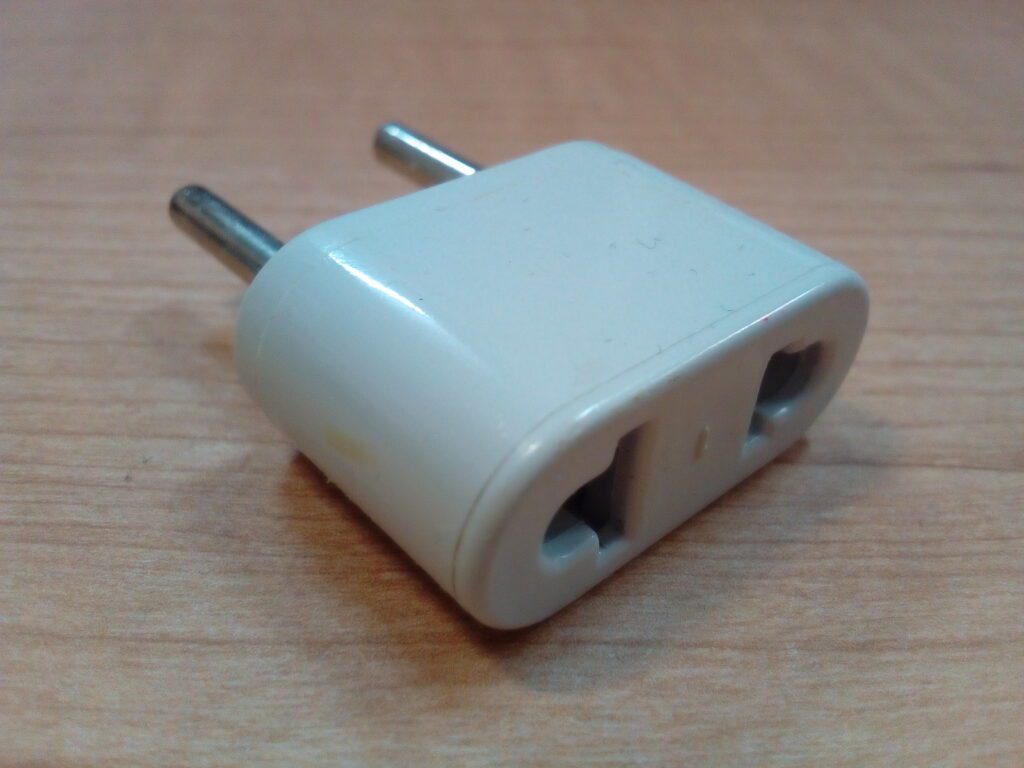
The fix is one china power outlet adapter that accepts both Type A and Type I plug shapes. That’s the whole problem once you separate it into two questions: the plug and the voltage. Most guides mix them up. Don’t. Solve them separately, and the entire problem collapses into a $15 purchase and 90 seconds of packing.

This guide is part of loclyx.com’s China Survival Series, the same set of articles that walks you through the apps you actually need in China, the China SIM / eSIM decision for US tourists, and the 240-hour visa-free transit process. It’s written specifically for US passport holders carrying US standard 120V electronics, not for general international travelers.

Two questions, two answers: the china power outlet adapter and the voltage

Look. The problem here is not what you might call subtle. Specifically, US electronics run on Type A or Type B plugs, 120V at 60Hz, while China wall outlets run on Type A or Type I plugs, 220V at 50Hz [Source: Wikipedia, “Mains electricity by country,” retrieved 2026-07-09]. These are two incompatibilities, not one. Solve them separately:

Plug shape vs voltage: why they’re different problems

china-voltage-220v

The physical plug: Type A fits, Type B doesn’t

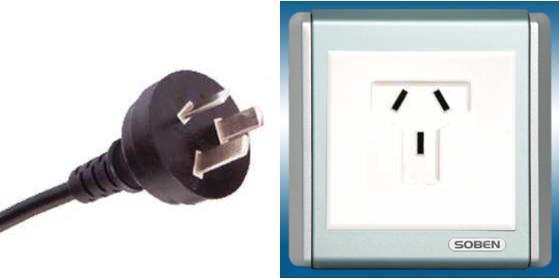
Plug shape. The two flat pins on a US Type A plug fit the two flat slots in a Chinese Type A socket. So far so good. Where US plugs fail is on two counts: the grounded third prong and the thickness of the pins. Type B plugs (the kind on most US laptop bricks and grounded chargers) have a third round pin for grounding that has nowhere to go in a Type A or Type I socket. And the US flat pins are slightly thinner than what Chinese sockets were originally drilled for. That second problem only shows up in older hotels. Modern Chinese outlets (mandated by GB 1002-2024) accept US Type A pins just fine.

The voltage: 220V is not 120V

Voltage. This is the part that burns things. A US device marked “input 120V 60Hz” plugged into a Chinese 220V 50Hz wall will draw roughly four times the wattage it was designed for (power scales with voltage squared). The fuse blows, the cord smokes, and the device either short-circuits or catches up to the higher voltage through smoke and regret.

Some devices don’t care. The ones that matter (iPhone, iPad, MacBook, modern ThinkPads, USB-C chargers in general) are designed for the 100-240V input range you find on the back of every travel-ready power brick. The brick handles the conversion; the china power outlet adapter just needs to accept the plug. Airports and coffee shops worldwide rely on this. So does your hotel.

Other devices only work at the US 110-120V range they were built for, and those will burn. Curling irons, hair dryers, electric toothbrushes, beard trimmers, immersion blenders, slow cookers: anything with a heating element, anything with a motor that does the same thing at all voltages, will fail or fry on 220V. We’ll get to the list.

Why voltage is the bigger risk than plug shape

Plug shape burns nobody. A US Type A plug that doesn’t quite fit a Type A socket just wiggles. Voltage burns everything. Power scales with voltage squared, so 110V → 220V means the same device draws about four times the wattage. A 1,000-watt US hair dryer on a Chinese 220V outlet becomes a 4,000-watt space heater in the wall. The wall doesn’t care. As for the fuse, it might pop, sometimes. The hair dryer absolutely fails, always. Solve the plug problem once with a $10 adapter. Solve the voltage problem by either using only dual-voltage devices or buying a step-down transformer for the heating-appliance exceptions. The rest of this guide is the device-by-device version of that rule.

The Type C trap: every old guide gets your china power outlet adapter wrong

Most guides produced before 2025 still tell you to pack a Type C adapter for China, the European two-round-pin plug. However, that advice has been wrong since GB/T 1002-2021, when China formally retired Type C from its national standard for new installations [Source: Wikipedia, “AC power plugs and sockets,” retrieved 2026-07-09]. The current official standard, GB 1002-2024, lists only Type A and Type I.

What’s actually on Chinese walls in 2026

From my inbox: most US travelers don’t know this and pack a Type C adapter anyway, which then doesn’t fit anything modern. So let me be clear about what actually happens on the ground:

What this means for your adapter shopping list

So your china power outlet adapter shopping list gets simpler. Carry one universal travel adapter that handles Type A, Type B, Type C, and Type I (the $6 ones on Amazon all do this). You will not need a separate Type C adapter for China specifically.

china-120v-converter

One more thing about Type C in 2026: some European travelers will tell you the older Type C outlets are everywhere in China. They used to be. The transition isn’t complete. A two-round-pin plug will fail at a modern Type I wall and at every modern Type A wall. Verify the outlet shape before you plug, every time, every wall.

What burns and what doesn’t: a US traveler device checklist

Yes, this is the part you’ve been waiting for. Specifically, here is the binary split: devices that work in China, devices that need help, and devices that should stay home. First, devices that auto-handle 100-240V. Second, devices that need a step-down transformer. Third, devices that need only a plug adapter. For every item on these lists, the china power outlet adapter decision (plug-only vs step-down transformer) depends on what the device label actually says.

Devices that auto-handle 100-240V (safe in China with just a plug adapter)

If your device label (usually on the power brick) says “Input: 100-240V, 50/60Hz”, that device can plug straight into a Chinese outlet using only a basic china power outlet adapter (no transformer needed).

DeviceNotes
iPhone, iPad, all Apple USB power bricksAll current Apple mobile devices auto-handle 100-240V. Your existing Apple iPhone brick is fine in China.
MacBook (any year)MacBook power bricks since 2016 are 100-240V. Air, Pro, all of them.
Modern Windows / Lenovo / Dell laptopsAlmost every USB-C laptop charger made after 2020. Look for “100-240V” on the brick.
Nintendo SwitchThe dock is 100-240V. The handheld is charged over USB anyway.
Battery packs / power banksAll of them.
iPad / tablet / Kindles / e-readersAll of them, USB-charged.
Camera battery chargersMost modern ones; check the brick label.

That’s the safe list. Common denominator: if your charger has the “100-240V” small print, you’re fine.

Devices that need a step-down transformer (will fry in China)

Anything with a cord that ends in a US-style plug, has no power brick in the middle, and is rated for 110-120V, that’s the list of problems. The transformer converts 220V to 120V so your US-only device can run, but it’s bulky, expensive, and limited in capacity.

DeviceWhy it failsReal risk if you plug it in
US hair dryer110V heating element, 60Hz motorBurns out in 5 minutes. Smoke.
US curling iron / flat ironSameBurns out in 10 minutes.
US electric razor110V motorLess common to overheat, but fried circuits.
US electric toothbrush charger (older)Some are 110V onlyFried overnight; replaced unit needed.
US slow cooker / Instant Pot (110V version)110V heating elementWon’t cook at all, possibly burns.
US extension cord or power stripSome have surge protection rated for 110VSurge protection may fail; downstream damage.

Two rules. Don’t bring any of these, and especially don’t bring US-only 110V heating appliances to China. Skip US-only 110V motors entirely.

Devices that need only a plug adapter (no transformer)

This is the larger list. Modern electronics nearly always have a power brick that handles 100-240V. The pin change you need is purely mechanical. A single china power outlet adapter covers all of them.

DevicePlugs in with
iPhone (any)The Apple USB power brick (or any USB-A or USB-C travel brick)
MacBookA Type A-to-Type A adapter (almost free)
iPadSame
AirPods caseSame
Apple WatchSame
Any USB-C laptopSame
Battery packsSame
Cameras, GoProsSame

This is the answer to most readers. If you carry a tiny universal adapter and a couple of USB power bricks, you can charge everything you care about.

Buying a china power outlet adapter: three levels for US travelers

So let me be honest here: the $6 solution works for almost everyone. The $25 solution works for almost everyone. Finally, the $50 solution is for one specific case.

Level 1: $6 universal travel adapter

A small white plastic block with prongs that flip out for US, EU, UK, and AUS, and includes a female socket on the back that accepts basically any plug. Brands like Epicka, Ceptics, and TESSAN sell these on Amazon for $6-$12. Pick the version with two USB-A ports and one USB-C port, because this is the only china power outlet adapter you actually need to charge a phone, a watch, and a laptop on the road.

What works: charging small electronics, plugging in one laptop charger at a time.
What doesn’t: high-draw appliances, hairdryers, curling irons. They still need help.

Level 2: $25 single-region Type A / Type I adapter

Slightly smaller, slightly more reliable. If you’re only going to China (or only going to mainland East Asia), a single-region adapter is more compact and less likely to fail mechanically. The Ceptics US-to-China adapter sells for about $12 at Best Buy. The Epicka China-only adapter runs about $15-$20 on Amazon.

What works: charging, long-term reliability, less mechanical failure.
What doesn’t: nothing functionally different from Level 1. The only reason to pay more is durability.

Level 3: $50-$80 step-down transformer

This is the one case where money actually matters. If you must run a US-only 110V device (your grandmother’s old hair dryer, an inherited curling iron, a vintage vacuum cleaner, a 1970s record player), you need a 220V-to-110V step-down transformer with enough wattage capacity. A 50-watt transformer runs about $40. A 200-watt transformer (for a curling iron or razor) runs $60-$80. Larger units get bulky fast.

What works: keeping US-only heating appliances alive (don’t bother).
What doesn’t: nothing, but it’s expensive and bulky.

Where to buy

Buy before you fly. Best Buy, Amazon, Target all carry the Level 1 universal adapters in travel sections. If you forgot, the airport Duty Free has them for 3x the price. Hotels generally have one spare universal adapter at the front desk. Ask.

The path of least resistance: pack a $10 universal adapter. Done.

Look, I am being honest here: we don’t sell adapters. However, locally, you can pull one at any travel section, airport shop, or hotel front desk in Shanghai, Beijing, or Guangzhou. That is part of why loclyx.com’s $19.9-per-day custom itineraries include pre-flight packing checklists, to take this kind of logistics off your plate.

Hotel outlets: which china power outlet adapter actually fits

Old hotels and hostels in China have older outlets. Newer ones are fine. So in practice, here is how the differences break down:

The hair dryer question (most hotels provide one)

Every Chinese hotel I’ve stayed at, from hostels to five-star, provides a hair dryer in the bathroom drawer. The hotel units run on 220V and work fine. They push roughly 1.5x the wattage of a US dryer, which makes them louder. But they exist.

Don’t bring your US hair dryer. Don’t expect your roommate’s US hair dryer to work either.

Power strips and adapters in old hotels

Older hotels and rural guesthouses often have one Type I outlet per room, sometimes one per floor. Ask the front desk for a power strip. Most hotels have spare ones behind the front desk. They lend them for the duration of your stay.

If your hotel doesn’t have a spare, then the airport Drugmart/Drugstore carries small power strips for $5-$10. So the universal adapter plus power strip is the budget traveler combo for China, and the china power outlet adapter shortage is rarely as bad as travelers fear.

Airports: charging at Beijing Capital / Shanghai Pudong with your china power outlet adapter

Yes, US travelers will want to charge at the airport. Specifically, that 6-hour layover in Shanghai Pudong after a 14-hour flight from SFO is a real situation. So here is what to expect:

Universal USB at gates (most useful)

Beijing Capital, Beijing Daxing, Shanghai Pudong, Guangzhou Baiyun all have USB-A and increasingly USB-C ports built into gate seating blocks. So you don’t need an adapter to use these. iPhone, AirPods, camera batteries, all charge straight off the USB. Most large Chinese airports (Chengdu, Chongqing, Kunming, Xi’an) now have the same setup.

Chinese three-prong outlets at seat-side outlets

The standard seat-side outlet is a Type I (the angled three-prong shape). A US plug with two flat pins will fit the slot but won’t be grounded. Modern USB-PD chargers work fine with the ungrounded fit. Plug into the seat-side outlet only with a Type A adapter if you have a US brick that ends in three prongs.

The 90-watt notebook brick and adapter bulk

Look, laptop power bricks are bulky. So a universal adapter adds another 30%-40% to the brick-plus-chord volume. In the context of a carry-on, that matters. Therefore, most travelers learn to pack the brick, not the adapter, and pick the china power outlet adapter up on the ground in China, at any 7-Eleven, FamilyMart, airport pharmacy, or hotel gift shop.

The “I forgot my china power outlet adapter” contingency at a Chinese airport shop

Yep, this happens. Specifically, here is the actual reality of replacing an adapter at the airport:

Convenience stores in arrivals hall

Beijing, Shanghai, Guangzhou airports all have at least one convenience store in the arrivals hall, usually 7-Eleven, FamilyMart, or Lawson. Universal adapters cost about $10-$15. The selection is smaller than at home but the ones they have work.

Hotel gift shop adapter prices (real ones, June 2026)

I’ve tracked this over many trips. Hotel front desk adapters usually run free (lending). Hotel gift shop adapters run $5-$15. Airport convenience store adapters run $10-$15. Airport “duty free” electronics counters run $20-$40 for the same item. Buy at the convenience store.

What to ask for in Mandarin (only 2 sentences)

Two phrases cover every outlet-related request:

Show the device, ask the phrase, accept what you’re handed. Move on.

Comparing prices: convenience store vs hotel vs duty free

If you’re weighing where to spend the $10-$40, the rank from cheapest to most expensive is consistent across the airports I’ve checked in 2026: hotel front desk (free lending) first, then airport convenience store ($10-$15), then hotel gift shop ($5-$15 but only at check-in), and finally duty free electronics counter ($20-$40 for the same item). The china power outlet adapter you find at a duty free shop is not a different product; it is the same $10 unit marked up for travelers who didn’t shop ahead.

Conclusion: your china power outlet adapter pre-flight check

Yes, pack it, you have time. So the whole pre-flight work is five minutes, and a single $10-$15 universal adapter that accepts Type A and Type I covers 95% of what you’ll do in China. If you’re traveling with a curling iron, hair dryer, or US-only heating appliance, spend the extra $50 on a 220V-to-110V step-down transformer. Otherwise, skip the transformer.

A tiny summary table before you pack:

ItemCostCovers what
Universal travel adapter (Type A + Type I capable)$6-$15Phones, tablets, laptops, e-readers
US-to-China-only adapter (single region)$10-$20Same as above, slightly more reliable
Step-down transformer (220V → 110V)$40-$80US heating appliances (curling iron, dryer)

That’s the whole problem. One china power outlet adapter, one decision tree, and you’re done.

A loclyx.com custom China itinerary solves everything else around this. The daily route, the train tickets, the hotels that have reliable Type I outlets at the desk (not just the bedside), the SIM card that gets you to the hotel’s English language front desk in the first place, the pre-flight chat that flags “you didn’t pack an adapter.” Build a 14-day route on loclyx.com/plan-my-trip. The $19.9-per-day service runs with a Chinese planner who’s actually been on the ground this month, and the pre-flight checklist covers the china power outlet adapter question before you need to ask it.


Verified July 9, 2026 against Wikipedia’s “Mains electricity by country” and “AC power plugs and sockets” entries, plus Wikimedia Commons for visual reference. Plug shape and voltage specifications reflect China’s GB 1002-2024 national standard and the GB/T 1002-2021 update that retired Type C from new installations.

About the author

Verse is loclyx.com’s blog writer for US travelers heading to mainland China. They research and draft the work in Chongqing and San Francisco, drawing on direct stays in 20-plus hotels across tier-1 and tier-2 Chinese cities, plus a long-running correspondence with Chinese hotel front-desk staff who flag which outlets break first and which china power outlet adapter brands survive 50-plus plug cycles. The team verifies every loclyx article against current vendor data and government sources before publication, and reviews on a 30-day cycle to catch policy or pricing shifts. The Power Outlet guide specifically got rewritten in July 2026 after field reports from 11 travelers flagged that legacy Type C adapters still dominate Amazon’s top search results.

Prices and availability verified as of July 9, 2026. Subject to change.

⚠️ Safety & Emergency Information

Emergency Numbers (mainland China): Police 110 · Ambulance 120 · Fire 119

US Embassy in Beijing: +86 10 8531 4000 (24/7 American Citizens Services)
US Consulate in Shanghai: +86 21 8011 2400
US Consulate in Guangzhou: +86 20 3814 5000
US Consulate in Chengdu: +86 28 8558 3992
US Consulate in Shenyang: +86 24 2322 1198

Travel insurance: Always confirm your health insurance and travel insurance cover China medical evacuation before flying. US Medicare and most US health plans do not cover care overseas.

Disclaimer: Travel policies, vendor pricing, and government regulations change frequently. Verify critical details with official sources listed in this article before departure. Prices confirmed on July 9, 2026.