Public toilets in China are not one single experience. You may find a spotless modern restroom with both seated and squat toilets, or a basic facility where supplies have run out and the only available stall is a squat toilet. The useful question is not whether Chinese public toilets are “good” or “bad.” It is whether you are prepared for the variation.
For most foreign travelers, a pocket pack of tissues, hand sanitizer, and a little knowledge remove most of the stress. This guide explains what to carry, how to handle a squat toilet, what to check before entering a stall, and where you are more likely to find a facility that fits your needs.
Plan access around the traveler and facility
| Situation | Useful next step | Important limit |
|---|---|---|
| City sightseeing | Identify practical restroom stops near the day’s route. | A large venue can still be crowded or out of supplies. |
| Limited mobility | Ask about the actual accessible facility and approach. | A Western-style toilet is not the same as accessible access. |
| Long train or outdoor day | Carry your small kit and plan usable stops. | Do not infer availability from a national stereotype. |
Key Takeaways
- Public toilet quality and equipment vary by city, venue, age, maintenance, and crowd level.
- Carry pocket tissues and hand sanitizer instead of assuming every stall will be stocked.
- Check near the restroom entrance for a shared paper dispenser before entering your stall.
- Do not assume all toilet paper should be flushed or placed in a bin; follow the sign and the setup you actually see.
- Never stand on the seat of a Western-style toilet.
- Travelers with knee, balance, mobility, pregnancy, or caregiving needs should plan restroom stops before long sightseeing blocks.
- Airports, larger malls, hotels, newer transport hubs, and major museums are often better first places to look, but no category offers a universal guarantee.
What Types of Toilets Will You See in China?
Foreign visitors usually encounter two basic types: seated toilets and squat toilets. Many modern facilities contain both, while older or simpler restrooms may offer mostly squat stalls.
The mix changes from place to place. A recently renovated airport restroom can feel completely familiar to an American traveler. A small restaurant, local park, busy attraction, or older roadside stop can be much more basic. Even two restrooms in the same railway station may have different layouts or supply levels.
China has invested in improving tourism public services and toilet facilities for years. That does not mean every facility has been renovated, stocked, or maintained to the same standard. Treat the country as a huge, varied operating environment rather than expecting one national restroom experience.
What Should You Carry in a Small Bathroom Kit?
You do not need a giant “survival kit.” A few small items cover the most common gaps:
- Pocket tissues or a small roll of toilet paper
- Alcohol-based hand sanitizer
- A few wet wipes in a resealable pack
- A small opaque disposal bag
- Menstrual products if you may need them
- Any personal medical or mobility item you normally rely on
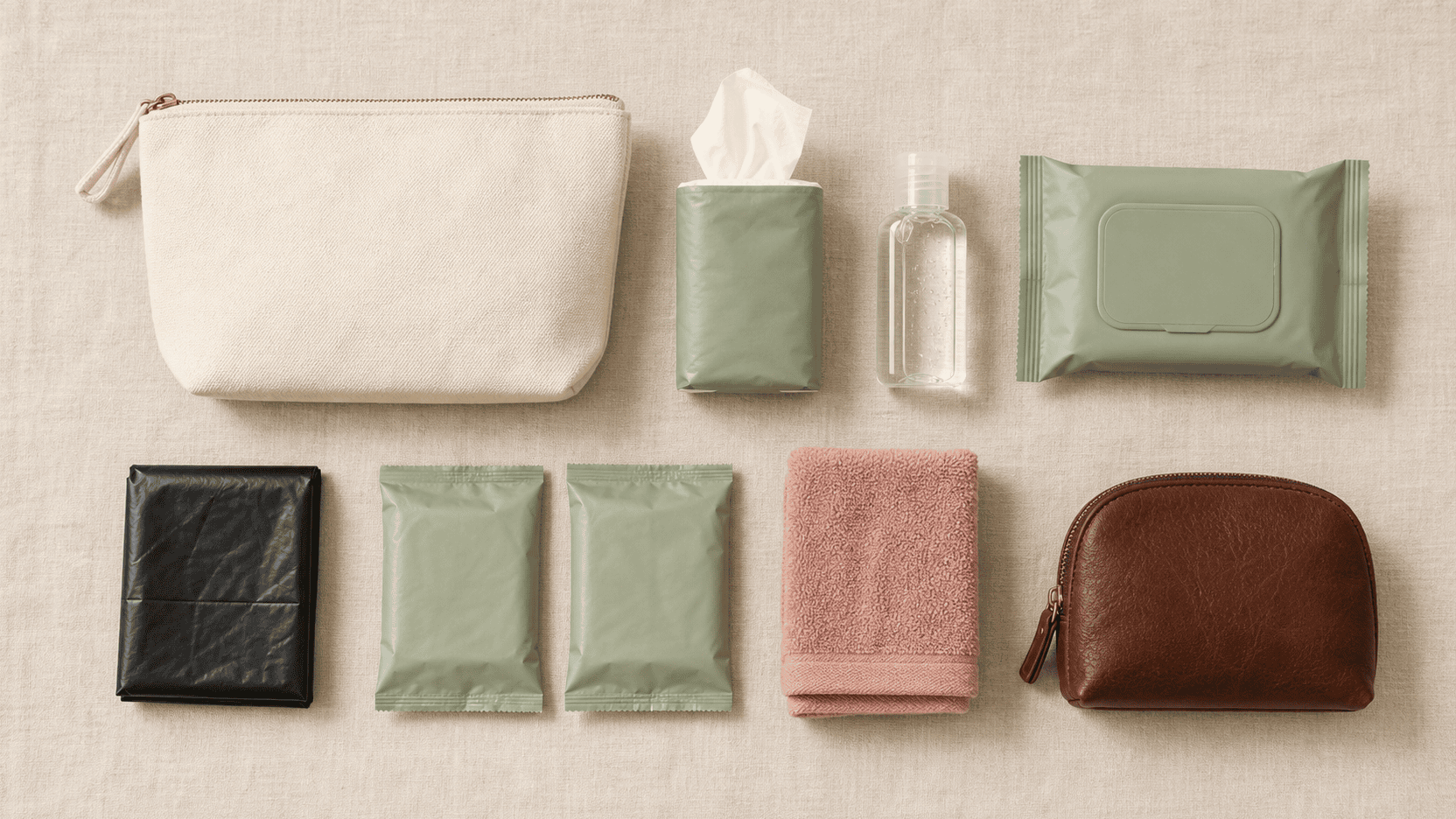
Keep this kit in the bag you carry during the day, not in your checked suitcase or hotel room. A summer packing list is useless if the item you need is two cities away, so add these supplies to your daily bag when using our realistic China summer packing list.
The CDC says washing with soap and water is the best option in most situations. If soap and water are not readily available, an alcohol-based sanitizer containing at least 60% alcohol is a useful backup. Sanitizer does not replace washing when your hands are visibly dirty.
How Do You Use a Squat Toilet Without Making a Mess?
A squat toilet looks intimidating mainly because many Western travelers have never used one. Slow down and set yourself up before you squat.
- Check the stall before committing. Confirm that the floor is usable, the toilet is functioning, and you have paper ready.
- Secure your belongings. Zip your phone, passport, and wallet inside your bag. Do not balance valuables on a ledge or hold your phone over the fixture.
- Keep clothing clear. Pull up long coats, loose trousers, straps, and wide-leg fabric before lowering yourself.
- Place your feet on the textured foot areas. Fixture designs vary, so use the intended foot positions rather than copying a rigid “always face this direction” rule.
- Lower yourself only as far as you can control. Keep your balance and do not force a deep squat if your knees, hips, pregnancy, injury, or footwear make it unsafe.
- Use the flush control shown for that stall. It may be a pedal, button, sensor, lever, or another setup.
Do not stand on a seated toilet. Toilet seats are not designed to support a person’s full standing weight, and slipping can cause a serious injury.
If you cannot use a squat toilet safely, leave the stall and look for a seated or accessible option. There is no prize for forcing yourself through a facility that does not fit your body.
Where Is the Toilet Paper?
Check before entering the stall. Some public restrooms place one shared roll or dispenser near the entrance or sinks instead of providing paper inside each stall. Other facilities stock individual stalls. Some provide none, and busy facilities can simply run out.
This is why carrying tissues is more reliable than memorizing claims such as “China never provides toilet paper.” That statement is too broad. The real problem is inconsistent availability.
Take only what you need from a shared dispenser. If the dispenser uses a sensor or another unfamiliar system, look for a simple instruction nearby or ask staff rather than repeatedly scanning random QR codes or granting unnecessary phone permissions.
Should You Flush Toilet Paper or Use the Bin?
Follow the instruction and equipment in front of you. Do not apply one rule to the entire country.
In some facilities, signs or the stall setup instruct users to place used paper in a bin. In other modern facilities, ordinary toilet paper can be flushed. Plumbing condition, paper type, building age, and local operating practice vary.
Use this decision order:
- Read the stall sign if one is posted.
- Check whether a clearly intended waste bin is present.
- Follow the facility’s instruction.
- If the setup is unclear, use the smallest reasonable amount of toilet paper and ask staff when practical.
Do not flush wet wipes, sanitary products, diapers, or bulky paper products unless the facility explicitly says they are flushable. A product marketed as “flushable” in another country does not prove it is suitable for the plumbing in front of you.
Where Are Travelers More Likely to Find a Better Restroom?
When you have a choice, start with a larger, professionally managed venue. Airports, newer railway stations, major museums, larger shopping malls, and established hotels often provide a broader range of stalls and more regular maintenance.
That is a probability, not a guarantee. Supplies can run out, cleaning schedules vary, and a large venue may still be crowded. Conversely, a small local facility may be perfectly clean and well stocked.
A practical search order in a city is:
- Major mall or department store
- Hotel lobby or large restaurant
- Museum, visitor center, or managed attraction
- Newer transport hub
- Public facility shown by a local map app or nearby signage
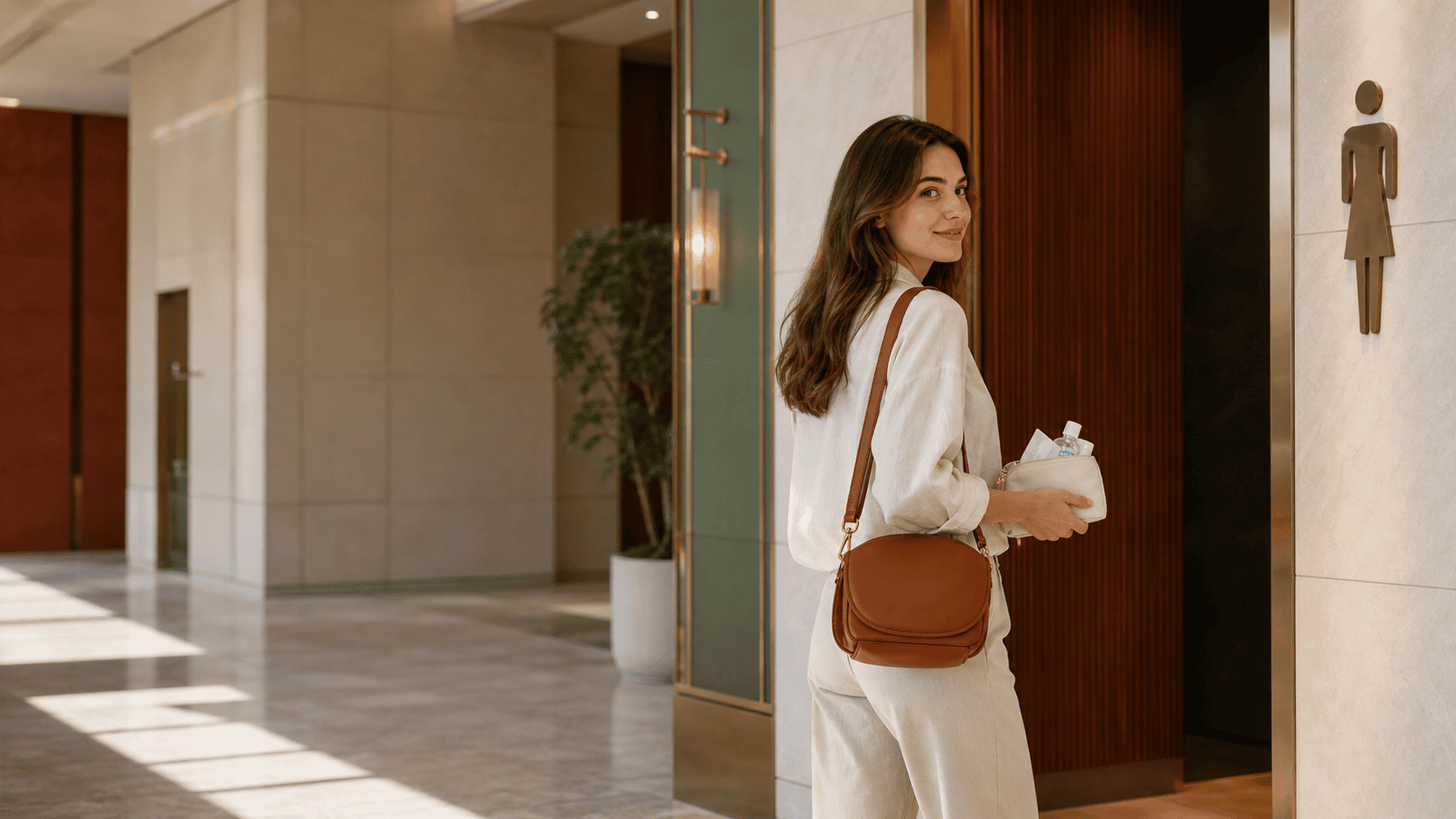
Ask before walking deep into a hotel or restaurant solely to use the restroom. A polite request works better than treating a private business like an unrestricted public facility.
What Should Women Prepare For?
Carry the menstrual products you prefer, especially if brand, absorbency, applicator style, or material matters to you. Convenience stores and supermarkets sell period products, but the exact format and brand selection may differ from what you use at home.
A small opaque disposal bag is useful when the stall bin is missing, full, or unsuitable. Never flush pads or tampons unless the facility explicitly permits it.
Avoid placing your phone, bag, coat, or personal products on a wet floor. Use a hook when one is available, keep straps zipped inside the bag, and prepare tissues before adjusting clothing.
What About Children, Older Travelers, and Limited Mobility?
Restroom planning should be part of the itinerary, not an afterthought, when someone in the group has limited mobility, a knee or hip condition, balance concerns, pregnancy-related needs, or a young child.
Before a long attraction visit or transfer:
- Use the restroom at the hotel, mall, museum, airport, or station before leaving the managed area.
- Ask staff where the seated or accessible stall is located.
- Build extra time into station and attraction transfers.
- Do not assume the next roadside or scenic-area restroom will match the previous one.
- Keep the caregiver’s bathroom kit accessible.
Families should also review our China trip with kids guide before planning long sightseeing days.
What Should You Expect on Trains and Long Travel Days?
Use the restroom before boarding when you have a suitable station facility available. Train restroom style and condition can vary by train type, carriage, usage, and timing.
Keep tissues and sanitizer in your seat bag rather than in a suitcase stored overhead. Do not wait until the train is approaching a station, when movement through the carriage may become crowded. If a restroom is temporarily unavailable, ask train staff rather than trying to enter a locked or marked facility.
For the rest of the transport preparation, use our China survival guide for tourists and complete China travel planning guide.
What If a Restroom Is Too Dirty or Unsafe to Use?
Leave and find another option if you can. Do not put your luggage or phone on a contaminated surface, and do not attempt an unstable squat because you feel pressured by a queue.
If you develop persistent vomiting, diarrhea, dehydration, fever, severe pain, blood in stool, or another worrying symptom, restroom access is no longer just a convenience issue. Review our guide to getting sick in China and seek appropriate medical care.
FAQ
Are Public Toilets Free in China?
Many public restrooms are free, but do not assume every facility or privately managed venue follows the same model. Keep a small payment backup available and follow the posted information.
Are Squat Toilets the Only Option?
No. Seated toilets are common in many modern facilities, hotels, airports, malls, hospitals, museums, and transport hubs. Availability still varies, so travelers who cannot squat should plan ahead and ask staff for a seated or accessible stall.
Do Chinese Public Toilets Have Toilet Paper?
Some do, some use a shared dispenser near the entrance, and some do not. Supplies can also run out. Carrying pocket tissues is the simplest backup.
Should I Put Toilet Paper in the Bin?
Follow the sign and the actual stall setup. Do not treat one facility’s instruction as a nationwide rule. Never flush wet wipes, sanitary products, or diapers unless specifically allowed.
What Is the Most Useful Thing to Carry?
Pocket tissues are the most universally useful item. Add hand sanitizer, a few wet wipes, and personal menstrual or medical supplies as needed.
Bottom Line
Public toilets in China are manageable when you expect variation instead of demanding one universal standard. Carry tissues, check for paper before entering the stall, follow the local disposal instruction, and choose a seated or accessible facility when squatting is not safe for you.
The goal is not to “survive” a bathroom. It is to remove one small uncertainty from a much bigger trip. A well-paced itinerary, realistic transfer time, and a tiny bathroom kit make the experience far less dramatic than the internet suggests.
Official and Reliable References
- China moves to advance public services in tourism sector — State Council English-language reporting on tourism public-service improvements.
- About Handwashing — CDC guidance on soap, water, and alcohol-based hand sanitizer.
- The China Toilet Guide 2026 — practical traveler overview used for competitor and topic-gap research.
- What Are Toilets Like in China? — practical comparison of restroom types and traveler preparation.
- China public toilets and squat toilets — variation-focused practical guide.
Related decisions for this part of the trip
- Is China Safe for Tourists? Plan for the Risks That Matter
- How to Apply for a China Tourist Visa in the U.S.
- China High-Speed Trains: Plan, Book and Board With a Passport
Turn this decision into a workable route
Restroom access, walking distance and rest periods should be reflected in the day’s actual route. LOCLYX is a China-based local team. We tailor a written plan to your dates, budget, interests, pace and constraints. Planning costs $19.9 per travel day; travel purchases are separate and we do not make reservations or provide ground services.
Use the relevant guides above to settle this question, then compare the full planning deliverable. Compare the sample itinerary and pricing and scope before using Plan My Trip. Delivery and revision conditions are in the published policy.
Update note
Editorial review: October 12, 2026. Use official and provider references for the route and service they cover. Operational availability, individual eligibility, medical decisions and local procedures require the appropriate current or professional check.