Yes, you can travel in China with food allergies, celiac disease, vegan requirements, or a food preference. You will need more preparation than the average visitor, and some meals may not be worth the uncertainty. The practical approach is to know exactly what you must avoid, explain it in Chinese, check both the ingredients and the kitchen process, and carry food you can rely on when the answers are vague.
This is travel information, not medical advice or a promise that any dish, restaurant, or city will be safe. If you have a history of anaphylaxis or a diagnosed medical condition, follow the travel and emergency plan from your clinician.
Match preparation to the severity of the restriction
| Situation | Useful next step | Important limit |
|---|---|---|
| Preference or intolerance | Explain the exact ingredient and acceptable substitutes. | A general translated diet label may be insufficient. |
| Severe allergy | Prepare with a clinician and use a professionally checked card. | A menu photo does not establish cross-contact safety. |
| Staff cannot answer clearly | Choose a safer alternative consistent with your medical plan. | Do not accept an uncertain meal to keep to the itinerary. |
Start with the restriction you actually have
These categories can look similar on a menu, but they call for different conversations.
Severe food allergy. A small amount of a particular food may cause a rapid, potentially life-threatening reaction. Ask about more than the visible ingredient. Peanut oil, a shared sauce container, a fryer, or a wok used for another dish may matter just as much. Your allergist’s plan should guide how much uncertainty you are willing to accept.
Celiac disease. Celiac disease is an immune-mediated disease triggered by gluten, not a personal preference and not the same as a wheat allergy or gluten sensitivity. People with diagnosed celiac disease generally need a lifelong gluten-free diet. Wheat can turn up in noodles, dumpling wrappers, buns, fried coatings, marinades, seasoning mixes, and soy sauce. Cross-contact during preparation or serving matters too.
Vegan food. Vegan means avoiding animal products. A Chinese menu may use 素 or vegetarian to describe a dish that still contains oyster sauce, meat stock, lard, dried seafood, egg, or dairy. Buddhist vegetarian rules may also exclude garlic or onions, which is a separate issue from veganism. Say what you personally exclude instead of assuming the label will carry the same meaning.
A preference or intolerance. Avoiding cilantro, choosing not to eat dairy, or feeling uncomfortable after a food is not automatically the same medical risk as anaphylaxis or celiac disease. Be honest about the level of risk. Clear wording helps staff respond to the request you are actually making.
Hidden ingredients are often in the seasoning
The main ingredient may be easy to spot. The small additions used for salt, color, thickness, or umami are harder.
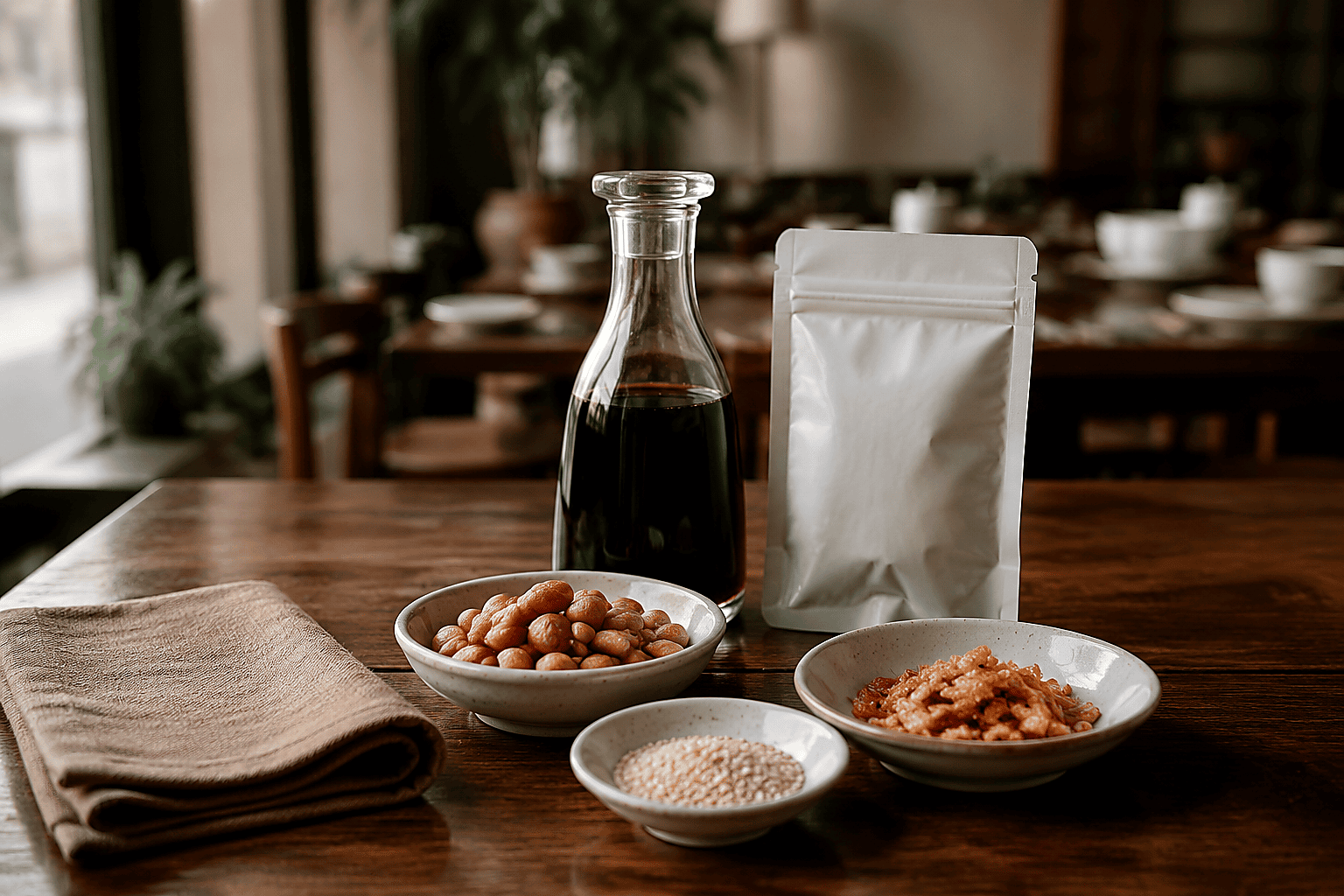
Soy sauce and wheat
Rice and vegetables are not enough to establish that a meal is gluten-free. Wheat may be present in noodles, wrappers, flour coatings, braising sauces, marinades, premixed seasonings, or a particular soy sauce. Recipes and product formulations vary, so ask about the actual sauce and seasoning used for that dish. For packaged food, read the Chinese ingredient list rather than relying on a picture or a front-of-pack claim.
Seafood and dried ingredients
Oyster sauce, dried shrimp, shrimp paste, fish products, or seafood-flavored seasoning can appear in a dish that is described as vegetable-based. This matters to people with seafood allergies and to vegans. “Vegetable” usually tells you about the main ingredient, not every part of the recipe.
Peanuts, tree nuts, and sesame
Peanuts can be mixed into sauces, cold dishes, snacks, stir-fries, or toppings. Cashews and walnuts may appear in stir-fries. Sesame oil, sesame paste, and sesame seeds are common flavorings. With a severe allergy, ask about the oil, sauce, garnish, cooking surface, and utensils, not just what you can see on the plate.
Animal ingredients in a plant-based dish
A dish called vegetarian may use chicken stock, meat stock, lard, oyster sauce, dried seafood, egg, or dairy. If you are vegan, explain the full list that applies to you: meat, fish, shellfish, egg, dairy, lard, animal stock, and oyster sauce, for example. Do not assume every item on that list is excluded unless you have said so.
Packaged foods and the changing label rules
Meatballs, fish balls, sausages, imitation meats, fillings, flavored snacks, and broth cubes can contain flour, soy, egg, milk, or other ingredients that the product name does not reveal.
China has published GB 7718-2025, a revised standard for prepackaged-food labeling, but the standard is scheduled to take effect on March 16, 2027. For a trip before that date, do not treat the new requirements as if they were already in force. The current labeling rules and the announced revision apply to prepackaged foods; they do not turn a restaurant menu into an allergen guarantee. The National Health Commission announcement and the national standard record for GB 7718-2025 are useful references for the publication and implementation dates.
Even after the revised standard takes effect, a missing precautionary statement will not prove that cross-contact did not occur. Read the package, keep the product information, and avoid treating a label as a substitute for your medical plan.
Ingredients and cross-contact are separate checks
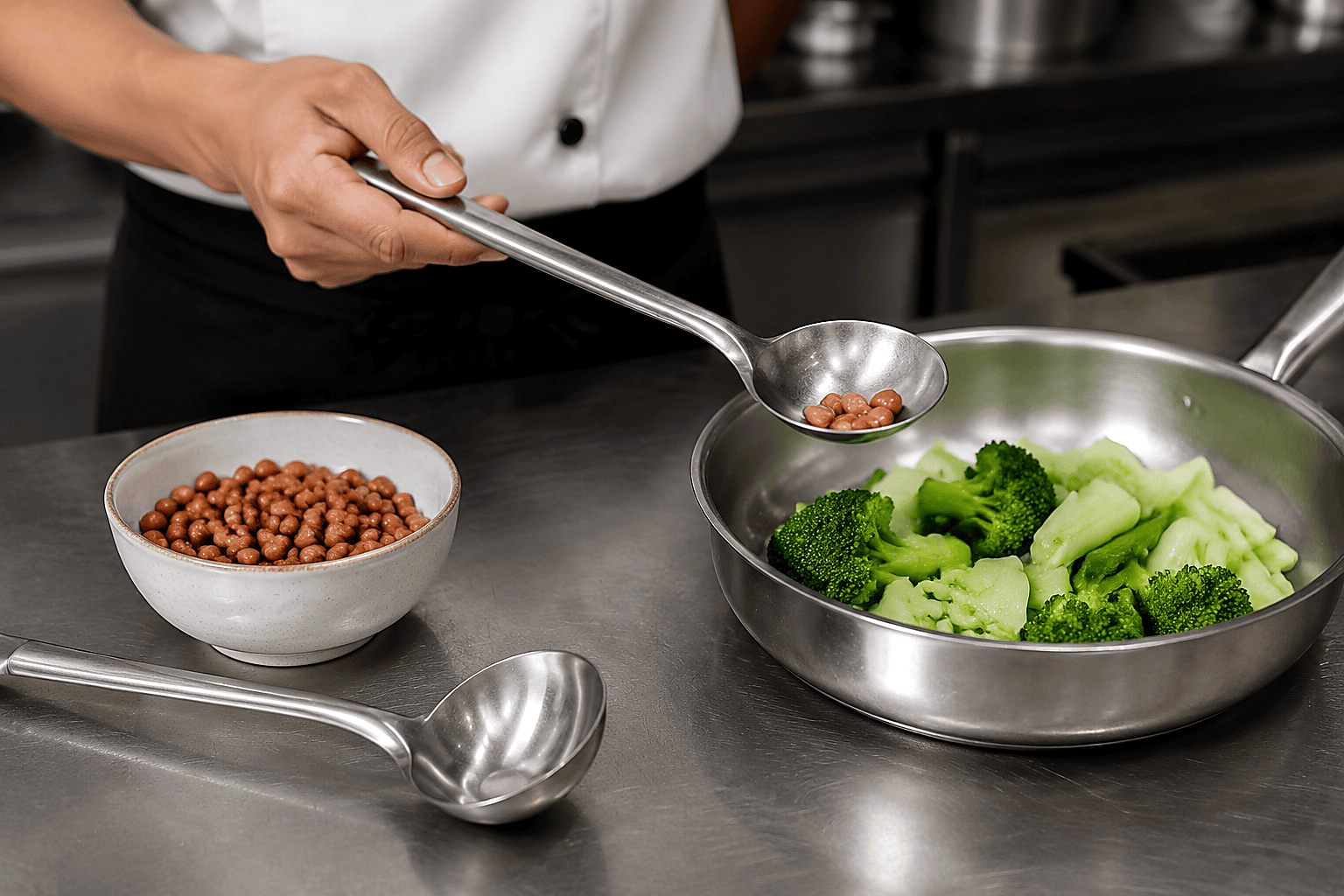
A dish may not contain your allergen as an intended ingredient and still be unsuitable for you. AAAAI advises diners with food allergies to ask about shared equipment and utensils. Contact can happen through a shared wok, cutting board, fryer, oil, ladle, hotpot broth, dipping-sauce container, serving utensil, or buffet surface.
That is why “Can you leave out the peanuts?” may not be enough. You may also need to know whether the kitchen can use clean equipment, fresh oil where relevant, a separate sauce, and utensils that have not touched the allergen. A restaurant may want to help and still be unable to verify every step. Treat that uncertainty as information. Cooperation is not the same as control.
For celiac disease, a plain rice dish cooked in a wok used for wheat noodles is not automatically suitable. For a severe allergy, removing a visible garnish after the food is cooked does not undo contact with oil or sauce.
Bring a Chinese allergy or dietary card
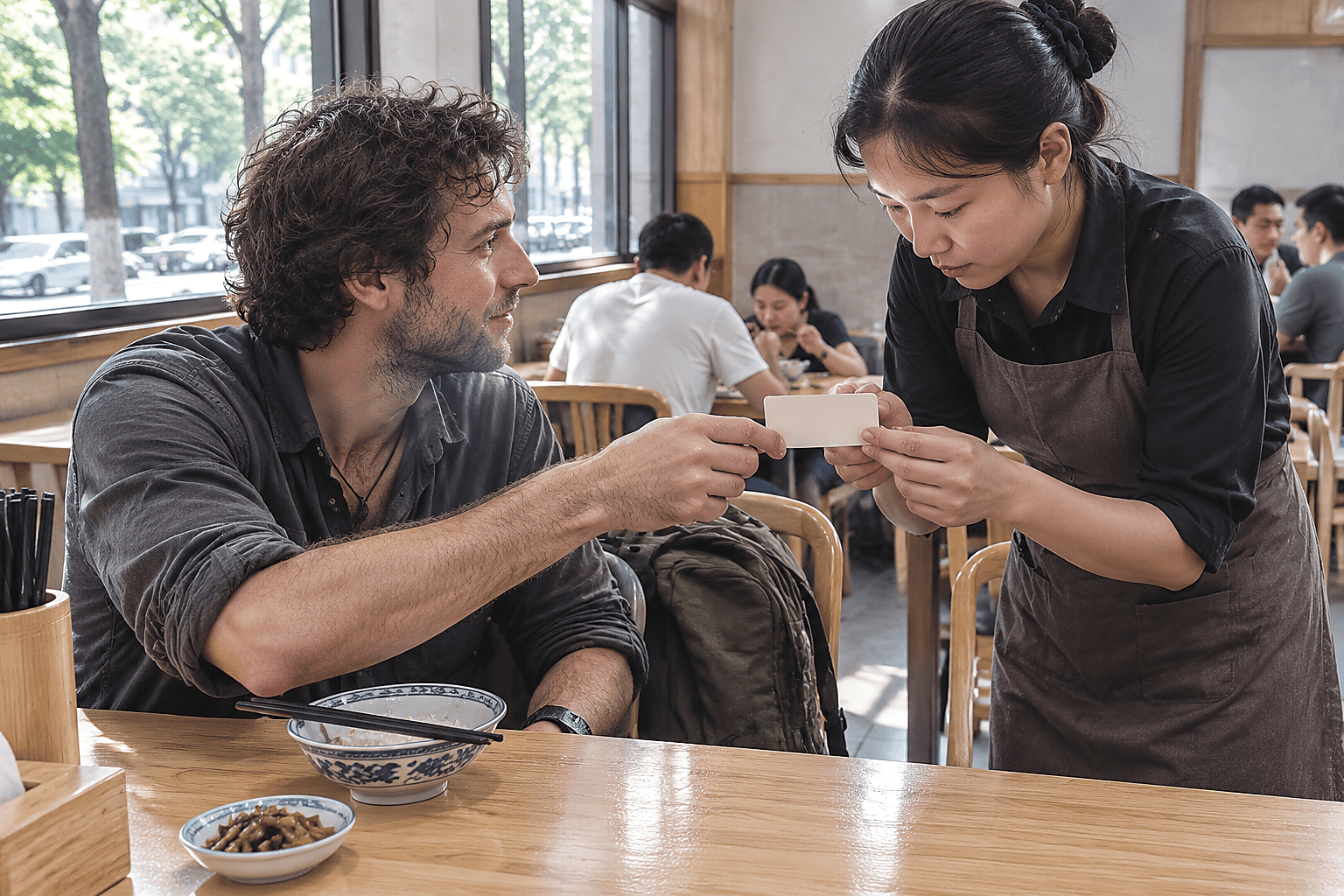
Prepare a card in Chinese characters before departure. Carry a printed copy as well as an offline phone version. Name the exact allergen or restriction, describe the consequence, list likely hidden sources, and explain that cross-contact matters. A card helps communication; it does not prove that a kitchen can meet the request.
For a severe peanut allergy, you could use wording such as:
我对花生严重过敏,吃了可能危及生命。请确认菜品、酱料、食用油和调味料中都没有花生,也请避免交叉接触。如果不能确认,请直接告诉我。
I have a severe peanut allergy that could be life-threatening. Please confirm that the dish, sauces, cooking oil, and seasonings contain no peanuts, and please avoid cross-contact. If you cannot confirm this, please tell me directly.
Replace 花生 with the allergen you need to avoid. Other useful terms include 花生油 (peanut oil), 坚果 (nuts), 芝麻 (sesame), 贝类 (shellfish), 海鲜 (seafood), 鸡蛋 (egg), 牛奶 or 乳制品 (milk/dairy), 小麦 (wheat), 麸质 (gluten), and 酱油 (soy sauce).
For celiac disease, describe the medical condition rather than saying only that you prefer gluten-free food:
我有乳糜泻,必须严格避免麸质和小麦。请不要使用小麦面粉、面条、饺子、包子、面包、酱油或含小麦的调味料,并请避免使用做过面食的锅、油和餐具。如果不能确认,请告诉我。
I have celiac disease and must strictly avoid gluten and wheat. Please do not use wheat flour, noodles, dumplings, buns, bread, soy sauce, or seasonings containing wheat. Please also avoid cookware, oil, and utensils used for wheat-based foods. If you cannot confirm this, please tell me.
A translation app can help you read a menu or clarify a short phrase, but machine translation may blur the difference between an allergy, a preference, and a cross-contact prohibition. Show the card to the server and ask that it reach the person preparing the food.
For ordinary ordering questions, including QR menus and photo menus, see How to Order Food in China Without Speaking Chinese. Dietary safety requires an additional conversation before you point at a dish or submit an order.
Questions worth asking at the table
Use the questions that fit your restriction rather than reciting every possible ingredient:
- What oil is used?
- Does the dish contain soy sauce, oyster sauce, stock, shrimp, shrimp paste, egg, dairy, or a premade seasoning?
- Is the sauce made separately, or taken from a shared container?
- Can the kitchen use a clean wok, pan, cutting board, and utensils?
- Is the broth shared with noodles, dumplings, or other ingredients?
- Can the chef make a simple dish without premade sauce or seasoning?
Pay attention to the quality of the answer. If staff cannot identify the ingredients, contradict one another, or repeat 没问题 (“no problem”) without answering the specific question, you still have an unresolved risk. Do not turn reassurance into confirmation.
When it makes sense to leave
You can decline a meal. Leave politely when nobody understands the card, staff cannot identify the oil or sauce, the kitchen cannot separate equipment where that matters, the answer changes between the server and kitchen, or someone suggests picking a visible allergen off a finished dish. Pressure to accept an uncertain answer is another reason to use your backup plan.
This is a practical response to an unanswered safety question, not a verdict on a restaurant or on Chinese food. The Celiac Disease Foundation travel guidance and CDC guidance for severely allergic travelers both support advance planning and carrying food or supplies for situations where a suitable meal is not available.
Plan for the meal that does not work
Before a busy sightseeing day or a long train journey, identify at least one place where you can explain your restriction clearly. Contacting a hotel or restaurant in advance may give someone time to check ingredients, but a message or reservation is not a guarantee. Revisit the question when you arrive.
Carry sealed, familiar snacks that fit your needs and that you have already tolerated. Bring enough for delays, cancellations, or leaving a restaurant. Check the current rules for carrying food through borders, airports, and transport security rather than assuming every snack is allowed.
It also helps to know where you can buy clearly labeled packaged food or simple ingredients near your accommodation. A refrigerator, microwave, or kitchenette can make an uncertain evening easier, but inspect the facilities and clean shared utensils before using them. Packaged food is not automatically safe; read the Chinese label and check unfamiliar products one by one.
For severe allergies, discuss the trip with your healthcare professional and carry prescribed emergency medication, your written action plan, and medical documentation according to their instructions. CDC advises travelers to keep medication in original labeled packaging and in accessible carry-on luggage. The TSA EpiPens guidance applies to U.S. security screening only. For questions about a medication or device, check with the airline, transfer points, and Chinese customs before departure. China’s customs guidance covers general principles such as personal use, reasonable quantities, and truthful declaration, but it does not guarantee that a particular medicine or amount will be admitted. See the Chinese Customs passenger guide and its English version.
Do not make an aircraft, airport pharmacy, or destination pharmacy your only emergency-medication plan. The medication, device, quantity, and instructions should come from the clinician who prescribed them. This article does not provide drug doses.
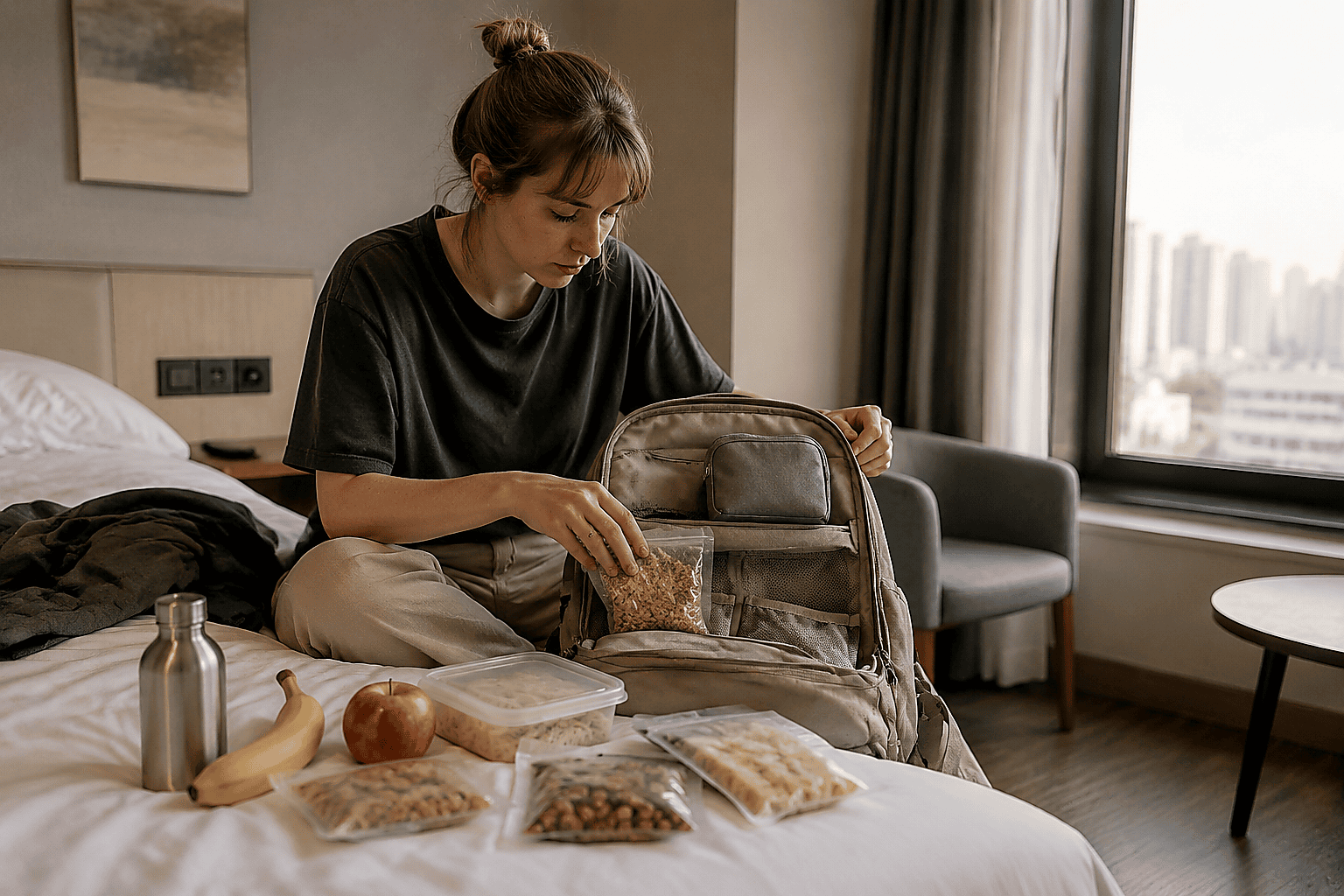
A simple check before you eat
At each meal, pause long enough to answer four plain questions:
- What exactly must I avoid: a medical allergen, gluten, animal products, or a preference?
- What is in the dish, including the sauce, oil, stock, topping, and seasoning?
- How was it prepared, and could shared equipment or serving utensils matter?
- If the answer is unclear, what will I eat instead?
Simple dishes with clear ingredients may be easier to verify than meals built around several sauces or premade components. They are not automatically safe. The useful skill is recognizing when the uncertainty is too high for your own restriction and switching to the food you brought or another option you can evaluate.
China can still be an enjoyable trip with a serious allergy, celiac disease, vegan requirements, or a food preference. A little planning keeps one uncertain meal from dictating the whole journey, while leaving room to make a sensible call when a kitchen cannot give you a reliable answer.
Sources and further reading
- National Health Commission of China: GB 7718-2011
- National Health Commission: GB 7718-2025 questions and answers
- NIDDK: Definition and Facts for Celiac Disease
- NIDDK: Eating, Diet, and Nutrition for Celiac Disease
- AAAAI: Dining Out with Food Allergies
- CDC Yellow Book: Severely Allergic Travelers
- TSA: EpiPens
Prices and availability verified as of July 19, 2026. Subject to change.
Related decisions for this part of the trip
- How to Order Food in China Without Speaking Chinese
- Getting Sick in China: Care, Payment and Records
- Bringing Prescription Medication to China: Check First
Turn this decision into a workable route
Suitable meal options and backups must be planned around your needs; no itinerary can certify a kitchen as allergen-free. LOCLYX is a China-based local team. We tailor a written plan to your dates, budget, interests, pace and constraints. Planning costs $19.9 per travel day; travel purchases are separate and we do not make reservations or provide ground services.
Use the relevant guides above to settle this question, then compare the full planning deliverable. Compare the sample itinerary and pricing and scope before using Plan My Trip. Delivery and revision conditions are in the published policy.
Update note
Editorial review: October 12, 2026. Use official and provider references for the route and service they cover. Operational availability, individual eligibility, medical decisions and local procedures require the appropriate current or professional check.