A prescription that is valid in the United States does not automatically settle whether the same medicine can enter mainland China. Chinese Customs looks at the active ingredient, the amount, the purpose of the medicine, and whether China classifies it as a narcotic or psychotropic substance.
Most travelers carrying an ordinary prescription for personal use will not face the same rules as someone carrying a controlled medicine. The trouble starts when people rely on a pharmacy label alone, assume every country follows U.S. drug schedules, or copy a “30-day rule” from an old forum post.
This guide explains the checks to make before you fly. It covers medicine carried by the traveler into mainland China. It does not cover Hong Kong, Macau, mailing medicine later, commercial imports, or advice about changing treatment.
Resolve the ingredient question before relying on a packing list
| Situation | Useful next step | Important limit |
|---|---|---|
| Ordinary prescription | Check the active ingredient, quantity and documentation with the relevant authorities. | A home prescription does not settle every import condition. |
| Controlled or uncertain ingredient | Seek a clear official answer before travel. | Do not apply a general 30- or 90-day allowance. |
| Essential treatment | Prepare with your clinician if admission or supply is uncertain. | Do not stop or substitute treatment based on a travel article. |
The short answer
China allows travelers to carry reasonable quantities of medicine for personal use under Customs supervision. The exact requirements depend on what the medicine contains.
For ordinary medicine that does not contain a narcotic or psychotropic substance, the published rule uses the standard of personal use and reasonable quantity. Chinese Customs defines reasonable quantity in relation to the purpose of the trip and the length of stay. That is why a universal 30-day or 90-day allowance is a poor shortcut.
Controlled medicines require more attention. China’s current Regulations on the Administration of Narcotic Drugs and Psychotropic Substances state that a person who needs a narcotic drug or Category I psychotropic medicine for treatment must carry a medical diagnosis certificate issued by a medical institution and personal identification. The quantity is limited by the maximum amount permitted under a single prescription, and Customs still applies the principles of personal use and reasonable quantity.
Start with the active ingredient, not the brand name
Customs classification follows the substance in the medicine, not the name printed in large letters on the box. Two medicines used for similar conditions may contain different active ingredients and fall under different rules.
Write down the following for every prescription you plan to pack:
- generic active ingredient;
- brand name;
- strength and dosage form;
- daily dose;
- total quantity;
- reason it was prescribed;
- dates of travel.
Use that list when you contact the Embassy or a Chinese consulate. It is much more useful than asking whether “my ADHD medicine” or “my sleeping pills” are allowed.
Stimulants and other controlled ingredients deserve an ingredient-specific official check before departure. Do not infer permission from a U.S. prescription, a brand name or another traveler’s experience. Discuss alternatives with your clinician if the relevant authorities cannot confirm admission. Do not stop essential treatment based on this article.
Shanghai Customs has published a separate answer about Concerta, which contains methylphenidate and is classified there as a Category I psychotropic substance. The answer describes a possible documentation route for that ingredient. It is an official example, not permission for another stimulant, dosage, or traveler.
There is no blanket tourist allowance
You will often see claims that China allows “30 days” or “90 days” of prescription medicine. The national Customs guidance reviewed for this article does not set one allowance for every ordinary prescription.
Chinese Customs defines personal use as private use rather than sale or lending. It defines reasonable quantity according to the travel purpose and length of stay. For narcotic drugs and Category I psychotropic medicines, the current regulation points to the maximum amount permitted under a single prescription.
Shanghai Customs also explains domestic prescription limits for different formulations of controlled medicines. Those limits vary by category and formulation. They should not be turned into a universal allowance for foreign travelers.
Pack enough medicine for the trip, plus a sensible delay buffer, only after confirming that the ingredient and total quantity are permitted. If you need a longer supply, do not assume that dividing it between bags changes the rule. Ask the relevant Chinese authority before travel.
What documents should you prepare?
For any prescription medicine, the safest preparation is simple and boring. That is useful at an airport.
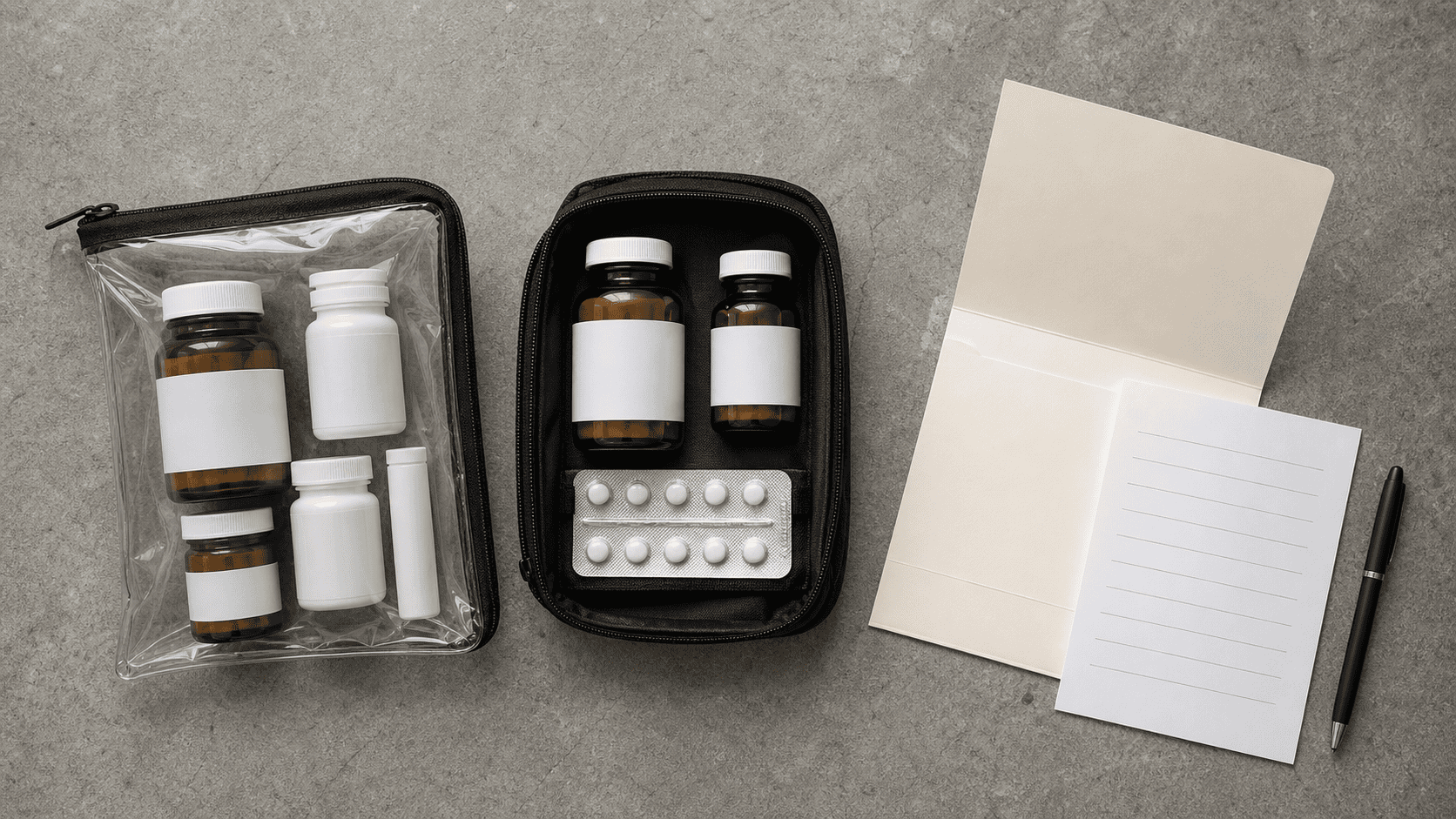
Keep the medicine in its original pharmacy packaging. The label should show your name, the medicine name, and the dosage. Carry a copy of the written prescription using the generic name, not only the U.S. brand name. Ask the prescribing clinician for a signed letter that lists the diagnosis or medical need, active ingredient, dose, total quantity, and travel dates.
For a medicine that China may classify as a narcotic or Category I psychotropic substance, the Chinese regulation refers specifically to a medical diagnosis certificate and identification. A casual doctor’s note is not automatically the same document, and neither one is an advance approval from Customs.
For Category II psychotropic medicines, Shanghai Customs advises travelers to carry supporting material such as prescriptions, medical records, or diagnostic certificates and to declare the medicine proactively at the port. Because this is official port guidance, it deserves more weight than an anonymous account of someone who “walked through without being asked.”
The CDC recommends keeping medicine in carry-on luggage rather than checked baggage. It also recommends original labeled containers, copies of prescriptions, and a clinician’s note for controlled substances or injectable medicines. These are strong preparation steps. They should not be misrepresented as one blanket Chinese legal requirement for every ordinary tablet.
When should you use the red Customs channel?
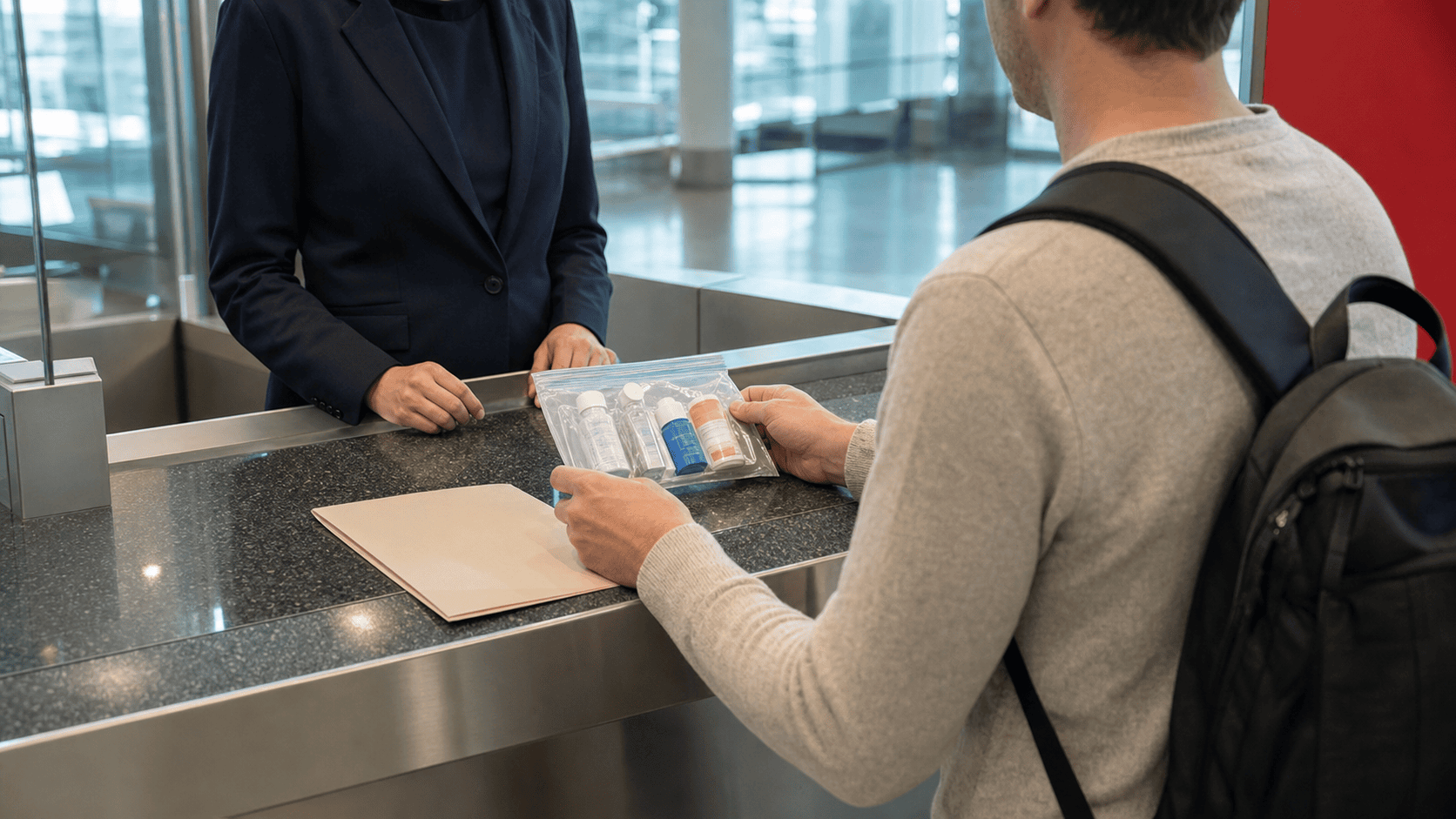
China has a green channel for travelers with nothing to declare and a red channel for goods that require declaration. The Customs passenger guide says travelers who are unsure which channel to use should ask an officer or choose the red channel.
An ordinary prescription in a reasonable personal quantity is not automatically proof that every traveler must use the red channel. Controlled or restricted medicine is different. If the ingredient appears in a controlled category, your supporting documents are unclear, or you have not received a clear answer before departure, proactive declaration is the safer course.
Do not hide medicine, remove labels, or scatter tablets through unmarked containers. A pill organizer may be convenient at home, but it makes the medicine harder to identify during an inspection.
Which medicines deserve extra checking?
The CDC tells international travelers to pay particular attention to medicines that countries often control differently. Examples include opioid pain medicines, sedatives, stimulants, some sleep medicines, injectable products, and products containing CBD or pseudoephedrine.
This is a screening list, not a China-specific banned list. The next step is to check the exact ingredient against current Chinese rules and ask the appropriate authority.
The U.S. Department of State warns travelers not to bring cannabis or cannabis-derived products into China and notes that products legal elsewhere may be illegal there. Do not treat a U.S. prescription, state-law legality, or a “THC-free” retail label as enough proof for entry.
If you cannot confirm a medicine’s status, speak with the prescribing clinician before changing anything. Do not stop, reduce, or substitute a prescription based on a blog post. Ask the Chinese Embassy or consulate about entry rules and ask your clinician about safe medical options if the original medicine cannot travel.
A practical pre-flight checklist
Four to six weeks before departure:
- List every medicine by generic active ingredient, strength, dosage form, and total quantity.
- Check the current Chinese controlled-substance rules and the INCB country page, while remembering that INCB tells travelers to confirm details with the destination government.
- Contact the Embassy of the People’s Republic of China or the consulate responsible for your area when a medicine is controlled, unclear, injectable, or needed in a large quantity.
- Ask your clinician for the prescription and a signed medical letter or diagnosis document with the generic name, dose, purpose, and travel dates.
- Keep the medicine in original labeled packaging and pack it in your carry-on.
- Check the rules of any country where you will clear Customs during a stopover.
- Save digital copies of the prescription and medical documents, but carry paper copies as well.
- If the classification or declaration route is still unclear on arrival, ask Customs and use the red channel rather than guessing.
For the rest of your medical preparation, read Getting Sick in China: Hospitals, Pharmacies & Payment. The broader China Survival Guide for Tourists covers payment, connectivity, transport, and arrival preparation.
What this guide cannot decide for you
No public checklist can approve a specific medicine for a specific traveler. Classification can depend on the active ingredient, formulation, concentration, amount, supporting documents, and current controlled-substance catalogues. Customs makes the entry decision.
A useful answer from an authority should identify your active ingredient and quantity. A vague answer about a brand or medical condition is not enough. Keep the written response with your travel documents if you receive one.
Rules and official guidance were checked on July 24, 2026. Recheck them before departure, especially if you take a stimulant, opioid, sedative, sleep medicine, injectable medicine, or any cannabis-derived product.
Official sources
- China’s Regulations on the Administration of Narcotic Drugs and Psychotropic Substances
- Shanghai Customs: How can I bring psychotropic medications into China?
- China Customs: Clearance of passengers’ carried baggage
- China Customs: International passenger clearance guide
- U.S. Department of State: China travel advisory
- CDC Yellow Book: Traveling with prohibited or restricted medications
- CDC: Traveling abroad with medicine
- INCB country regulations for travelers
Related decisions for this part of the trip
- Travel-safety preparation guide
- Food Allergies in China: Ingredients and Meal Backups
- Getting Sick in China: Care, Payment and Records
- Travel Insurance for China: Compare the Actual Coverage
Turn this decision into a workable route
Medical needs and document checks must shape the route early; LOCLYX does not determine medicine-import eligibility. LOCLYX is a China-based local team. We tailor a written plan to your dates, budget, interests, pace and constraints. Planning costs $19.9 per travel day; travel purchases are separate and we do not make reservations or provide ground services.
Use the relevant guides above to settle this question, then compare the full planning deliverable. Compare the sample itinerary and pricing and scope before using Plan My Trip. Delivery and revision conditions are in the published policy.
Update note
Editorial review: October 12, 2026. Use official and provider references for the route and service they cover. Operational availability, individual eligibility, medical decisions and local procedures require the appropriate current or professional check.