Short answer: Foreign visitors can withdraw RMB cash at ATMs displaying the logo of their card network, according to China’s official payment guidance. But an ATM is a backup route, not something to test for the first time when you are already trying to pay. Use a machine with your card network’s logo, keep a second payment method ready, and stop before repeated failed attempts turn one decline into a card-security problem.
Evidence checked: September 8, 2026. China’s government payment guide says overseas visitors can withdraw RMB at ATMs displaying the logos of the corresponding bank-card organizations. The exact ATM, card-network acceptance, issuer controls, fees, exchange rate and per-transaction limit remain specific to the machine and your card issuer.
Check the machine, issuer and transaction separately
| Situation | Useful next step | Important limit |
|---|---|---|
| Before using an ATM | Read the displayed card-network logos and inspect the machine. | A bank name does not guarantee every machine accepts your card. |
| A withdrawal is declined | Check issuer settings and the error before repeated attempts. | Do not assume changing the requested amount solves a blocked account. |
| Fees or conversion offered | Read the specific screen and issuer conditions. | There is no universal traveler fee or guaranteed rate. |
Key Takeaways
- Official guidance says foreign visitors can withdraw RMB at ATMs that display the logo of the corresponding card organization.
- Look at the machine before inserting your card; a large bank name alone does not prove your particular card will work there.
- A decline can come from your issuer, a card setting, a limit, a network mismatch or the individual ATM. It does not automatically mean your trip is blocked.
- Do not keep retrying the same failed request. Keep the card, note the machine location and change one variable at a time.
- Keep at least two payment routes: a verified mobile-payment setup or second card, plus a sensible amount of RMB cash.
- Never put your PIN, full card number, balance or a live banking screen into a travel screenshot or support chat.
- Use an official bank, card issuer or payment-app support route for a blocked transaction; do not pay an informal stranger to “fix” your card.
Can Foreign Visitors Withdraw RMB From ATMs in China?
Yes—when the ATM displays the logo of the card organization that issued or supports your card. The State Council’s payment guide for overseas visitors says that RMB cash can be withdrawn with bank cards at ATMs carrying the corresponding bank-card-organization logos. A People’s Bank of China visitor guide gives the same practical instruction for overseas cards.
That is an acceptance path, not a blanket success guarantee. The ATM can only process the card if the network relationship, your issuer’s security controls, your available balance or credit, your account settings and the machine’s live condition all line up. Treat the first successful withdrawal as a useful setup check, not proof that every ATM or every future transaction will behave the same way.
How Do You Choose an ATM?
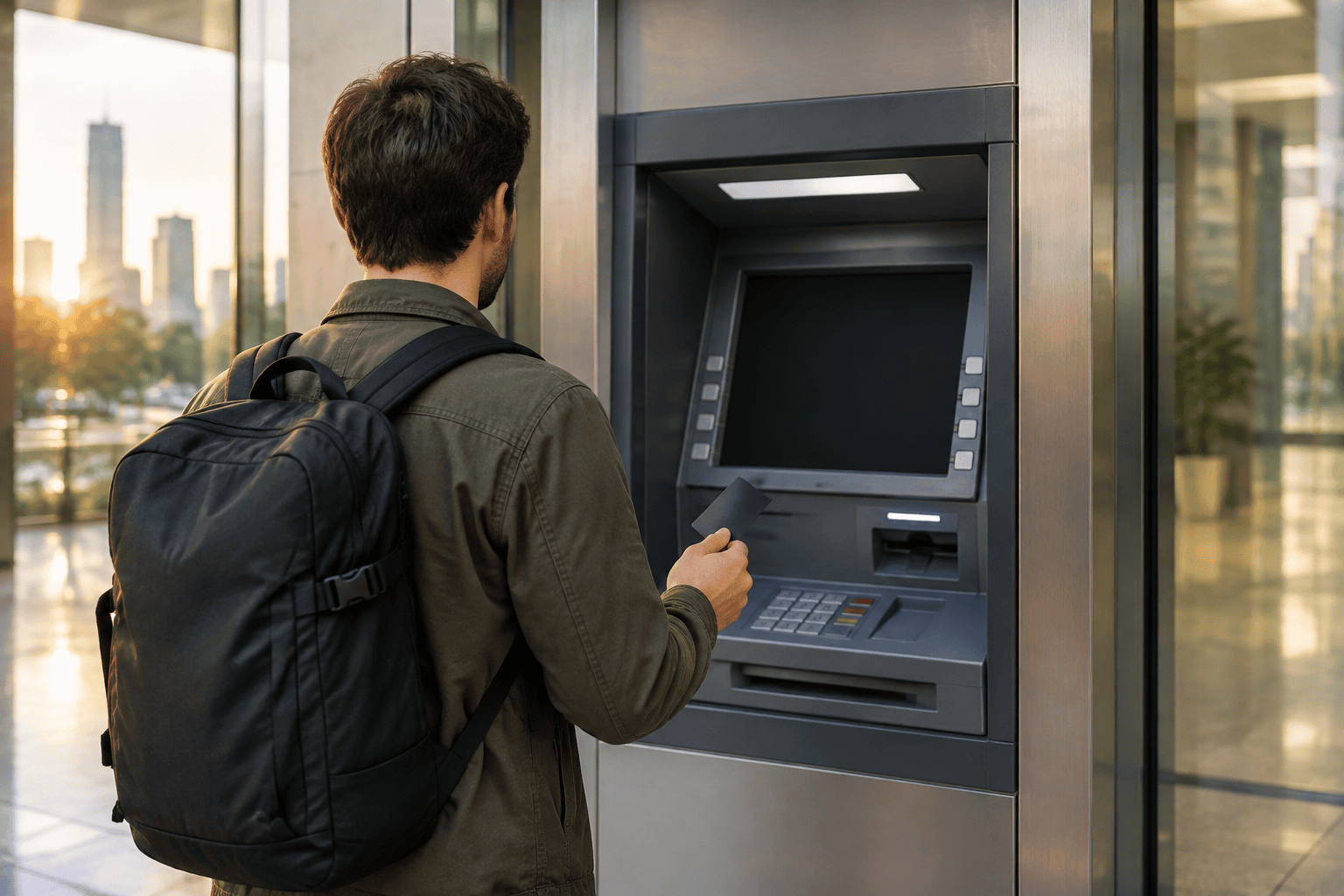
Choose a bank-operated ATM and inspect the network logos on that specific machine. Do not assume that every machine at a familiar bank accepts every overseas card. The official rule is tied to the logo of the corresponding card organization, so the visible marks on the ATM matter more than a generic claim that a particular bank “always works.”
- Use an ATM in a staffed bank branch, airport, major station or established shopping area when possible.
- Check the visible card-network logos before you insert the card.
- Prefer a machine where you can step aside safely if you need to read a decline message or call your issuer.
- Avoid a damaged machine, an unusual attachment near the card slot or anyone offering unsolicited help.
- Keep the machine location in your notes until the cash and card are both accounted for.
What Should You Do Before Your First Withdrawal?
Prepare your card issuer before you need cash. Check that your card is active for international ATM use, that you know the PIN, and that your bank can reach you while you are abroad. Some issuers provide a travel notice, international-use switch or transaction-control setting; others do not. Follow the controls and support instructions for your own issuer rather than copying another traveler’s banking setup.
- Bring a physical card, not only a phone-based wallet.
- Carry a second card stored separately when practical.
- Know your issuer’s international support route before departure.
- Check withdrawal, cash-advance and daily-limit settings that apply to your own account.
- Do a small, sensible test withdrawal early in the trip—not late at night before a critical transfer.
- Keep mobile payment configured too; cash and mobile payment are complementary backups, not rival systems.
For the setup that should handle most day-to-day purchases, see our Alipay guide for foreign visitors. For U.S. PayPal users, the newer PayPal World connection is another option at supported Weixin Pay merchant routes—but it is not a replacement for every card, cash or app backup.
What If the ATM Declines Your Card?
Stop, keep the card and troubleshoot in a controlled order. A decline message rarely tells you the full reason. Repeated attempts can trigger fraud controls, use up an attempt limit or make it harder to identify what changed. Do not hand the card to a stranger, reveal your PIN or let someone photograph the screen.
- Cancel the transaction and make sure the physical card is returned.
- Record the bank name, machine location and approximate time without photographing private account details.
- Check whether the machine visibly supports your card network.
- Try a different bank-operated ATM only if the first machine was not clearly compatible or appeared to malfunction.
- If the same card fails again, use a second payment route and contact the issuer through the number or secure channel you already trust.
- Ask the issuer whether international cash withdrawal, a security control, a PIN issue, a limit or a temporary block caused the decline.
If your main mobile-payment route is also failing, use the separate recovery steps in our guide to what to do when Alipay stops working in China. Do not repeatedly unlink and re-add cards while you are standing at a checkout counter; move to a stable connection and follow the provider’s own prompts.
What Fees and Exchange Rate Will You Pay?
There is no universal traveler fee or guaranteed rate. Your card issuer may charge an overseas ATM, cash-advance or foreign-transaction fee. The ATM operator may present its own charge or conversion choice. The network and issuer can also apply their own exchange-rate terms. Read the machine screen before approval and check the transaction later in your issuer account.
Do not write down a fixed “China ATM fee” from a blog and expect it to apply to your card. The actionable rule is to understand your issuer’s cash-withdrawal terms before departure, then review any charge and conversion disclosure the specific ATM presents. If the screen is unclear, cancel rather than guessing.
How Much Cash Should You Carry?
Carry enough to bridge a payment problem, not so much that a loss becomes the trip’s biggest crisis. The right amount depends on your city, route, hotel, card setup and comfort with mobile payment. Cash can help when a phone is dead, a card is temporarily blocked, a small merchant does not accept your preferred foreign-card route, or connectivity is poor.
Split money between a day wallet and a separate secure place. Keep your passport, bank cards and emergency cash apart. If you carry a larger amount, do not count it openly at an ATM or leave it loose in a bag at a restaurant. The purpose of cash is resilience, not a reason to abandon your better-tracked payment methods.
Can You Exchange Foreign Currency Instead?
Yes, official guidance also identifies bank outlets with currency-exchange signs, qualified financial institutions and self-service exchange kiosks as routes to RMB cash. Accepted currencies, documents, opening hours and rates vary by location. Ask the staff at the actual outlet what it can process before treating it as a rescue plan.
Currency exchange is useful when your card will not work or when you deliberately carry a small emergency reserve. It is not necessarily faster than an ATM, and it does not solve an expired passport, a lost card or an account-level fraud block. Use the route that you can verify in the moment.
What If an ATM Keeps Your Card?
Do not leave the machine without knowing which bank owns it and what happened to the card. If the ATM is inside a staffed branch during opening hours, ask the bank staff through the official counter. If it is unattended, record the location and any visible machine reference, then call your issuer promptly. Your issuer can advise whether to block the card and arrange a replacement or emergency cash process.
Do not trust a person who says they can retrieve the card from the machine. If the card is lost or stolen rather than retained, follow the immediate steps in our lost or stolen phone guide to secure your accounts and access to payment apps; if you lose a passport too, use our U.S. passport recovery guide as the separate identity-document recovery path.
ATM Cash Backup Checklist
- One physical international card and a separately stored backup card.
- Issuer contact method and PIN available securely, not written on the card.
- ATM visibly displaying the relevant card-network logo.
- A small early test before a long transfer day.
- Mobile payment configured and a way to keep the phone charged.
- A modest cash reserve split between secure locations.
- No public screenshots of card, PIN, balance, receipt or live ATM screen.
- A calm stop-and-call plan if the card is declined, retained or blocked.
Bottom Line
Foreign cards can be used to withdraw RMB at compatible, logo-marked ATMs in China, but the reliable traveler setup is layered: a verified mobile-payment route, a physical card, a backup card and a modest cash reserve. If an ATM says no, do not panic or brute-force retries. Protect the card, change one variable, and use your issuer’s official support route.
Official Sources and Update Note
- State Council: Payment service guide for overseas visitors to China
- People’s Bank of China: Shanghai payment service guide for overseas visitors
- State Council: Guide to Payment Services in China
Checked September 8, 2026. ATM network acceptance, card issuer controls, machine availability, cash limits, fees, exchange rates and exchange-counter hours can change. Confirm the exact terms shown by your issuer and the actual ATM or outlet before completing a transaction.
Related decisions for this part of the trip
- Alipay preparation guide
- Alipay Not Working in China? Diagnose the Failed Step
- How to Pay with Alipay in China: A Counter Checklist
- China Trip Cost: Build a Budget for Your Actual Route
Turn this decision into a workable route
A practical arrival plan includes accessible cash and a payment backup suited to the actual purchases. LOCLYX is a China-based local team. We tailor a written plan to your dates, budget, interests, pace and constraints. Planning costs $19.9 per travel day; travel purchases are separate and we do not make reservations or provide ground services.
Use the relevant guides above to settle this question, then compare the full planning deliverable. Compare the sample itinerary and pricing and scope before using Plan My Trip. Delivery and revision conditions are in the published policy.
Update note
Editorial review: October 12, 2026. Use official and provider references for the route and service they cover. Operational availability, individual eligibility, medical decisions and local procedures require the appropriate current or professional check.