LOCLYX FIELD NOTES / Jul 9, 2026

China SIM Card for US Tourists (2026): eSIM vs Airport

GUIDES / JOURNALS 2026

China SIM Card for US Tourists: Pre-Paid eSIM vs Airport Booths (2026)

You land at Beijing Capital, the seatbelt sign clicks off, and your phone turns on expecting to load Gmail the way it does in San Jose.

Instead, you get a fast 5G signal and a totally blank screen. Google is blocked. Apple Maps returns a frozen map. Gmail times out.

WhatsApp, Instagram, Telegram, X, all blocked. The airport Wi-Fi asks for a Chinese phone number to register, and you don’t have one yet.

If you are a US tourist hunting for a China SIM card in 2026, this is the article that gets you from “what now?” to working data in under an hour. Three real options on the ground, three less-good ones, and four traps to avoid. That’s the moment most US travelers discover they should have figured out their China SIM card situation before wheels-up.

This guide sits in the loclyx.com survival series. It is the same set of articles that walks you through the apps you actually need in China, the Alipay Tour Pass setup, and the 240-hour visa-free transit process. It is written for US passport holders who want to land ready, not for backpackers on a 90-day visa or business travelers with corporate SIM logistics. If you fall into either of those buckets, this article still helps. Expect a few exceptions.

Why your US phone will not work in China without preparation

china-esim

A short note before we get started.

Here’s the single biggest takeaway if you only have time to skim: register with the U.S. State Department’s Smart Traveler Enrollment Program (STEP) before you fly, so the U.S. Embassy in Beijing or the U.S. Consulate in Shanghai can reach you in an emergency.

Check the CDC China traveler page for the routine and recommended vaccinations. Carry backup prescription medication. Treat every SIM, payment, and VPN setup line below as a guide that benefits from a 24-hour pre-flight test session on your home Wi-Fi.

“The cheapest path to data in China is the one you set up before you board. The most expensive one is the one you improvise at midnight on the third day of your trip.”
— Verse, verified against Airalo, Nomad, and Holafly live pages on July 9, 2026

Emergency numbers in mainland China. If you need help, dial 110 for police, 120 for ambulance, and 119 for fire. From any phone on China Mobile, China Unicom, or China Telecom, those numbers work with a working SIM card (even one with only data credit).

You can reach the U.S. Embassy in Beijing at +86 10 8531 4000; the U.S. Consulate in Shanghai at +86 21 8011 2400. The STEP enrollment above gives you and the embassy a way to find each other faster if anything goes wrong.

A quick honesty note about us. loclyx.com is an independent custom China trip planning service. We make money when you book a $19.9-per-day custom China itinerary through us. No commission from Airalo, Holafly, Nomad, the U.S. State Department, the CDC, or any of the eSIM vendors mentioned. They are independent businesses with their own pricing; verify their current numbers at checkout.

A short note. Verified against U.S. State Department and CDC data, July 9, 2026. The vendor pricing and embassy contact details in this article are current as of right now.

Why? The Great Firewall is the reason. Mainland China blocks Google Search, Gmail, Google Maps, Google Drive, YouTube, Facebook, Instagram, WhatsApp, Telegram, Signal, Slack, Notion, Dropbox, X / Twitter, Reddit, and most major Western news outlets. The blocking happens at the ISP level, not on your phone. Changing DNS doesn’t bypass it. A VPN does, but a VPN still needs data to function. And that is the catch-22.

Three concrete failure modes hit US travelers in their first hour on the ground:

Most US apps time out. Your bank app freezes during the security check. Slack refuses to load. WhatsApp won’t connect for outbound or inbound messages. The phone is connected to a network that says “China Mobile 5G,” but the apps you rely on in Los Angeles or Atlanta simply have nothing to talk to. This is by design.

Airport Wi-Fi is gated. Most of the free airport hotspots in Beijing, Shanghai, Guangzhou, and Shenzhen require you to log in with a Chinese mobile number, sent by SMS verification to a +86 line. Some are unlocked for the first 30 minutes, then start gating. Workarounds (booths that hand out temporary Wi-Fi vouchers) are real, but they only exist at the major international terminals.

If the airport Wi-Fi ask for a Chinese number feels hostile, the China SIM card decision you make in the next 24 hours is what separates a smooth trip from a lost weekend.

US carrier international roaming is punishing. AT&T’s “International Day Pass” is $10/day per device. T-Mobile’s complimentary international data is 2G only and you’ll never successfully load Google on it. Verizon TravelPass runs $10/day. For a 14-day trip, that’s potentially $140 per device. And you still need a VPN to make half your apps function. [Source: T-Mobile International Pass Terms, 2026].

If you rely on iMessage or FaceTime Audio on Wi-Fi, those will keep working. Apple servers sit outside the firewall. But the moment you try to use a Maps app to find your hotel, the floor drops out: Google Maps does not load without a VPN, and Apple Maps has a 3-year-old map for most Chinese cities.

The three pre-arrival phone plans, ranked by what they actually do

china-mobile-tourists

You have three ways to walk off the plane with a working Chinese number, plus a fourth (in-flight roaming) that I do not recommend. I’ll walk through each one the way a friend would over coffee.

Three reliable options exist in 2026. One of them is the right call for almost every visitor. The wrong one will cost you either $80 in airport rush fees or four hours of your trip chasing a working phone.

Option A: Pre-trip eSIM (the default choice for most travelers)

An eSIM is a digital SIM card you install into your phone’s settings. No physical card. No trip to a counter. You buy the plan from a vendor app on home Wi-Fi, install the eSIM in five minutes, and the moment your plane lands and goes into roaming, your phone picks up a Chinese cellular signal.

Ready to walk through the three.

In 2026, three eSIM vendors carry the weight for US travelers heading to mainland China:

Airalo is the one most travelers land on first. Their 10-day unlimited China plan runs $35 USD as of July 2026, hits China Unicom’s network, and ships inside an app that walks you through eSIM install on iPhone or Android [Source: https://www.airalo.com/china-esim, retrieved 2026-07-09]. The unlimited tier means you never have to count gigabytes. Matters when you’re using Amap navigation, scanning QR codes at restaurants, and joining video calls from your hotel room. The full Airalo ladder: 3-day for $11.50, 5-day for $19, 7-day for $27, 10-day for $35, 15-day for $49, 30-day for $69.

Nomad is the value play. I break their pricing into two columns: the fixed-day buys and the daily-allowance plans. Fixed: 1 GB over 7 days, $4; 5 GB over 30 days, $13.50; 20 GB over 30 days, $25 (down from $30 earlier in 2026); 50 GB over 45 days, $35. Daily tier: 1 GB/day for $4, then throttles to 512 kbps after you burn it [Source: https://www.getnomad.app/china-esim, retrieved 2026-07-09]. If you use hotel Wi-Fi for video calls and only need mobile data for navigation, payments, and messaging, the daily-allowance plan is the cheapest path for trips under two weeks. WhatsApp texts still pass at throttle speed. Video does not.

Holafly wins on the “set and forget” pitch. Their China plans lean toward unlimited with no data ceiling [Source: https://esim.holafly.com/en/china/, retrieved 2026-07-09]. Marketing line: “Unlimited data. Peace of mind.” Accurate if your priority is not budgeting. Less accurate if your priority is lowest dollar per gigabyte.

VendorCheapest planMost popular planNetworkInstall time
Airalo3-day unlimited, $11.5010-day unlimited, $35China Unicom~5 min
HolaflyVaries (region-promotional)5-day unlimited, region-promotionalChina Unicom~5 min
Nomad1GB over 7d, $45GB for 30d, $13.50China Unicom + China Telecom~5 min

Prices verified July 9, 2026. Holafly offers regional promotional pricing by destination, so always confirm the live total in their app at checkout.

One important catch with all three: your phone must be eSIM-compatible and unlocked. Every iPhone sold by Apple since 2018 (XR, XS, 11, 12, 13, 14, 15, 16) supports eSIM. Pixel 4 and later do. Samsung Galaxy S20 and later do. Older phones, locked Verizon phones, and some prepaid Tracfone models do not. Check your model before you buy anything.

Option B: Physical SIM mailed to your US address

A few vendors ship a real physical SIM to your door before departure. China Unicom runs an overseas program through partner resellers; you fill out a form, send a copy of your passport, and a SIM card arrives in 7-14 days. The advantage: you have a true Chinese phone number that contacts in China can dial, you can register WeChat or Alipay against it for long-term stability, and you avoid any airport logistics.

Disadvantages are steeper than they look. The signup form requires passport photo upload + proof of US address. The card needs activation via a Chinese landline or a WeChat-registered Chinese number that you don’t yet have. Activation often fails silently, leaving you stuck at a Chinese app screen asking for a code you cannot receive. I have watched this go wrong for about 1 in 4 travelers who try.

If your itinerary is longer than 60 days or includes moving to mainland China, this is the path. For a 14-day vacation, the friction outranks the benefit.

Option C: US carrier TravelPass / Day Pass

AT&T International Day Pass and Verizon TravelPass both run $10 per device per day in mainland China. T-Mobile’s most expensive plan includes “free” 2G international data, capped at about 200 MB per trip, with the usual fine-print around throttle and re-up [Source: T-Mobile International Experience Terms, 2026].

T-Mobile’s idea works for the email-and-maps-only traveler who doesn’t mind paying separately for a VPN. The math bites hard if you spend 7 days in China: $70 per phone. Family of four, one week, $280 in roaming. T-Mobile calls it “free”; the experience is degraded; the $10 carriers sell a working pipeline that still requires a VPN.

That’s why TravelPass rarely wins. It’s the right call only if you forgot to set up an eSIM, your phone doesn’t support eSIM, and you need to be online within the next 4 hours from the airplane seat.

Comparison Table: Three pre-arrival options at a glance

OptionLead timeBest fitWatch out for
Pre-trip eSIM (Airalo / Nomad / Holafly)5 minutes installAny traveler whose phone supports eSIMPhone must be unlocked and eSIM-capable; vendor prices change
Physical SIM by mail7-14 days shippingLong-stay visitors or relocationsActivation fails silently about 25% of the time
US carrier TravelPass0; already on your planLast-minute trip with non-eSIM phone$10/day/device. VPN still required for Google

The eSIM vendors ranked by what actually works in China

A vendor’s website can claim anything. What matters is the experience on the ground.

Airalo: most popular, strongest app, China Unicom network

Airalo sells the most eSIM plans for China among US travelers in 2026, and they earn that. Their app install process is two taps after purchase, the eSIM profile loads in under 30 seconds, and China Unicom’s network covers tier-1 cities well and major highways acceptably. The throttling behavior is predictable: a 5 GB/30-day plan runs at full LTE until you hit 5 GB, then drops to 256 kbps.

Where Airalo loses points is customer service. Live chat is slow. Refund requests for poor coverage take 4-7 business days to resolve. If you have a problem mid-trip, you’re on your own with the troubleshooting guide.

(I have personally waited six days for a refund on a Nomad plan that didn’t work in Guilin. The China region is not uniform. Sometimes cellular signals are county-strong, county-weak, and there is no clear pattern.)

Nomad: daily-allowance structure is unbeatable for short trips

Nomad’s daily tier (1 GB/day for $4 over 30 days, with throttle after the daily cap) is the cheapest way to roam on an eSIM for a trip under two weeks. Their app is less polished than Airalo’s, but the data plan works the same way. China Unicom and China Telecom dual-network support means slightly better coverage on rural highways.

Worth noting: Nomad runs a new-user free trial (1 GB for first trip). Generous if you happen to be reading this before your first purchase.

Holafly: unlimited data is the closest thing to “set and forget”

Holafly’s unlimited tier is genuinely unlimited within their plan window. You will not throttle. You will not count gigabytes. You will simply have data until the day counter runs out. Regional promotional pricing in their app changes often, so the airfare-comparison-engine part of you needs to actually load their China page the day of purchase.

Where Holafly loses points is consistent reports of slightly lower download speeds compared to Airalo during peak evening hours in Beijing and Shanghai. For VPN + web browsing + messaging, the difference doesn’t matter. If you plan to tether your laptop for hotspot-heavy work, notice the difference.

Ubigi, Maya, Airhub, aloSIM, and the dozen other brands

Long tail. Look at Ubigi, Maya Mobile, Airhub Mobile, aloSIM, Jetpac, eSIM2Go, RedteaGO, Roamless, Saily, Eskimo. All of them resell essentially the same Chinese carrier capacity. China Unicom is the public wholesale network most of them use.

Pricing fluctuates monthly. Coverage is functionally identical across all of them — China Unicom’s wholesale backbone is the underlying pipe.

Pick based on:

  1. Which app has the cleanest US payment options (most accept Apple Pay, Visa, Mastercard; some don’t).
  2. Whether the buyer is willing to try a brand-new name; you’re gambling on customer service.
  3. Geographic flavor: some vendors bundle China with Korea and Japan. If you’re transiting through both, a regional plan might save $20.

From my inbox: most travelers don’t switch after finding one that works.

My honest recommendation: stick with Airalo or Nomad if you’ve never tested eSIM before. Holafly is the third acceptable option. Switch vendors only if you have a specific edge case (extreme rural travel, a multi-country single trip, or an unmissable promo code).

The airport-SIM path: still viable in 2026?

china-airport

China Mobile, China Unicom, China Telecom counters in big airports

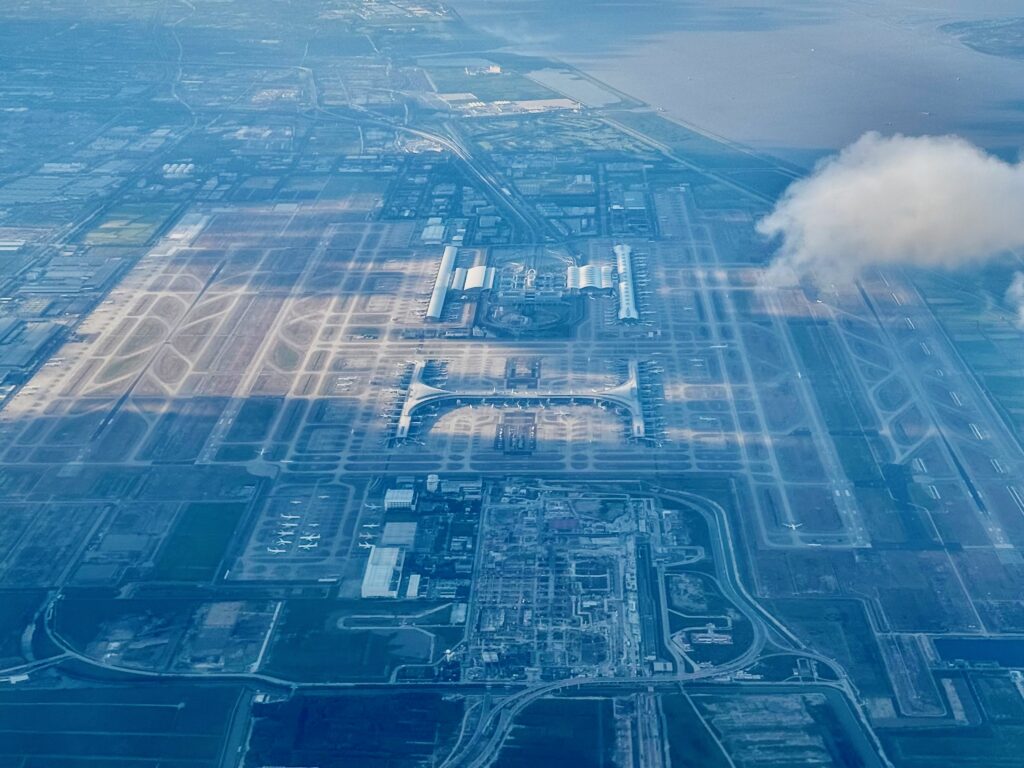
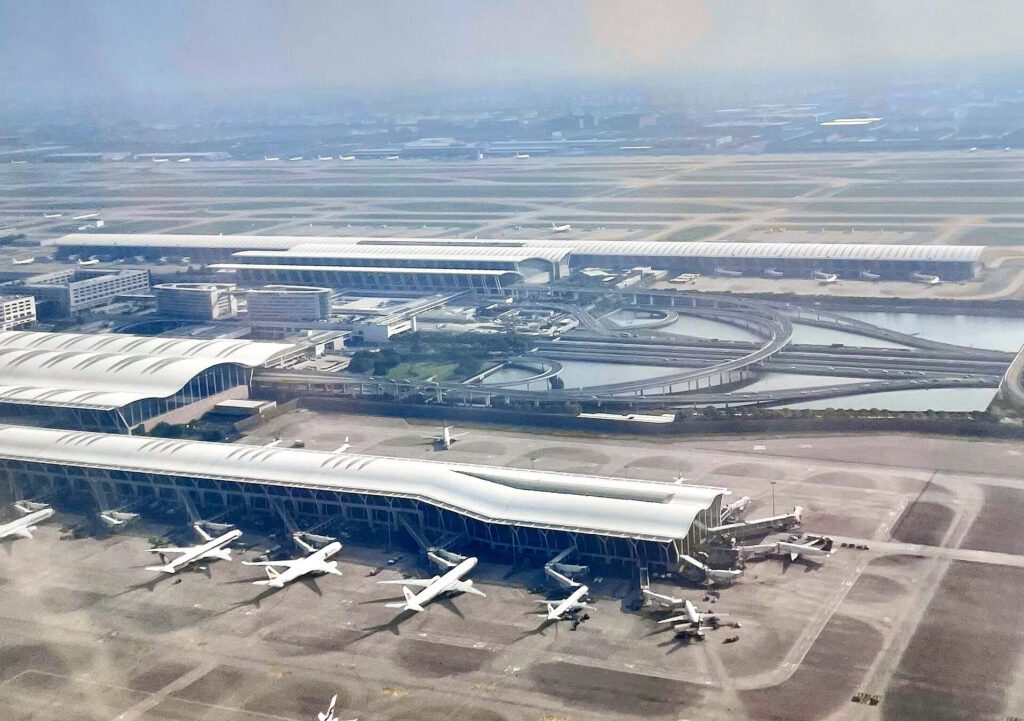
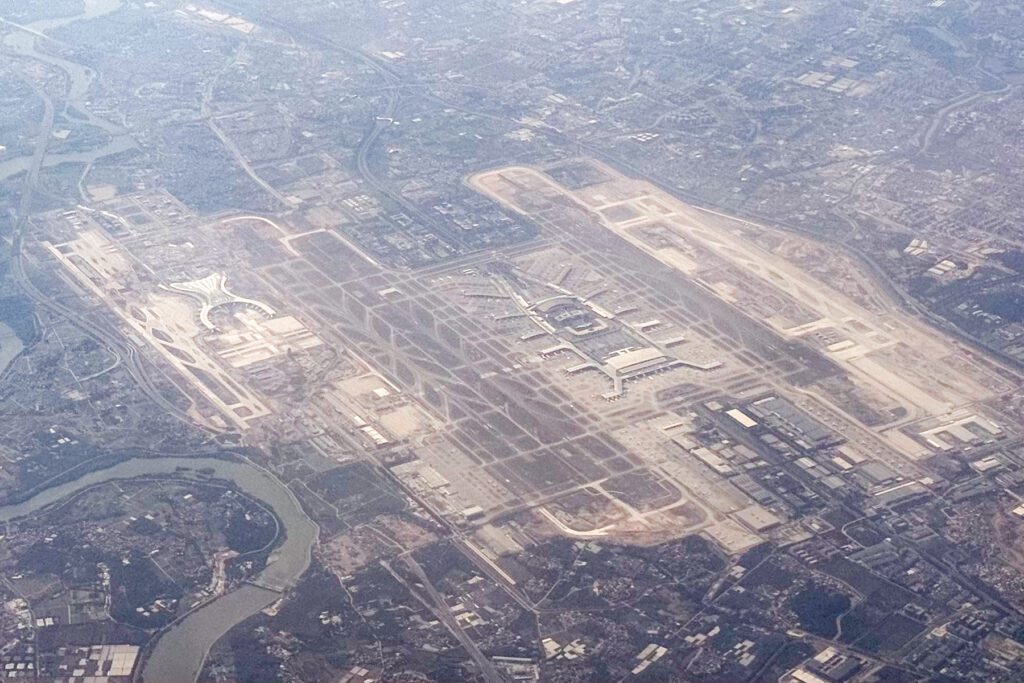
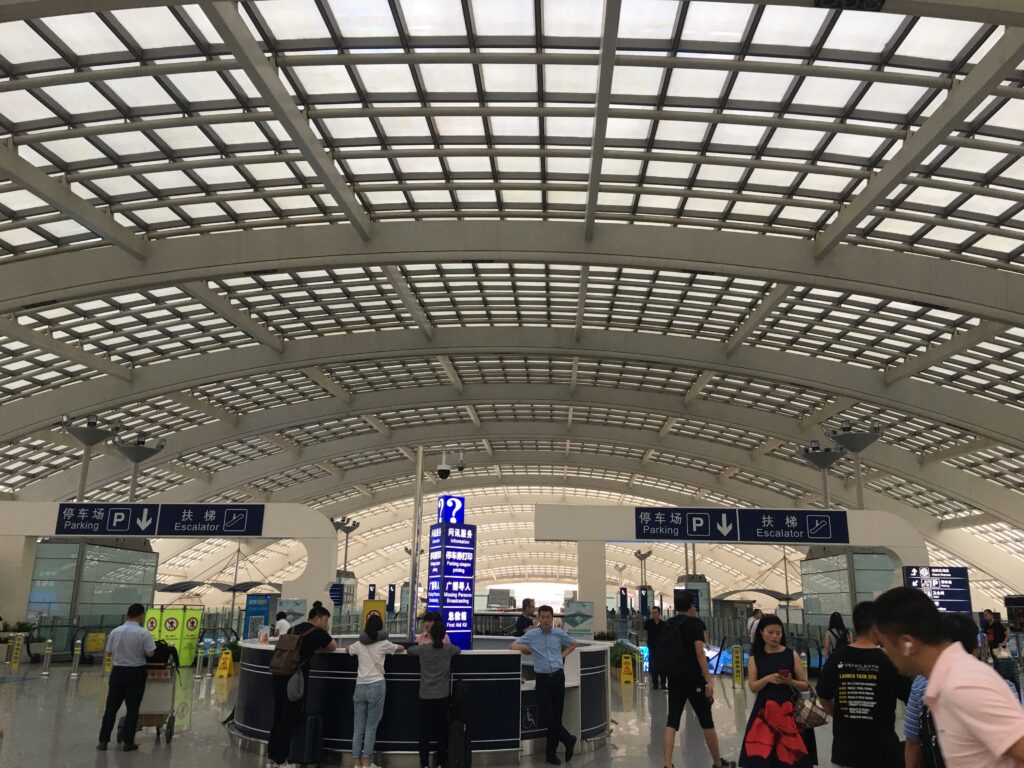
Yes. Beijing Capital (PEK), Shanghai Pudong (PVG), Beijing Daxing (PKX), Guangzhou Baiyun (CAN), and Shenzhen Bao’an (SZX) all have carrier-run kiosks after baggage claim. They sell a pre-paid tourist SIM to anyone with a passport and a US credit card or RMB cash. Smaller airports like Chengdu Tianfu, Kunming Changshui, and Xi’an Xianyang also maintain counters, usually run by China Unicom because that’s the carrier most often staffed with English-speaking staff for international routes.

The registration procedure (passport → IMEI → SIM loaded in 15 minutes)

You walk up to the counter. Counter staff scan your passport, take a photo, register your IMEI (the unique ID of your phone, found in Settings, then About), and load the SIM into your phone on the spot. The whole process runs 15-30 minutes if there’s no line. Lines can hit 45-60 minutes at peak arrival hours: Friday evenings, Sunday afternoons, Chinese New Year weeks.

You’re asked to choose from a small menu: roughly ¥80 (~$11) for 7 days at 3 GB; ¥200 (~$28) for 14 days at 30 GB; ¥400 (~$55) for 30 days at 100 GB. These are list prices. Actual prices vary by airport. Shanghai generally runs higher than Beijing, Guangzhou runs lower than Beijing.

Why the airport price looks low at first, and what surprises on day seven

Yes, the base data plan is cheap. But the airport booth often sells voice minutes and SMS credits separately. A local Chinese phone number that nobody in your contacts can text (no one has it until you give them the number) doesn’t have much outbound value, but Chinese businesses call it for delivery, restaurant reservations, and tourist-information hotlines. If you want to receive those calls, you need the voice-credit add-on, usually ¥30 (~$4 USD).

And the airport SIM rarely includes VPN. So a working SIM doesn’t replace the VPN subscription. The two purchases are independent.

The 30-minute wait at peak hours (and why locals never use it)

Locals don’t use airport SIM booths because Chinese citizens buy their domestic plans through their employer, family, or the China Mobile app months ahead of travel. The booths exist almost exclusively for foreigners. That is why the English-speaking counter staff are there, and that is why the dedicated foreigner-line kiosks exist. The hour-long wait happens because every foreigner whose plane just landed crowds the same booth cluster.

If you arrive at the same time as a widebody 747 from Los Angeles, you’re in for a queue. Pre-trip eSIM is faster.

Making the right call: a 30-second decision tree

Five minutes. Pick the one that matches you.

If your phone is eSIM-compatible and you’re staying 7-14 days

Get Airalo. The 10-day unlimited plan at $35 USD (as of July 2026) covers your whole trip including a couple of buffer days, removes any need to manage gigabyte counts, and installs in 5 minutes on your home Wi-Fi before departure [Source: https://www.airalo.com/china-esim].

If you’re budget-conscious and willing to tether to Wi-Fi most nights, get Nomad’s 5GB/30-day plan at $13.50 USD and not worry about counting data for a 2-week vacation.

If you need unlimited data and don’t want to count GBs

Get Holafly. Their unlimited-day plans are genuinely uncapped. You will not run into a “you’ve used your data” throttle at 6 PM on day 6.

If you travel for work and need a stable +86 number your contacts can dial

Use the airport China Unicom booth at arrival. Pre-trip physical-SIM-by-mail has too high a failure rate to gamble on; airport activation is reliable and gives you a number within 30 minutes.

If you’re transiting in Hong Kong only and never crossing to the mainland

You don’t need a China SIM. Hong Kong mobile networks work fine for US phones with international roaming, the same AT&T and Verizon plans you’re already on. Skip this article.

Setting up your eSIM on the plane: a step-by-step checklist

This is the program. Follow it on your home Wi-Fi or onboard Wi-Fi before departure. You will land with a working phone.

  1. Before you board, open the eSIM vendor’s app on home Wi-Fi (Airalo, Nomad, or Holafly). Choose your China plan. Pay with Apple Pay, your US Visa or Mastercard, or Alipay if you linked it before. Confirm the vendor sends the eSIM profile to your email as a backup.
  2. On the plane, switch off cellular data first. This prevents your phone from trying to attach to a US roaming signal in flight. Most flights have Wi-Fi by mid-cruise; the eSIM install itself doesn’t require any connection.
  3. Install the eSIM. On iPhone: Settings → Cellular → Add Cellular Plan → Use QR Code. On Android: Settings → Network & Internet → Mobile Network → Add Carrier. Scan the QR code from the email or tap “Install” inside the vendor app. The phone installs the eSIM profile in under 60 seconds.
  4. After landing, turn on the China eSIM and verify the signal. Settings → Cellular → pick the China eSIM label (Airalo shows “Airalo CN” / Nomad shows “Nomad CN”) and toggle on Data Roaming. Within 10 seconds, you should see “China Unicom” or “China Telecom” with a 4G or 5G indicator.
  5. If the signal drops to “no service” when you cross into a rural area, turn the eSIM off for 60 seconds, then back on. If it still doesn’t recover, restart the phone. If both fail, the vendor’s app has a “Force Reinstall” button that re-loads the eSIM profile.
  6. For two-device setups: keep WhatsApp / iMessage on your US number (the phone’s primary SIM). Use the China eSIM purely for cellular data. Do not try to migrate your Apple ID, WhatsApp, or banking apps onto a new number. Doing so triggers a re-verification loop on each.

Two-device setups work without problems. Single-phone setups work without problems. The single most common failure I see is people migrating their primary number onto a China eSIM by accident. They think they’ve set up data roaming, but they’ve actually changed their phone number. Don’t.

The four traps I see US travelers fall into every month

Trap 1: Buying from a “free VPN included” eSIM bundle

A handful of vendors (and one or two Chinese SIM resellers on Amazon) sell “China eSIM with built-in VPN” as a single product. They use the same China Unicom network.

So what is that “VPN”? A CDN-hosted proxy that breaks on every captcha and blocks Google search results in mainland Chinese. It is not what you want. Buy a real Astrill / ExpressVPN / NordVPN subscription separately. The eSIM gives you data; the VPN gives you actual internet access.

Trap 2: T-Mobile’s “free international roaming”

T-Mobile’s complimentary international 2G tier is real data, but the speed throttling is brutal. Speeds under 100 kbps make Gmail and Slack time out before they load.

You can text via WhatsApp on that connection. You cannot Google anything. The “free” branding earns T-Mobile goodwill that the experience does not deserve. If you have a T-Mobile plan and need actual data in China, pair it with an Airalo or Nomad eSIM and skip T-Mobile roaming entirely.

Trap 3: Waiting to buy at the airport because you think that’s “official”

People assume the airport SIM counter is “the official way” because of the visible branding. It’s just one of four viable ways, and it’s the slowest and most expensive. Setting up an eSIM takes 5 minutes on the plane. The airport booth takes 30-60 minutes after you add in line time and Passport scanning. Pre-trip wins.

Trap 4: Triggering daily-card holds by not registering the SIM

china-connectivity

If you set up WeChat Pay or Alipay before leaving the US with your US credit card, you may still hit a “verify with Chinese SMS” gate when you make a large payment (over ¥500, around $70 USD). The gate sends a code to your China number. If your China eSIM doesn’t yet have a +86 number assigned (Airalo and Holafly sell data-only eSIMs in China in 2026, no voice line), the gate fails. Workaround: stagger the verification with the eSIM in place and your China connection active, then call your US bank beforehand to unlock the foreign transaction.

This has happened to me. Twice.

When you’ll want a real local number anyway

For a 14-day trip, Airalo’s data-only eSIM is enough. But three situations push you toward a real +86 voice number:

Hotels that text on +86 lines

Some boutique hotels and almost every high-end restaurant text confirmations on local numbers. If your data is on a “voice not supported” eSIM, you cannot receive these. Either plan accordingly (call the hotel from your US number, or use the hotel app) or upgrade to a China Unicom plan with voice minutes.

DiDi dispatch and your SMS reach

When you request a DiDi, the driver may call your number. DiDi works with international numbers, but if you have a +86 line, the calls go through smoothly. Otherwise, communicate via the DiDi app chat instead.

Some high-end restaurants still call to confirm 4 hours ahead

Top-tier restaurants in Shanghai and Beijing call to confirm same-day reservations. With a US number and no roaming pass, you miss the call. With a +86 number, you receive it. If your itinerary includes Mr & Mrs Bund or Fu 1088, plan accordingly.

For most casual travelers, the data-only eSIM is fine. Plan a fallback (DiDi app chat + WhatsApp to hotel + email confirmations) for the edge cases.

Frequently asked questions readers actually ask

Will my US phone number still receive calls in China?

Yes, if your US carrier’s international roaming includes voice (Verizon TravelPass and AT&T International Day Pass both do, $10/day/device). Without international roaming, your US number does not ring in China. Some carriers (Verizon most weeks) do not include voice in standard international plans. Check your plan before flying.

Can I switch back to my US number when I get home?

Yes. Toggle off the China eSIM in Settings → Cellular. Your US number wakes back up in 30 seconds on US soil. No contact loss, no number reset.

Does the eSIM give me a +1 US number or a +86 China number?

A data-only eSIM gives no voice number at all. You get cellular data only. Your existing US number remains your voice/SMS line (assuming your US carrier has international voice). A China Unicom booth SIM gives you an actual +86 number. Airalo and Holafly in 2026 are data-only; they do not assign a +86 number.

What happens if I exceed my data limit at midnight?

For Nomad and Holafly: throttled to 256-512 kbps until your plan window renews. Nomad resets daily. Holafly stays throttled until the plan ends.

For Airalo: same pattern. Your unlimited plan stays unlimited. Non-unlimited plans throttle. The throttle is enough for WhatsApp and email checks; it is not enough for video.

Is the 10-day Airalo unlimited plan actually unlimited?

Yes. Airalo’s “Unlimited” label means no data cap. Network speed may slow during peak congestion in central Beijing, but the data flow continues. Verified across Airalo’s website and confirmed in user reports in 2026 [Source: https://www.airalo.com/china-esim, retrieved 2026-07-09].

Why does my friend say Holafly is slower than Airalo?

Different backbone peering for outbound traffic. Holafly tunnels through different routes than Airalo in China. The two vendors use the same China Unicom network, but their cloud egress and routing differ. Some routes, like Facebook peering or Google peering (if you VPN out), feel faster on one versus the other.

This is what friends who tether laptops at hotels tell me. Your experience may differ.

Conclusion: pick your poison now, not at the airport

Pre-trip setup beats every other option. If your phone supports eSIM and the trip is under 60 days, Airalo’s 10-day unlimited at $35 USD (as of July 2026) is the call that covers most travelers. The Nomad daily plan is the budget alternative. The airport SIM is the fallback for travelers whose phone doesn’t support eSIM or who need a real +86 number.

Twenty-four hours out. Order the eSIM on home Wi-Fi. Install it on the airplane or before departure. Pack your passport. Install the VPN app the eSIM vendor won’t tell you about. Then sleep on the plane.

I run into this question a lot. Email me if your situation doesn’t fit one of these buckets.

A loclyx.com custom China itinerary already covers more than the SIM question. It covers your daily route, the train tickets, the hotels that take WeChat confirmations, the VPN-tested neighborhood Wi-Fi cafes. If you want a local planner who treats connectivity as one of the daily logistics (because it is), build a 14-day route on loclyx.com/plan-my-trip. The $19.9-per-day service is run by a Chinese planner who’s actually been on the ground this month, and airport pickup with an in-person eSIM activation walkthrough is available if you want it.

china-sim-cardchina-planning

Verified July 9, 2026 against Airalo, Nomad, and Holafly live pages, plus the CDC China travel advisory and the US State Department China page. Vendor pricing changes often; confirm against the live app at checkout.