5 Countries Near China Worth Adding to Your Trip
Published on LOCLYX Blog · Updated June 2026 · Reading time ~9 minutes

Opening
If you are flying 12–16 hours to China, the marginal cost of adding one more country is often just the flight between them. For travelers with two or three weeks of vacation, combining China with a neighboring destination is the single highest-value use of your travel time.
China is geographically and culturally central to East and Southeast Asia. From Beijing you can reach Tokyo in 3 hours, Seoul in 2 hours, Bangkok in 5 hours, Hanoi in 4 hours, and Hong Kong in 3 hours by train or short flight. Add a country and you turn a China trip into an Asia trip.
This guide ranks the five best countries to combine with China, ordered by how easy the combination is — from the trivial (Hong Kong, no flight needed) to the ambitious (Vietnam, requires real planning). Each section includes flight times, visa requirements for US citizens, suggested extensions, and the trip patterns that work best.

Section 1: Hong Kong (+ Macau) — the easy addition
Effort to add: 1–4 days, no flight needed from most of China.
Hong Kong is a special administrative region of China with its own currency (HKD), immigration system, and visa policy. From most mainland Chinese cities, it is a short flight or high-speed train ride away.
How to get there
- From Shanghai or Hangzhou: 2-hour flight, $80–150; or no direct train (the Shanghai-Hong Kong high-speed line is incomplete).
- From Beijing: 3-hour flight, $130–250.
- From Guangzhou: 30-minute train, $10; or 1-hour ferry.
- From Guilin or other southern cities: 1–2 hour flight, $80–150.
Visa requirements
Hong Kong has its own visa policy for many nationalities. US citizens can visit Hong Kong visa-free for up to 90 days. The visa is granted on arrival — you just show your US passport at immigration.
If you are also visiting mainland China, note that the mainland visa and the Hong Kong entry stamp are separate. Make sure your China visa is multi-entry if you plan to return to the mainland after Hong Kong.
Why add it
- Hong Kong is one of the world’s great food cities. Dim sum, Cantonese roast goose, dai pai dong street food, and Michelin-starred street stalls.
- The skyline from Victoria Peak at night is one of the most photographed urban views on Earth.
- It is the most Western-friendly city in the China region — extensive English, easy navigation, dense metro.
- The hiking within city limits (Dragon’s Back, Lion Rock) is some of the best urban hiking in Asia.
Suggested extension
3–4 days in Hong Kong + 1 day in Macau. Macau is a 1-hour ferry from Hong Kong, with Portuguese colonial architecture, the Cotai Strip casinos, and one of the cheapest Michelin-starred meals in the world (a 3-star tasting menu at under $30).
The visa reality for multi-country trips
If you start in mainland China, fly to Hong Kong for a few days, then return to mainland China, your mainland visa must be multiple-entry. A single-entry visa will force you to apply for a new one before returning, which is not practical. Plan accordingly.
Section 2: Japan — the classic China-plus-one combination
Effort to add: 5–7 days, $300–500 flight, real planning needed.
China and Japan share no border, but they are 3 hours apart by air from Shanghai, Beijing, or Hong Kong. Combining the two is the most popular multi-country itinerary for first-time Asia travelers.
How to get there
- From Shanghai: 3-hour flight to Tokyo or Osaka, $200–400 round trip.
- From Beijing: 3.5-hour flight to Tokyo, $250–500 round trip.
- From Hong Kong: 4-hour flight, $200–400 round trip.
- From Chengdu: 4-hour flight to Tokyo (less frequent, $300+).
Visa requirements
US citizens can visit Japan visa-free for up to 90 days. The visa is granted on arrival — show your passport at immigration, get stamped in. No application, no fee.
Why add it
- Tokyo, Kyoto, and Osaka are culturally distinct from anything in China. The combination is one of the most rewarding in world travel.
- Japanese food (sushi, ramen, kaiseki, yakitori) is a natural extension of the Asian food journey started in China.
- Cherry blossom season (late March to mid-April in Tokyo) or autumn colors (mid-November in Kyoto) are unique to Japan.
- Japan is incredibly well-organized for foreign tourists — English-friendly everywhere, clean, safe.
Suggested extension
7 days in Japan after 10 days in China: 3 days Tokyo, 2 days Kyoto, 1 day Nara, 1 day Osaka. Use the Japan Rail Pass for the Tokyo-Kyoto-Osaka triangle. Add a side trip to Hiroshima if you have an extra day.
Trip patterns that work well
- China (Beijing + Xi’an) → Japan (Tokyo + Kyoto + Osaka) — the classic 17-day combination. Most popular.
- China (Shanghai) → Japan (Tokyo + Kyoto) — the short version for 10–12 day vacations.
- China (Beijing) → Japan (Hokkaido in winter) — for skiers. The combination is less common but spectacular.
- China (Beijing) → Japan (Osaka) → back to Shanghai — for travelers who want a triangle. Needs the Japan-China-Korea visa pattern, only worth it for 21+ day trips.
Watch out for
- Flight prices spike during cherry blossom season (late March to mid-April) and Golden Week (late April to early May). Book 2–3 months ahead.
- Currency: Japanese yen. Notify your bank before travel. Most US credit cards work in Japan but small shops may be cash-only.
- Connectivity: get a Japanese pocket Wi-Fi or eSIM for the duration. Free hotel Wi-Fi is common but unreliable outside hotels.
Section 3: South Korea — the underrated combination
Effort to add: 4–6 days, $300–500 flight, less common than China + Japan but rewarding.
South Korea is closer to China than Japan is. From Beijing, you can reach Seoul in 2 hours. The combination is less common among Western travelers but the Korean food and culture scene is world-class.
How to get there
- From Beijing: 2-hour flight, $200–350 round trip.
- From Shanghai: 2-hour flight, $200–400 round trip.
- From Qingdao, Yantai, or Weihai: 1-hour flight or even ferry from some ports.
Visa requirements
US citizens can visit South Korea visa-free for up to 90 days. Visa on arrival with a US passport.
Why add it
- Seoul is one of the most dynamic food cities in Asia — Korean BBQ, bibimbap, Korean fried chicken, street food at Gwangjang Market.
- The DMZ tour from Seoul is a unique historical experience.
- K-beauty, K-pop, and Korean cinema have made Korea culturally relevant to a generation of travelers.
- Jeju Island (1-hour flight from Seoul) is a subtropical escape with volcanic landscapes and great hiking.
Suggested extension
5 days in South Korea after 10 days in China: 3 days Seoul (including a DMZ half-day), 2 days Busan (beaches, seafood, the Jagalchi fish market). Or 4 days Seoul + 2 days Jeju.
Watch out for
- Language: Korean is harder to navigate with translation apps than Japanese. English is spoken in Seoul’s main tourist areas but quickly disappears outside them.
- Food: Korean cuisine is heavily spicy and includes a lot of fermented foods. Picky eaters may struggle more than in Japan or China.
- Tipping: Tipping is not customary in Korea. Do not tip at restaurants.
Section 4: Vietnam — the food-and-nature combination
Effort to add: 7–10 days, $400–700 flight, more ambitious but very rewarding.
Vietnam is south of China with a long shared border. The flight from southern Chinese cities is short, and the food and culture are completely different from anything in China.
How to get there
- From Shanghai or Hong Kong: 3–4 hour flight to Hanoi or Ho Chi Minh City, $250–500 round trip.
- From Kunming: 2-hour flight to Hanoi, $200–400 round trip. (Kunming has direct flights.)
- From Guilin: cross-border land routes exist (Vietnam-China border at Dongxing/Mong Cai) but are logistically complex for tourists.
Visa requirements
US citizens need a visa for Vietnam. As of mid-2026, Vietnam offers e-visas for stays up to 90 days, single or multiple entry. Apply online at the official Vietnam Immigration website ($25 fee). Processing takes 3 business days.
Why add it
- Vietnamese food (pho, banh mi, bun cha, fresh spring rolls) is the strongest food addition to any China trip.
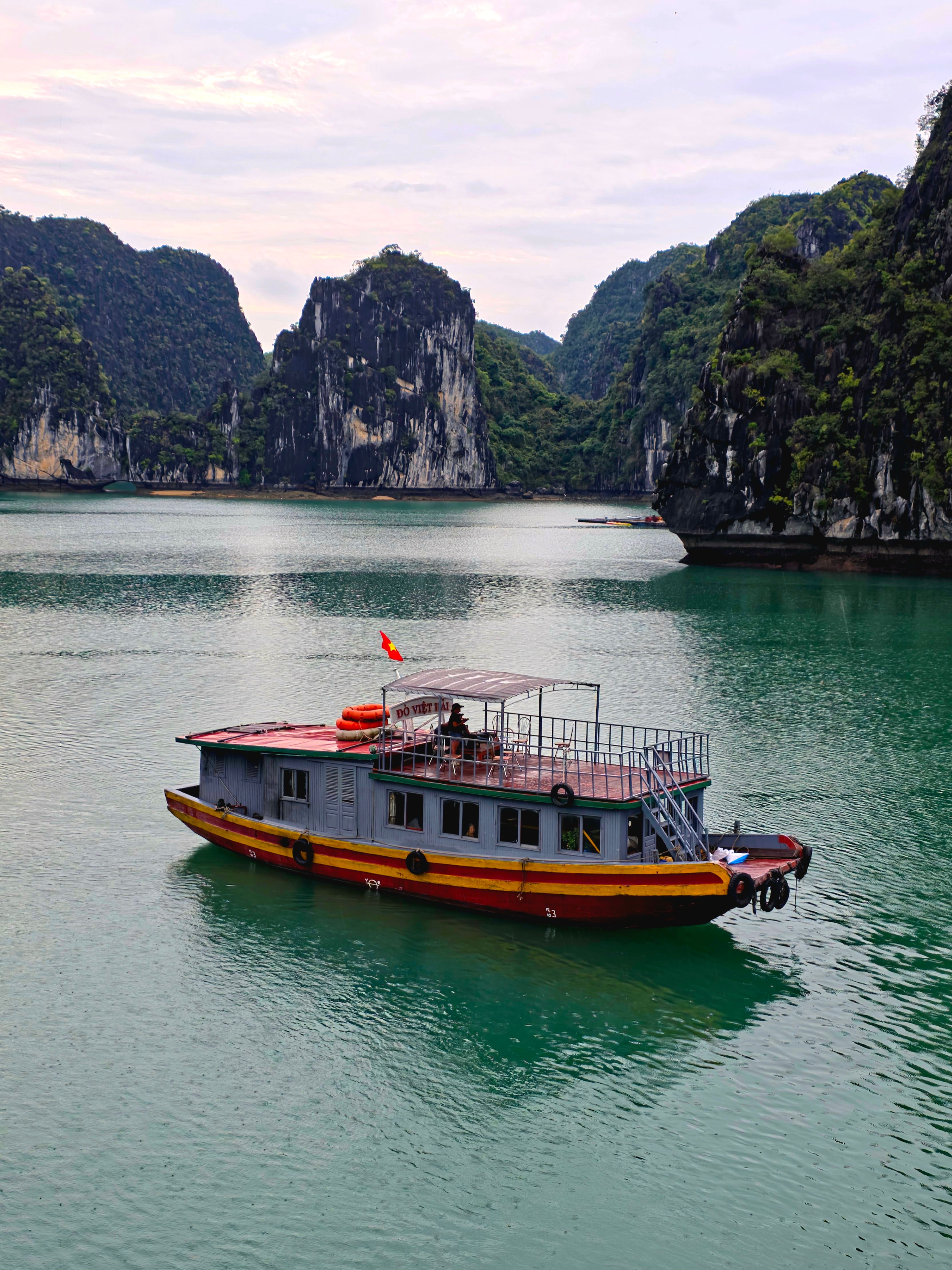
- Halong Bay is one of the most photogenic landscapes in Asia.
- Hoi An’s ancient town at night, lit by silk lanterns, is one of the most romantic settings in Southeast Asia.
- The pace is slower and the cost is significantly lower than China.
Suggested extension
7 days in Vietnam after 10 days in China: 2 days Hanoi, 1 day Halong Bay cruise, 2 days Hoi An, 2 days Ho Chi Minh City. Internal flight between Hanoi and Da Nang (1.5 hours, $50–80).
Watch out for
- Visa processing time: apply at least 1 week before your trip.
- Money: Vietnamese Dong (VND). Cash is more important than in China — many small vendors in Vietnam do not accept cards.
- Cross-border land travel: doable but not for first-timers. Fly instead.
Section 5: Thailand — the cultural-contrast combination
Effort to add: 7–10 days, $400–700 flight, the most popular “China + Southeast Asia” combo.
Thailand is far enough from China that the combination feels like two distinct trips, but cheap flights from southern Chinese cities make it easy.
How to get there
- From Shanghai, Hong Kong, Guangzhou, or Kunming: 3.5–5 hour flight to Bangkok, $250–500 round trip.
- From Hong Kong: 3-hour flight, $200–400 round trip. Frequent and cheap.
Visa requirements
US citizens can visit Thailand visa-free for up to 60 days. Visa on arrival with US passport.
Why add it
- Thai food is one of the world’s great cuisines and a complete contrast to Chinese food.
- Bangkok’s temples (Wat Pho, Wat Arun), Chiang Mai’s old city, and the southern islands (Phuket, Koh Samui) are all worth a flight.
- Thailand is well-developed for tourism. English is widely spoken, infrastructure is solid, and the cost is moderate.
- A beach extension (Phuket, Krabi, Koh Samui) is the perfect way to recover from a busy China itinerary.
Suggested extension
7 days in Thailand after 10 days in China: 2 days Bangkok, 2 days Chiang Mai, 3 days Phuket or Krabi. Or 3 days Bangkok, 4 days southern islands.
Watch out for
- Climate: Thailand has three seasons — hot (March-May), rainy (June-October), and cool (November-February). The cool season is the best for travel.
- Cultural respect: Thailand has stricter cultural norms around temples and the monarchy than China. Dress modestly at temples (shoulders and knees covered). Do not criticize the royal family.
Section 6: The trip patterns that actually work
14 days: China + Hong Kong (the easy combo)
- 10 days China (Beijing + Xi’an + Shanghai)
- 4 days Hong Kong + 1 day Macau
17 days: China + Japan (the classic combo)
- 10 days China (Beijing + Xi’an + Shanghai)
- 7 days Japan (Tokyo + Kyoto + Osaka)
21 days: China + Japan + Hong Kong (the comprehensive East Asia combo)
- 7 days China (Beijing + Xi’an)
- 3 days Shanghai
- 3 days Hong Kong
- 7 days Japan (Tokyo + Kyoto + Osaka)
21 days: China + Vietnam (the food-and-nature combo)
- 7 days China (Beijing)
- 5 days Shanghai
- 7 days Vietnam (Hanoi + Halong Bay + Hoi An)
- 2 days Hong Kong (recovery + flight out)
28 days: The full grand tour (the once-in-a-lifetime combo)
- 10 days China (Beijing + Xi’an + Shanghai)
- 7 days Japan (Tokyo + Kyoto + Osaka)
- 4 days Hong Kong
- 7 days Vietnam or Thailand
Closing
Adding a second country to your China trip is the single best way to multiply the value of a long-haul flight. The combinations above work because the flight times are short, the visa rules are friendly for US citizens, and the cultural contrasts are large enough to feel like a different trip.
The easiest combination is Hong Kong (no flight needed). The most rewarding is China + Japan. The most underrated is China + South Korea. The most food-focused is China + Vietnam. The most culturally distinct is China + Thailand.
For the China portion of any combination, see our 10-day itinerary or our plan my trip page for a customized China plan. The neighboring country portion is best planned after you have locked in the China dates — most flights between China and these destinations can be booked 60–90 days in advance on Trip.com or directly with the airline.