
Short answer: China sleeper trains can be a useful way to cover a long distance overnight, but “sleeper train” does not describe one single experience. Hard sleeper, soft sleeper and overnight high-speed services differ in privacy, layout, availability and comfort. Check the exact train and class on the current 12306 service before you book, and do not make an overnight train your only critical connection on a tight itinerary.
Evidence checked: September 10, 2026. China Railway’s official 12306 English service is the starting point for checking current trains, seat or berth availability, ticket details and applicable changes or refunds. Specific train types, schedules and onboard arrangements can vary by route and date.

Compare sleep conditions and the morning after
| Situation | Useful next step | Important limit |
|---|---|---|
| Choosing a product | Check the offered layout, berth and privacy arrangements. | Class labels do not make every train identical. |
| Traveling overnight | Keep documents, medication and essentials accessible. | A sleeper is transport, not a guarantee of a full night’s rest. |
| Arriving early | Confirm hotel access, bags and a light first morning. | Train arrival does not create early room availability. |
Key Takeaways
- Hard sleeper, soft sleeper and overnight high-speed services are different products; check the exact class shown for the train you are considering.
- Hard sleeper can suit budget-first travelers who are comfortable with a more open shared arrangement.
- Soft sleeper generally offers more privacy, but availability and layout vary by service.
- Not every high-speed train has sleeping berths, and not every long-distance route offers an overnight service.
- Keep your passport, ticket details and valuables secure; do not display tickets or personal data publicly.
- Leave recovery time after arrival if you have an important attraction, flight or fixed appointment the next morning.
Are China Sleeper Trains Comfortable for Foreign Travelers?
They can be practical, but comfort depends on the berth class, train type, route and your own tolerance for shared space. An overnight train may reduce daytime travel and sometimes replace one hotel night. It can also leave you tired, make luggage management less convenient and reduce your margin for a morning activity. Choose it because the complete itinerary works—not simply because the ticket looks cheaper than a flight.
First-time visitors should think about three questions: Can you sleep in a shared train environment? Can you manage your luggage without leaving valuables unattended? What happens if the train arrives late and your next booking is fixed? If the answer to the third question is “there is no backup,” a daytime train or flight may be the safer planning choice.
For the broader first-ride process, see our China high-speed train guide for foreign travelers. This article focuses on choosing an overnight sleeping arrangement rather than repeating basic station entry instructions.
What Is a Hard Sleeper?
Hard sleeper is an open shared berth arrangement with several sleeping levels in a section. The name does not mean that the bed is literally hard, and it should not be read as a safety rating. The practical differences for a visitor are less privacy, more interaction with nearby passengers and a greater need to organize your luggage and personal items.
- Choose it when budget and route efficiency matter more than privacy.
- Keep a small valuables pouch with you rather than placing important items in a distant luggage area.
- Consider whether climbing to or using a particular berth level is comfortable for you.
- Use earplugs, an eye mask and a light layer if you are sensitive to noise or temperature.
- Do not expect every hard-sleeper carriage to feel identical; confirm the current service where possible.
What Is a Soft Sleeper?
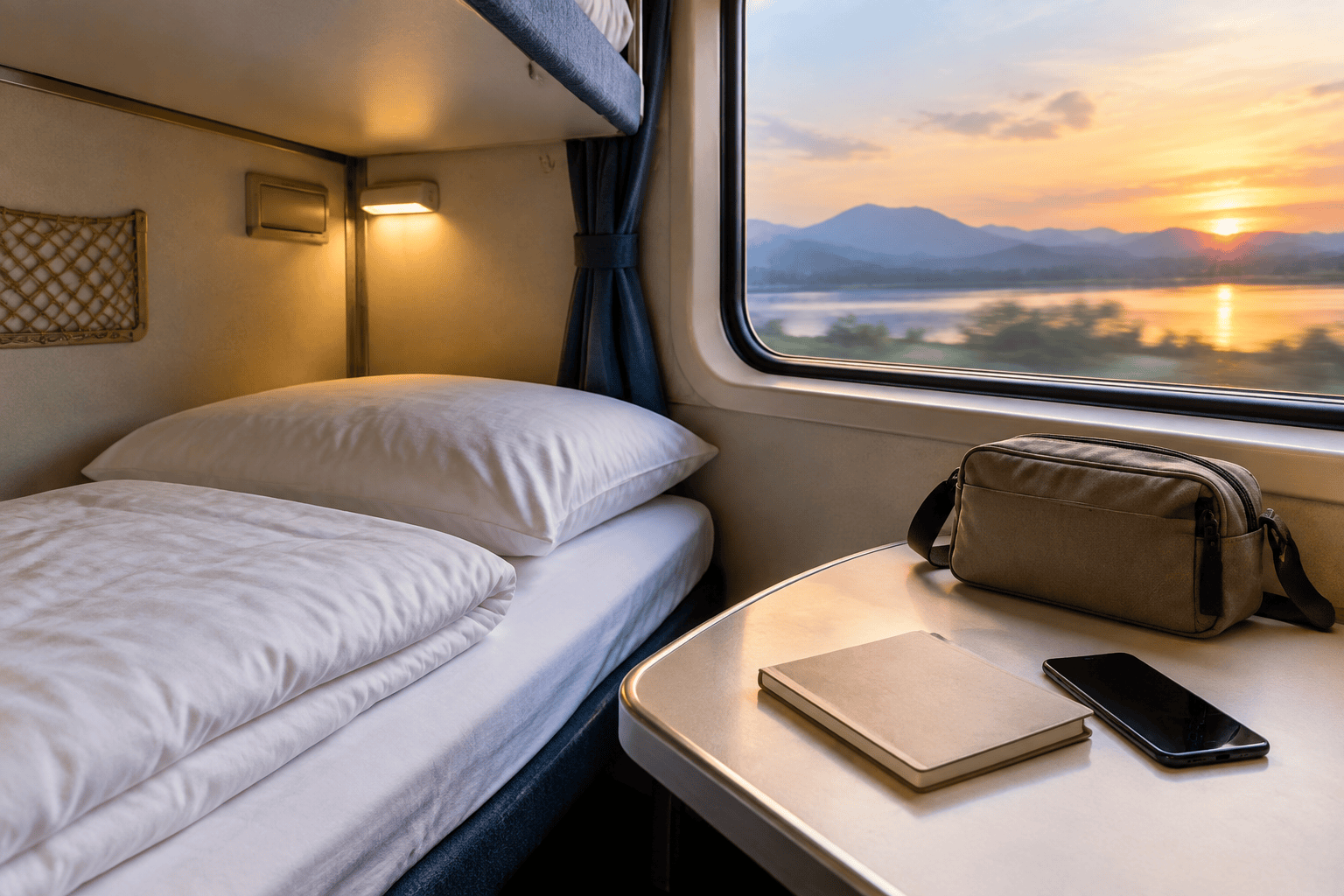
Soft sleeper generally provides a more private berth arrangement than hard sleeper. It is often the more comfortable choice for couples, families or travelers who want less exposure to a shared open section. The exact cabin layout, berth count and facilities still depend on the train and route, so do not assume that every “soft sleeper” listing has the same configuration.
Soft sleeper can be worth considering when you need better odds of sleeping before a busy day. It is not automatically the best choice for every traveler: availability may be limited, the price difference may not fit your budget and a particular route may offer only certain overnight services. Compare the actual train and class, not just the category name.
What Is an Overnight High-Speed Sleeper?
Some overnight high-speed services provide sleeping berths, but high-speed rail does not automatically mean sleeper service. Availability is route- and train-specific. A search for a long-distance journey may show daytime high-speed seats, conventional overnight trains, or a particular overnight high-speed product on selected services.
Use the live 12306 result to check the actual departure time, arrival time and class. Do not infer the onboard layout from the train’s speed or from a photo of another service. If the listing does not clearly show a sleeping class, treat it as a seated journey until the official ticket information says otherwise.
Which Sleeper Class Should You Choose?
Choose based on the trade-off you can actually accept: price, privacy, sleep quality, luggage and next-day timing. There is no universal best berth for every visitor.
- Budget first: compare hard sleeper with a daytime train and the cost of an extra hotel night.
- Privacy first: look for soft sleeper when the specific service offers it and the price fits your trip.
- Sleep first: avoid choosing an open or unfamiliar arrangement immediately before a high-stakes morning.
- Traveling with children or a group: confirm how the berths are arranged before assuming everyone will be together.
- Carrying large luggage: check where it can be kept without blocking the berth or separating you from valuables.
- Arriving for a fixed appointment: compare the overnight option with a daytime train or flight that leaves more recovery margin.
What Should You Pack for an Overnight Train?
Pack for a small sleeping space and keep essential items within reach. A light layer, eye mask, earplugs, tissues, basic toiletries, a charger and a refillable water bottle can make the journey easier. Keep your passport, phone, wallet and medication secure rather than placing them in an open bag away from your berth.
Keep the packing list compact. A large suitcase is harder to move through a station and more awkward in a shared carriage. If you are using an overnight train as part of a multi-city route, review the next morning’s hotel check-in, luggage storage and attraction timing before you commit.
How Do Foreigners Book a Sleeper Train in China?
Start with the official 12306 service and check the exact train and class available for your travel date. Foreign travelers should keep their passport and ticket identity details consistent, then review the displayed train type, departure station, arrival station and berth class before payment.
- Search the complete route on the current official service.
- Check the exact train number, date, departure station and arrival station.
- Read the available class or berth label instead of relying on a generic “overnight train” description.
- Confirm whether your group is traveling under one booking or separate bookings.
- Check what happens to your next hotel, attraction or flight if the train arrives late.
- Save the final ticket record and keep your passport available for the journey.
Our 12306 foreign-passport guide explains the identity and booking side. Do not treat a third-party reservation email or payment notification as a substitute for checking the official ticket record.
What If the Sleeper Train Is Sold Out?
Check the precise unavailable combination before you abandon the whole route. A sold-out result may apply to one date, train, station or berth class rather than every way to make the journey.
- Check another berth class on the same service.
- Check nearby departure times and other overnight trains.
- Check whether a daytime direct train works better than a complicated connection.
- Check an alternative station only when the ground transfer is realistic.
- Consider an adjacent date if your hotel and visa or entry plan allow it.
- Set a backup deadline before downstream reservations become expensive or non-refundable.
A waitlist is not a confirmed ticket, and a third-party reservation is not automatically proof of an official ticket. For the full recovery sequence, see our guide to what to do when China train tickets are sold out.
How Should You Plan the Morning After?
Protect the first few hours after arrival. Do not schedule a non-refundable attraction, airport transfer or important business appointment immediately after an overnight train unless you have a realistic recovery margin. You may need time to leave the station, store luggage, find breakfast, check in or simply recover from a poor night’s sleep.
Use our free China travel preparation guides to prepare phone connectivity, payments and local transport for the morning after your train. Keep the hotel address and arrival route available offline; railway reservations still need to be checked with the booking provider.
If your route includes a station change after arrival, treat it as a separate urban transfer. Our same-station versus different-station transfer guide explains why two train times alone are not enough to prove that a connection works.
Bottom Line
China sleeper trains can be excellent itinerary tools when the route, berth and next-day schedule fit your travel style. Hard sleeper prioritizes budget and route efficiency; soft sleeper generally prioritizes privacy; overnight high-speed sleeper services depend on the exact train and route. Check the live official listing, protect your valuables, and leave enough margin that one bad night does not damage the rest of your trip.
Official Source and Update Note
Checked September 10, 2026. Train types, sleeper availability, schedules, berth labels, ticket rules and station procedures can change by route and date. Confirm the current details in the official railway service before purchasing or relying on an overnight connection.
Related decisions for this part of the trip
- China rail-planning hub
- 12306 With a Foreign Passport: Booking and Boarding
- Early Arrival in China: Hotel Room or Luggage Plan?
- China Train Seats Together: Check the Issued Assignment
Turn this decision into a workable route
An overnight journey only saves useful time when the next hotel and day’s pace make sense. LOCLYX is a China-based local team. We tailor a written plan to your dates, budget, interests, pace and constraints. Planning costs $19.9 per travel day; travel purchases are separate and we do not make reservations or provide ground services.
Use the relevant guides above to settle this question, then compare the full planning deliverable. Compare the sample itinerary and pricing and scope before using Plan My Trip. Delivery and revision conditions are in the published policy.
Update note
Editorial review: October 12, 2026. Use official and provider references for the route and service they cover. Operational availability, individual eligibility, medical decisions and local procedures require the appropriate current or professional check.