
Your flight lands. Your payment app is not linked to a card yet. The airport Wi-Fi wants phone verification. Your ride-hailing driver calls, but you cannot understand a word. At the hotel, the receptionist cannot find the booking under your English name.
None of these problems is serious on its own. When you travel alone, they can arrive within the same half hour. There is no second person to answer the phone, watch the bags, pull up the address, or pay while you fix the first problem.
Not speaking Chinese is not the biggest obstacle to solo travel in China. The harder question is whether you have a backup that still works when a small failure takes away your only phone, payment method, or route home.
Facts checked: July 23, 2026.
Run a solo failure test before booking a busy route
| Situation | Useful next step | Important limit |
|---|---|---|
| The main payment fails | Can you pay for transport or a meal another way? | Two apps on the same locked phone may not be independent backups. |
| You cannot explain the destination | Can you show the address and a workable fallback? | Translation does not decide which route to take. |
| You need help urgently | Can you state your location and reach the appropriate service? | A travel planner is not a substitute for emergency responders. |
The short answer: yes, but do not confuse safe with easy
A first-time visitor who does not speak Chinese can travel independently between cities such as Beijing, Shanghai, Xi’an, and Chengdu. Major airports, high-speed railway stations, urban metro systems, and leading tourist sites usually provide English signs. Foreign passports can also be used for hotel registration and real-name train tickets.
That does not mean the entire trip will work in English.
Restaurant staff, taxi drivers, small-hotel receptionists, and pharmacy workers may speak little or no English. Payment verification, a last-minute train change, a driver who cannot find your pickup point, or a hospital registration desk will not automatically switch to an English process because you are a foreign visitor.
Safety in China needs a careful answer. The problems most likely to ruin an ordinary sightseeing day are often logistical: language, payments, connectivity, and bookings. At the same time, the U.S. State Department currently lists China at Level 2, citing arbitrary enforcement of local laws and exit bans. That advisory should not be replaced by a travel blogger’s reassurance.
Solo travel in China requires preparation, not panic.
1. If payment fails, there is no travel companion to cover the bill
China’s official payment guide for overseas visitors says foreign users can link international cards, including Visa and Mastercard, to Alipay and WeChat Pay. Overseas visitors can also use bank cards and cash.
Official support does not mean every transaction will work on the first attempt.
If the app fails after setup, use this Alipay payment-failure sequence instead of repeatedly retrying the same card.
Your bank may block an overseas payment. A card-linking request may trigger another identity check. A small merchant’s QR code may not support payment from your particular foreign card. The risky choice is not carrying too little cash. It is putting all your spending power into one card, one app, and one phone.
Before departure:
- Register for Alipay or WeChat Pay, complete the required verification, and link your card on your home network.
- Tell your bank you will use the card in China and confirm that you can receive verification messages.
- Carry a second card from a different bank or payment network.
- Keep a modest amount of renminbi as a fallback after arrival.
- Write down your bank’s international support number instead of storing it only on your phone.
You do not need to carry a thick envelope of cash. You do need a second payment method that works immediately when the first one fails.
2. Translation apps can translate a sentence, but they cannot choose your next move
Not speaking Chinese is manageable. Depending entirely on online translation is not. This China travel app checklist covers the initial setup; the backups below are what help when an app or connection fails.
When your phone has no data or a driver speaks quickly over the phone, composing a long translated message is already too late. A solo traveler gets more value from a few pages that require no explanation:
- Your hotel’s Chinese name, address, and phone number.
- The exact Chinese name of your airport or railway station.
- The Chinese address and map pin for each destination.
- Offline copies of your passport, visa, and insurance details.
- “I don’t speak Chinese. Please type it for me.”
- “Please take me to this address.”
- “Please help me contact my hotel.”
- “I need a hospital” and “Please call the police.”
Save these as screenshots. Do not leave them inside a cloud document that needs a working connection.
If a driver cannot locate you, a precise Chinese pickup point is more useful than repeating “I am at the exit.” If a hotel cannot find the reservation, the confirmation number, Chinese hotel name, and booking platform support page will do more than repeating your English name.

3. Buying a train ticket is easy; passport verification may not be
The official China Railway FAQ confirms that foreign passengers can buy real-name tickets with a valid passport. The English 12306 website supports ticket purchases, changes, and refunds. Passengers use the same valid ID document to buy the ticket and board the train.
For the complete setup and boarding process, use the 12306 foreign passport guide.
The first account setup is where some travelers get stuck.
A mistake in name order, spacing, passport number, or expiry date can cause automatic identity verification to fail. An official guide for foreign-passport verification explains that a failed user may need to upload the passport information page and a photo of the traveler holding the passport. Manual review usually takes three to five working days. Until verification succeeds, the user cannot buy tickets or add passengers normally.
Do not leave this until the night before departure.
Test the process at home:
- Register a 12306 account.
- Enter your name and passport number exactly as shown on the passport information page.
- Confirm that your identity status shows a successful verification.
- Search one planned route so you recognize the full station names and timetable.
- Keep the railway-station ticket counter as your fallback.
If you use a third-party booking platform, check the passenger name and passport number on the order. The interface may be easier, but the railway still checks your passport against the actual ticket record.
4. Hotels can receive foreign guests, but not every receptionist knows the process
A 2024 notice issued by seven Chinese government departments says booking platforms and accommodation providers should not unlawfully publish statements that they do not accept foreign guests. It also calls for simpler registration procedures and better foreign-language service.
The separate China hotel check-in guide for foreign guests explains the full registration process and what to do when a front desk is unsure.
That policy addresses whether accommodation providers may receive foreign guests. It does not guarantee that every small hotel receptionist is experienced with foreign passports, English booking names, or overseas cards.
Before booking, check:
- Whether the reservation name matches your passport.
- The hotel’s Chinese name and address.
- Whether reception is staffed when you arrive.
- How a late-night check-in works.
- Whether the booking platform offers immediate support.
- Which nearby hotel you can book if the first reservation fails.
Hotels normally handle accommodation registration for their guests. If you stay in a private home or other non-hotel accommodation, you or your host may need to complete the registration. From March 20, 2026, the National Immigration Administration began a pilot online registration service for non-hotel stays in Hebei, Liaoning, Zhejiang, Hubei, Guangxi, Chongqing, and Sichuan. Elsewhere, follow the current local procedure.
5. An emergency forces you to decide and communicate at the same time
When two people travel together, one can handle the phone while the other watches the luggage, finds a staff member, or remembers the location. A solo traveler has to do all of it.
China’s main emergency numbers are:
- 110 for police.
- 119 for fire.
- 120 for an ambulance.
- 12367 for immigration policy questions and related services.
Some large-city services may provide English assistance, but you should not assume that every dispatcher, driver, or medical worker speaks English. In an emergency, ask hotel staff, railway staff, a police officer, or a nearby shop worker to help explain your location and situation. That may be faster than trying to manage a long call alone.
Keep offline copies of:
- Your travel insurer’s emergency assistance number.
- Your embassy or consulate contact details.
- Your hotel’s phone number.
- A family member’s contact details.
- A bilingual note listing chronic conditions, allergies, and regular medicines.
These details should still be available when your phone is lost or out of power.
Run a solo-travel failure test before you fly
Switch your phone to airplane mode and assume you have just landed in China. Then try to:
- Find your first hotel’s Chinese address.
- Open your offline translation tools.
- Find a backup route from the airport to the hotel.
- Check which payment cards are already linked.
- Open offline copies of your passport and insurance details.
- Find your 12306 identity-verification status.
- Explain how you would pay, return to the hotel, and contact your family if your phone disappeared.
If any task requires a working internet connection, make an offline version before departure.
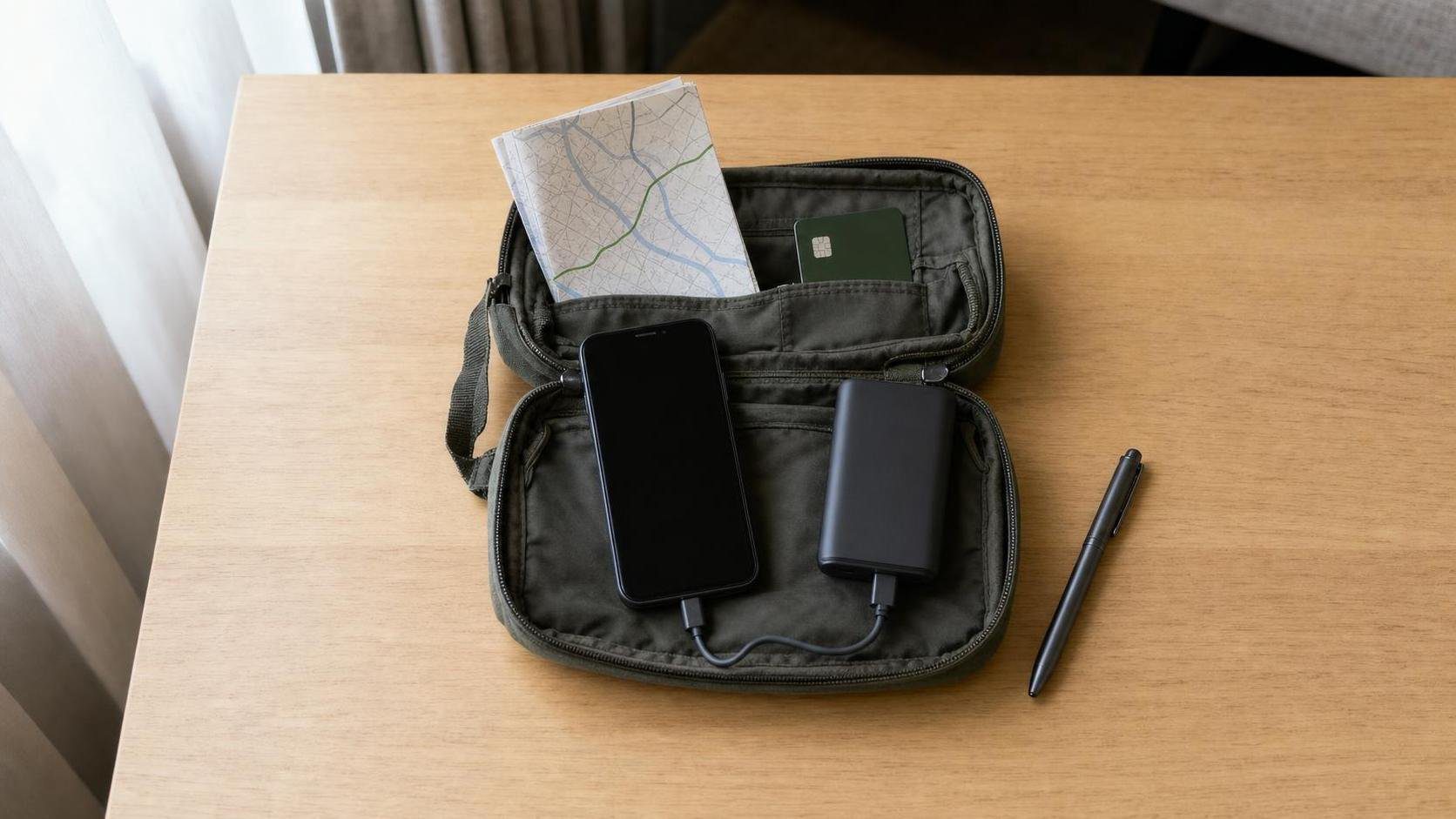
Who should take a first solo trip to China?
China’s major cities can work well for independent travelers who can tolerate occasional communication failures, set up payment and transport tools in advance, and stop to reconsider when a plan changes.
The trip will be harder if this is your first time abroad alone, you require guaranteed English service, you have no backup bank card, and you do not want to prepare your digital tools before departure. The sights are rarely the difficult part. The small steps between them are where an unprepared solo traveler loses time.
You do not need to speak Chinese to travel alone in China. You need to know what you will do next when nobody is there to solve the problem for you.
For a solo traveler, those details are usually worth more than one extra attraction recommendation.
Related decisions for this part of the trip
- China route-planning hub
- Apps for China Travel: Prepare by Task, Not App Count
- Alipay Not Working in China? Diagnose the Failed Step
- China Emergency Numbers: Save a Usable Contact Card
Turn this decision into a workable route
A solo itinerary needs clear handoffs and independent backups, not just attraction recommendations. LOCLYX is a China-based local team. We tailor a written plan to your dates, budget, interests, pace and constraints. Planning costs $19.9 per travel day; travel purchases are separate and we do not make reservations or provide ground services.
Use the relevant guides above to settle this question, then compare the full planning deliverable. Compare the sample itinerary and pricing and scope before using Plan My Trip. Delivery and revision conditions are in the published policy.
Update note
Editorial review: October 12, 2026. Use official and provider references for the route and service they cover. Operational availability, individual eligibility, medical decisions and local procedures require the appropriate current or professional check.